
Fatal Alpine Avalanches Claim Five Lives in Austria

Deadly avalanches in Austrian Alps kill five including father skiing with son, raising seasonal death toll to 21 amid dangerous snow conditions.
Devastating avalanches in Austria claimed five lives on Friday, including a tragic incident involving a father who was skiing alongside his son when the deadly snowslide occurred. The latest fatalities have brought the Austrian Alps avalanche death toll for this winter season to a staggering 21 victims, highlighting the increasingly dangerous conditions plaguing the popular Alpine region.
According to Austrian mountain rescue officials, the incidents occurred across multiple locations in the country's mountainous terrain, where unstable snow conditions have created a perfect storm for catastrophic avalanches. The fatal skiing accident involving the father-son duo has particularly shocked the local community, serving as a grim reminder of how quickly mountain conditions can turn deadly even for experienced winter sports enthusiasts.
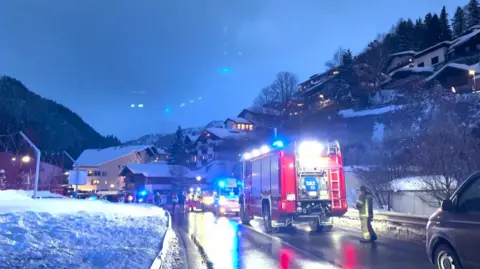
Emergency response teams worked tirelessly throughout Friday to locate and recover victims from the debris fields left by the powerful snow slides. The Austrian Alpine Police reported that several of the incidents occurred in off-piste areas, where skiers and snowboarders often venture despite posted warnings about dangerous avalanche conditions.
Weather experts and avalanche forecasters have been issuing repeated warnings about the unstable snowpack throughout the Austrian Alps this season. The combination of heavy snowfall, rapid temperature fluctuations, and strong winds has created layered snow conditions that are particularly prone to sudden collapse and deadly slides.
This winter season has proven to be one of the most deadly on record for Alpine avalanche fatalities in Austria. The cumulative death toll of 21 victims represents a significant increase compared to previous years, prompting authorities to intensify safety campaigns and avalanche awareness programs across the region's ski resorts and backcountry areas.
Mountain safety experts emphasize that the majority of avalanche incidents are triggered by the victims themselves or members of their party. In typical scenarios, the additional weight and movement of skiers or snowboarders on an unstable slope can cause the critical failure that releases thousands of tons of snow in a matter of seconds.
The Austrian government has invested heavily in avalanche prediction and warning systems, utilizing advanced meteorological data, snowpack analysis, and terrain mapping to provide accurate risk assessments. Despite these technological advances, the unpredictable nature of mountain weather and snow conditions continues to pose significant challenges for forecasters and safety officials.
Local ski resort operators have been working closely with avalanche control teams to implement enhanced safety measures, including increased use of controlled explosives to trigger smaller, manageable avalanches before they can grow into life-threatening events. These avalanche mitigation efforts have proven effective in secured resort areas, but cannot eliminate risks in the vast backcountry regions where many of the fatal incidents occur.
Tourism officials acknowledge that the rising death toll poses concerns for Austria's vital winter sports industry, which attracts millions of visitors annually to the country's renowned Alpine destinations. However, they stress that the vast majority of skiing and snowboarding activities occur safely within controlled resort boundaries where avalanche risks are actively managed.
The tragic incident involving the father and son has resonated deeply within Austria's close-knit mountain communities, where families have been participating in winter sports for generations. Local residents and rescue volunteers often know the victims personally, making each avalanche fatality a profound loss that extends far beyond statistics and safety reports.
Professional mountain guides and ski instructors across the Austrian Alps have intensified their focus on avalanche safety education, teaching visitors and locals alike about risk assessment, proper equipment use, and emergency response procedures. These educational initiatives include hands-on training with avalanche transceivers, probes, and shovels – essential tools for survival in avalanche terrain.
Recent meteorological patterns have contributed significantly to the hazardous conditions plaguing the Austrian Alps this season. Alternating periods of heavy snowfall and warming temperatures have created complex layering within the snowpack, with weak layers that can fail catastrophically under relatively minor disturbances.
International mountain safety organizations have been monitoring the situation in Austria closely, as similar conditions have been observed across other Alpine regions in Switzerland, France, and Italy. The European Avalanche Warning Services have coordinated their efforts to provide consistent risk communication and safety messaging to the millions of winter sports enthusiasts who travel throughout the Alps each season.
As the winter season continues, Austrian authorities are urging all mountain visitors to exercise extreme caution and strictly adhere to posted avalanche warnings and closure notices. The five lives lost on Friday serve as a sobering reminder that the beauty and excitement of the Austrian Alps come with inherent risks that demand respect, preparation, and constant vigilance from all who venture into these magnificent but potentially deadly mountains.
Source: BBC News


