
Fed Independence Under Threat in Trump Era

As Jerome Powell steps down as Federal Reserve chair, his legacy centers on defending the Fed's autonomy from presidential pressure during Trump's presidency.
Jerome Powell's tenure as chair of the Federal Reserve has concluded this week, marking the end of a significant chapter in American monetary policy. Throughout his leadership, Powell navigated unprecedented economic challenges, from the depths of the Covid-19 pandemic to inflationary pressures that reshaped global markets. While his technical achievements in monetary management were noteworthy, including orchestrating a rare "soft landing" that controlled inflation without triggering recession or employment losses, his most enduring legacy may prove to be something entirely different.
Powell's decisive actions during the pandemic response demonstrated the Fed's capacity to respond swiftly to economic crises. Initially, the central bank faced criticism for being slow to recognize and respond to rising prices as the pandemic's acute phase subsided and supply chains began normalizing. However, once Powell and his colleagues recognized the persistent nature of inflation, they implemented aggressive interest rate increases that ultimately succeeded in bringing price pressures under control without causing the widespread economic damage many had feared. This achievement—a soft landing in economic terms—represents one of the most elusive goals in monetary policy history, successfully executed only a handful of times in the Federal Reserve's long history.
Yet despite these economic accomplishments, Powell's defining contribution to American institutional life extends well beyond traditional monetary policy metrics. His most significant legacy appears to be his steadfast and vocal defense of the Federal Reserve's independence from political pressure, particularly during the contentious and unpredictable administration of Donald Trump. In an era of unprecedented institutional stress and political polarization, Powell emerged as a guardian of central bank autonomy, a role that proved increasingly critical as the boundaries between politics and monetary policy began to blur dangerously.
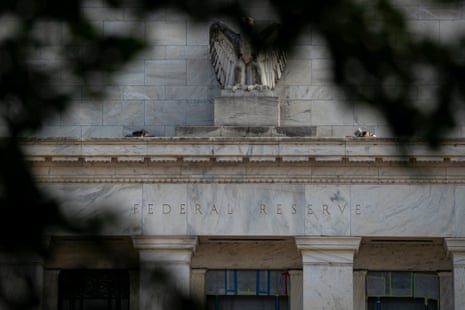
The Trump presidency fundamentally challenged longstanding conventions regarding the separation between executive power and central banking. Trump repeatedly criticized Powell and the Federal Reserve publicly, demanding lower interest rates that would have accommodated his preferred fiscal policies and real estate interests. The president's ultimate objective extended beyond mere interest rate management; it represented a broader assault on the independence of multiple American institutions, with the Fed serving as a primary target in this ideological offensive. Trump viewed independent agencies and institutions as obstacles to his executive will rather than as essential components of constitutional checks and balances.
Powell's response to these unprecedented pressures distinguished him from many of his predecessors. Rather than capitulating to political demands or attempting to appease the White House through policy adjustments, Powell maintained the Fed's operational independence and continued to make decisions based on economic data and statutory mandates rather than political convenience. His public statements defending the Fed's autonomy were remarkably blunt by standards of typical Fed communication, signaling to markets and the public that the institution would not be subordinated to executive preferences. This principled stance required considerable personal courage, given the relentless attacks Powell endured from Trump and his allies.
The broader context of Powell's tenure reveals the precarious nature of institutional independence in contemporary American politics. The Federal Reserve, established by Congress in 1913, was deliberately structured to insulate monetary policy from short-term political pressures that might undermine long-term economic stability. This independence was considered essential because politicians, facing election cycles, might be tempted to artificially stimulate the economy before elections, creating unsustainable boom-and-bust cycles. The Fed's independence also protects credibility in financial markets, allowing the institution to make tough decisions about inflation control without being dismissed as politically motivated.
Trump's challenge to this independence represented something qualitatively different from the usual political grumbling about Fed policy. Previous presidents had criticized the Fed, but none had launched such a sustained and direct assault on the institution's foundational autonomy. Trump repeatedly suggested that he should have direct control over the Fed's policy decisions or even that the president should be able to remove the Fed chair at will—a dramatic departure from established constitutional understandings. These weren't merely rhetorical flourishes; they reflected a genuine desire to subordinate an independent institution to presidential authority, a desire that threatened the entire post-war framework of institutional checks and balances.
Powell's departure raises critical questions about the future of Federal Reserve independence in American politics. As Trump prepares to return to office and potentially pursue his agenda of subordinating independent agencies, the precedent Powell set becomes increasingly important. His demonstrated willingness to resist political pressure and maintain institutional independence provides a model for other independent officials facing similar pressures. At the same time, Powell's tenure revealed just how fragile institutional independence can be when facing a determined executive branch determined to consolidate power.
The stakes of maintaining central bank independence extend far beyond the immediate politics of a single administration. Independent monetary policy has been recognized globally as essential to economic stability and price predictability. Nations that have attempted to subordinate their central banks to political control have consistently experienced worse economic outcomes, including higher inflation, currency instability, and reduced investor confidence. The Federal Reserve's role as a politically independent institution has been a cornerstone of American economic strength and stability for over a century. Compromising this independence would carry significant costs for economic performance and financial market stability.
Powell's legacy, therefore, transcends the specific policy decisions made during his tenure. While the soft landing represents a genuine economic accomplishment worthy of recognition, his true historical significance may lie in his defense of institutional integrity during a period of unprecedented assault on American democratic norms and institutional independence. He demonstrated that an appointed official, insulated from electoral pressures, could maintain principled positions even against the most powerful political figure in the country. This example becomes particularly important as debates about institutional reform and executive power continue to evolve.
The future trajectory of Federal Reserve independence remains uncertain. Powell's successor will inherit both the mantle of defending institutional autonomy and the knowledge that this defense may prove difficult in the current political environment. The challenge facing the Fed and other independent institutions is fundamentally a question about what kind of political system America wants to maintain. Concentrated executive power may seem attractive to some, but the dispersion of authority across independent institutions was deliberately designed to prevent tyranny and protect long-term national interests from short-term political expedients. Powell's steadfast defense of the Fed's independence represents a crucial defense of this entire constitutional framework.
Source: The Guardian


