
Federal Agencies Leading Trump's Immigration Enforcement

Explore which federal agencies are conducting immigration enforcement operations across the US under the Trump administration's mass deportation agenda.
The Trump administration's aggressive approach to immigration enforcement has mobilized multiple federal agencies across the United States in what officials describe as an unprecedented enforcement surge. When armed federal immigration enforcement personnel were deployed to Minneapolis, the Department of Homeland Security announced this represented the largest operation in its institutional history, placing the liberal midwestern city at the center of the nation's attention and escalating tensions between federal authorities and local governments.
This escalation reflects the Trump administration's broader policy agenda centered on mass arrests and deportations from the US interior, a cornerstone of the president's immigration platform. The most visible enforcement efforts have involved coordinated operations featuring officers from multiple federal agencies descending upon prominent Democratic-led cities, often against the explicit wishes of local elected officials who have sought to protect immigrant communities within their jurisdictions. These high-profile operations have garnered significant media attention and sparked debate about federal authority, constitutional protections, and the role of local cooperation in immigration enforcement.
Understanding the landscape of immigration enforcement agencies is essential for comprehending how these operations function across the country. While several agencies participate in immigration enforcement efforts, most of the personnel involved operate under the broader umbrella of the Department of Homeland Security, though coordination with other federal authorities adds complexity to these operations. The geographic spread of these enforcement activities spans from coast to coast, involving thousands of federal officers deployed to communities of varying sizes and demographics.
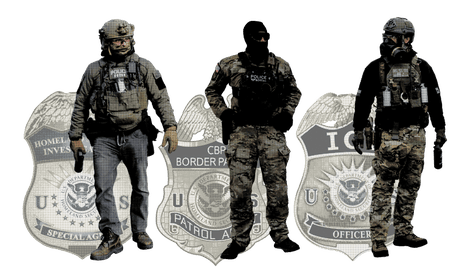
The Department of Homeland Security serves as the primary orchestrator of federal immigration enforcement operations, overseeing multiple subordinate agencies that carry out day-to-day enforcement activities. Within DHS, Immigration and Customs Enforcement (ICE) represents the principal agency conducting interior enforcement operations, responsible for identifying, detaining, and processing individuals believed to be in the country illegally. The organization operates with significantly increased resources and personnel under the current administration, enabling the dramatic escalation in enforcement activities observed across major metropolitan areas and smaller communities alike.
Alongside ICE, the Department of Homeland Security's Customs and Border Protection agency contributes personnel to interior enforcement operations, particularly in regions near international borders. CBP officers, traditionally stationed at ports of entry and coastal enforcement zones, have been increasingly deployed inland to support surge operations in major cities. This expansion of CBP's role in interior enforcement represents a notable shift in agency responsibilities and contributes to the overall scale of federal immigration enforcement activities. The coordination between these agencies has been facilitated by enhanced information-sharing protocols and centralized command structures established specifically for these surge operations.
The Department of Justice has also played a supporting role in the immigration enforcement apparatus, particularly through its Federal Bureau of Investigation and Marshals Service. These agencies provide investigative support, conduct criminal background checks, and in some cases, participate directly in field operations targeting individuals with criminal histories. While not primarily immigration agencies, their involvement demonstrates the whole-of-government approach adopted by the Trump administration in executing its immigration enforcement agenda.
State and local law enforcement agencies occupy a complex and contentious position within this enforcement infrastructure. While some jurisdictions have elected to cooperate with federal immigration authorities through agreements and joint task forces, many others have explicitly refused to participate in immigration enforcement activities. Major cities including Minneapolis, Chicago, and numerous others have adopted sanctuary policies or executive orders that limit local police cooperation with federal immigration authorities. These decisions reflect concerns about community trust, constitutional protections, and the appropriate boundaries between immigration enforcement and traditional criminal law enforcement.
The deployment of federal agents to specific cities reveals strategic choices in the Trump administration's enforcement approach. Minneapolis, Chicago, New York, and other Democratic-led metropolitan areas have become focal points for these operations, suggesting that enforcement efforts target not only undocumented immigrants but also reflect broader political calculations. Local mayors and governors have publicly contested these operations, arguing they violate constitutional protections, undermine community-police relations, and prioritize political theater over genuine public safety concerns.
The scale of these federal immigration enforcement operations has created significant logistical challenges and resource implications. Thousands of federal officers have been mobilized from their traditional assignments to participate in surge operations, raising questions about the sustainability of this enforcement intensity and potential impacts on other federal law enforcement priorities. Training and coordination requirements for personnel from multiple agencies have necessitated the establishment of specialized command structures and operational protocols. The financial costs associated with these expanded operations, including personnel, transportation, detention facilities, and legal resources, represent substantial government expenditures.

The detention infrastructure supporting these enforcement operations has faced capacity challenges as the volume of arrests increases. Federal immigration detention facilities operated by Immigration and Customs Enforcement have experienced overcrowding, while private detention contractors have expanded capacity to accommodate the surge. Local jails have also been utilized under federal agreement to hold immigration detainees, creating additional friction between local and federal authorities. The conditions within these facilities and the treatment of detained individuals have drawn criticism from civil rights organizations and humanitarian groups.
Legal challenges to these enforcement operations have proliferated, with civil rights organizations and immigrant advocacy groups filing lawsuits challenging the constitutionality of specific enforcement tactics and the authority of federal agents to conduct certain operations. Constitutional questions regarding search and seizure, due process protections, and the appropriate scope of federal enforcement authority remain contested in federal courts. These legal battles will likely continue throughout the administration's tenure and may ultimately constrain or redirect enforcement approaches.
The immigration enforcement operations have created significant ripple effects throughout American society, impacting immigrant communities, businesses reliant on immigrant labor, and local economies. Schools, hospitals, and community organizations have reported disruptions as individuals fear law enforcement contact and avoid public spaces. Economic sectors including agriculture, hospitality, and construction have faced labor shortages as immigrant workers flee enforcement activity. These broader societal impacts extend far beyond the direct effects on individuals detained by federal authorities.

The coordination between federal immigration enforcement agencies represents a significant organizational undertaking, requiring enhanced information-sharing systems, centralized command authority, and unified operational objectives. Intelligence fusion centers have been established to integrate data from ICE, CBP, and supporting law enforcement agencies, creating comprehensive profiles of targeted communities and individuals. This technological infrastructure, while facilitating enforcement efficiency, has raised concerns about privacy protections and potential misuse of personally identifiable information.
Looking forward, the scope and intensity of federal immigration enforcement activities will likely remain a central feature of the Trump administration's domestic policy agenda. Political opposition from Democratic-led jurisdictions and advocacy organizations will continue to challenge these operations through legal, political, and public opinion channels. The ultimate trajectory of these enforcement efforts will depend on evolving legal determinations, Congressional appropriations decisions, and the political sustainability of maintaining this level of enforcement intensity over extended periods. The agencies and resources deployed in this immigration enforcement surge represent one of the most significant domestic law enforcement undertakings in recent American history.


