
Federal Agents Behind Trump's Immigration Enforcement Operations

Explore the federal agencies deployed across the US in Trump's immigration crackdown. Discover which departments lead enforcement operations and detention efforts.
The Trump administration's immigration enforcement strategy has mobilized numerous federal agencies across the United States, creating an unprecedented coordinated effort to increase arrests and deportations from American communities. This comprehensive deployment represents a significant escalation in federal immigration operations, with multiple agencies working in tandem under various governmental umbrellas to execute the administration's policy objectives. Understanding the structure and scope of these enforcement efforts requires examining which agencies are involved, how they operate, and the scale of their deployment across the nation.
When the Trump administration ordered a substantial surge of armed federal immigration enforcement personnel onto the streets of Minneapolis, the Department of Homeland Security declared it the largest operation in its history. This Minnesota deployment marked a turning point in the administration's immigration enforcement strategy, transforming the liberal midwestern city into a focal point for federal immigration operations. The operation demonstrated the administration's willingness to deploy resources to major urban centers, regardless of local government opposition or political affiliation of city leadership.
These escalations reflect the broader mass arrests and deportations agenda that has become central to Trump's immigration policy framework. The administration has systematically targeted both prominent Democratic-led cities and smaller communities across the country, creating a coast-to-coast enforcement presence that extends beyond traditional border security operations. This strategy marks a departure from previous immigration enforcement approaches by prioritizing interior enforcement and high-visibility operations in urban centers.
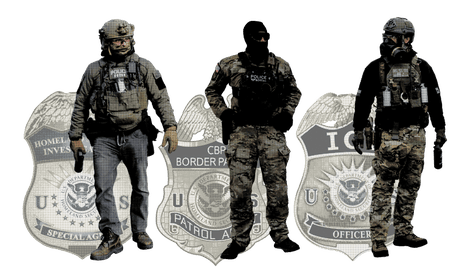
The Department of Homeland Security serves as the primary umbrella agency coordinating most federal immigration enforcement activities, though it is not the only federal entity involved in these operations. DHS oversees multiple specialized agencies that conduct different aspects of immigration enforcement, from border protection to interior operations. The coordination between these various agencies has been enhanced during this administration, with clearer lines of authority and expanded operational parameters allowing for more aggressive enforcement tactics.
Several distinct agencies operate under the DHS framework, each with specialized responsibilities in the immigration enforcement apparatus. Immigration and Customs Enforcement, commonly known as ICE, represents the agency most directly involved in interior enforcement operations targeting undocumented immigrants living within American communities. The agency has significantly expanded its operations during this administration, with increased resources, personnel, and operational flexibility allowing agents to conduct more frequent and widespread enforcement actions in residential neighborhoods, workplaces, and public spaces.
Customs and Border Protection, another major DHS agency, focuses primarily on border security and port of entry operations, though the agency's mandate has expanded to include support for interior enforcement operations when deemed necessary. CBP personnel have been deployed to assist in major metropolitan enforcement operations, supplementing ICE agents and providing additional manpower for large-scale raids and detention operations. This interagency cooperation has allowed the Trump administration to mobilize substantial federal resources for targeted enforcement efforts.
Beyond the primary DHS agencies, other federal entities contribute to the broader immigration enforcement strategy in various capacities. Federal law enforcement agencies including the FBI, DEA, and other investigative bodies occasionally coordinate with immigration enforcement efforts, particularly when criminal allegations accompany immigration violations. Additionally, some non-DHS federal agents have been authorized to assist in immigration enforcement operations, expanding the government's capacity to conduct widespread enforcement actions simultaneously across multiple jurisdictions.
The scale of federal personnel deployed across the nation for immigration enforcement has grown substantially during this administration's tenure. The mobilization has created visible federal presence in dozens of major American cities, with armed agents conducting operations in neighborhoods, apartment complexes, and business districts. This high-profile deployment strategy serves multiple purposes: it demonstrates the administration's commitment to immigration enforcement, creates deterrent effects within immigrant communities, and generates substantial media coverage that amplifies the policy's visibility.
Local government responses to these federal operations have ranged from active resistance to cautious cooperation, creating tensions between federal authorities and municipal leaders in many jurisdictions. Democratic-led cities have been particularly vocal in opposing the operations, with mayors and local officials issuing directives limiting local police cooperation with federal immigration agents. Some jurisdictions have implemented policies specifically designed to restrict federal agents' access to city facilities or information, creating friction between local and federal law enforcement priorities.

The detainee populations processed through these federal operations have included individuals with varying immigration statuses and backgrounds. While the stated focus has been on undocumented immigrants, enforcement operations have sometimes ensnared legal residents, asylum seekers, and individuals with complex immigration histories. The sheer volume of detentions has created capacity challenges in federal detention facilities, forcing authorities to utilize emergency facilities and coordinate with local jurisdictions to manage the surge in detained individuals awaiting processing and potential deportation.
Federal immigration detention infrastructure has expanded significantly to accommodate the increased number of individuals arrested through these operations. The Trump administration has accelerated construction and activation of detention facilities nationwide, converting previously unused federal buildings and contracting with private detention companies to increase capacity. This expansion of detention infrastructure represents a substantial federal investment in enforcement capabilities, signaling the administration's long-term commitment to elevated enforcement operations.
The coordination between federal immigration agencies has been formalized through enhanced information-sharing protocols and unified command structures during major operations. These coordination mechanisms allow for rapid deployment of resources to target areas, immediate communication between field agents across agencies, and centralized decision-making regarding operational scope and intensity. The technological infrastructure supporting this coordination has been upgraded to enable real-time information flow and tactical coordination across multiple jurisdictions simultaneously.

Training and authorization protocols for federal agents participating in immigration enforcement operations have been modified to expand their operational authority and flexibility. Federal agents have received expanded guidance regarding questioning, detention, and arrest procedures that broaden the circumstances under which immigration enforcement actions can be initiated. These protocol changes have accelerated the pace of operations while simultaneously raising concerns among civil rights organizations regarding potential violations of constitutional protections and individual rights.
The budget allocation for federal immigration enforcement has increased substantially, with resources flowing to agency operations, personnel expansion, facility development, and technological infrastructure. These budgetary increases have enabled the deployment surge and the expansion of enforcement operations into communities that previously experienced minimal federal immigration enforcement activity. The financial commitment reflects the administration's prioritization of immigration enforcement within broader federal spending allocations.
International cooperation has also been enhanced as part of the comprehensive immigration enforcement strategy, with federal agencies coordinating deportation operations with foreign governments and establishing expedited removal procedures. The State Department has been enlisted to support rapid deportation arrangements with countries of origin, while federal agencies have worked to streamline the legal and administrative processes governing deportations. These international cooperation efforts have accelerated the pace at which detained individuals can be removed from the United States.
The visibility and public awareness of federal immigration enforcement operations have been amplified through media coverage, social media documentation, and official government communications highlighting enforcement successes. The Trump administration has actively publicized enforcement statistics, arrest numbers, and deportation data to demonstrate the effectiveness of its immigration policy approach. This strategic communication effort has shaped public perception of immigration enforcement while simultaneously creating anxiety within immigrant communities uncertain about their safety and legal status.
Looking forward, the structure and scope of federal immigration enforcement operations remain subjects of intense political debate and legal challenge. Civil rights organizations have filed lawsuits challenging various enforcement practices, while Congress debates appropriate funding levels and statutory authority for these operations. The trajectory of federal immigration enforcement will depend on the continuation of current policies, potential legislative changes, and the outcome of ongoing legal challenges to enforcement practices and operational procedures.
Source: The Guardian


