
Federal Judge Blocks Trump's Yemeni Refugee Deportation

A Manhattan federal judge has blocked the Trump administration from deporting approximately 3,000 Yemeni refugees, extending their temporary protected status.
In a significant legal development, a federal judge has intervened to prevent the Trump administration from proceeding with the deportation of approximately 3,000 Yemeni refugees currently residing in the United States. The decision came down on Friday when Judge Dale E. Ho of Manhattan issued an emergency order that temporarily extends their temporary protected status, which was scheduled to expire on Monday. This judicial intervention represents another chapter in the ongoing legal battles surrounding immigration policy and refugee protections under the current administration.
The temporary protected status, commonly referred to as TPS, has been a mechanism through which the federal government provides legal protection to foreign nationals from countries experiencing ongoing armed conflict, environmental disasters, or other extraordinary conditions. For Yemeni nationals, this protection has been granted repeatedly over the years, recognizing the perilous humanitarian situation in their home country. Judge Ho's emergency order ensures that these individuals can remain in the United States while the broader legal challenge to preserve their protections moves through the court system.
In his ruling, Judge Ho emphasized a critical point about the individuals affected by this policy decision. He noted that the people who have been granted temporary protected status are ordinary, law-abiding residents who have become integrated into American society. The government itself had previously determined that these individuals could face serious threats to their personal safety if they were forced to return to Yemen, given the country's ongoing armed conflict and the dangerous conditions that persist there.
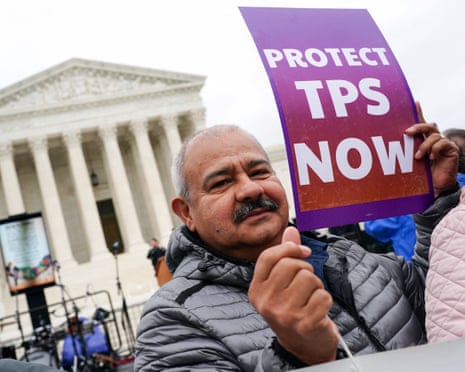
The situation reflects the broader tensions between executive immigration policies and judicial oversight of those policies. The Trump administration has signaled its intention to take a stricter approach to immigration and refugee admissions, which has prompted legal challenges from various advocacy groups and civil rights organizations. These groups argue that the administration's policies violate established legal protections and humanitarian principles that have guided American immigration law for decades.
Yemen has been experiencing a devastating humanitarian crisis for years, with an ongoing civil war that has resulted in widespread displacement, famine, disease outbreaks, and the collapse of basic services. The United Nations has repeatedly described the situation as one of the world's worst humanitarian catastrophes. Against this backdrop, the temporary protected status has served as a crucial lifeline for Yemeni nationals who cannot safely return home, allowing them to work legally and maintain their presence in the United States.
Judge Ho's emergency order is technically temporary, serving to maintain the status quo while the larger lawsuit challenging the administration's actions works its way through the courts. This means that the 3,000 Yemeni refugees will be able to keep their current legal status at least until the court case proceeds further. The lawsuit itself seeks to establish a more permanent protection for these individuals, challenging the administration's authority to terminate or refuse to extend their temporary protected status.
The legal arguments in the case center on whether the Trump administration has properly followed statutory procedures for modifying or ending temporary protected status designations. Critics of the administration's approach argue that the process has been politically motivated rather than based on objective assessments of conditions in Yemen. They contend that the government has not properly documented why the conditions in Yemen have improved sufficiently to warrant ending protections for its nationals.
From the government's perspective, officials have argued that they have the authority to make determinations about which countries warrant temporary protected status designations based on their assessment of current conditions. The administration has signaled that it wants to reduce the number of immigrants and refugees coming to the United States, and decisions about temporary protected status designations are seen as one avenue for achieving this goal.
The Yemeni refugee community in the United States has been watching these legal developments with considerable anxiety. Many have built lives here, found employment, sent their children to school, and become integrated into their local communities. The prospect of deportation threatens to uproot families and tear apart the networks of support that have enabled them to rebuild their lives after fleeing dangerous conditions in Yemen.
Judge Ho's emergency order is part of a broader pattern of judicial oversight of immigration policies during the Trump administration. Federal judges across the country have repeatedly blocked or delayed various immigration executive orders and policy changes, citing concerns about procedural requirements, constitutional protections, and the proper interpretation of immigration statutes. These judicial interventions have often slowed the implementation of the administration's immigration agenda.
The extension of temporary protected status through the emergency order provides these 3,000 Yemeni refugees with breathing room and time for the courts to fully consider the legal arguments at stake. The case will likely involve detailed examination of the humanitarian situation in Yemen, the government's decision-making process, and the legal standards that should apply when determining whether to continue or terminate temporary protected status designations for specific nationality groups.
As this case moves forward, it will likely receive attention from various advocacy organizations, legal scholars, and humanitarian groups who have a stake in the outcome. The decision could have implications not only for Yemeni refugees but potentially for other groups holding temporary protected status as well, including nationals from Syria, El Salvador, and several other countries. The ultimate resolution of this legal dispute could shape immigration policy for years to come.
For now, the 3,000 Yemeni refugees whose status was set to expire on Monday can continue their lives with the protection of temporary protected status, at least temporarily. Judge Ho's emergency order represents a victory for those seeking to preserve refugee protections, though the larger legal battle continues. As the lawsuit proceeds through the courts, the ultimate fate of temporary protected status for Yemeni nationals remains uncertain, making this an issue that will continue to unfold over the coming months and potentially longer.


