
Fertiliser Crisis: War Threatens 10 Billion Weekly Meals

Yara's CEO warns that geopolitical tensions could trigger global fertiliser shortages, jeopardising food security and crop production worldwide.
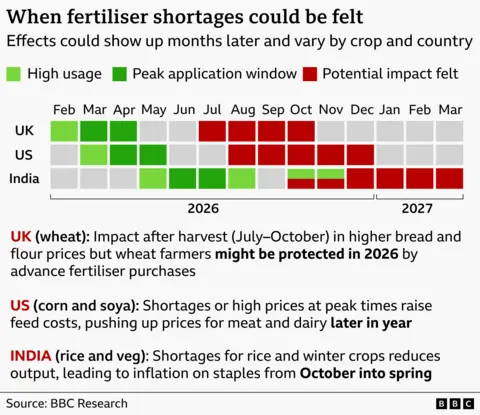
The global food supply chain faces unprecedented vulnerability as fertiliser shortages linked to Middle Eastern geopolitical tensions threaten to destabilize agricultural production on an unprecedented scale. According to the chief executive of Yara, one of the world's largest fertiliser producers, the potential disruption could endanger approximately 10 billion meals weekly, affecting billions of people across the globe who depend on stable food availability.
The warning highlights the intricate interconnection between geopolitical stability and global agricultural systems. When supply chains for critical agricultural inputs are disrupted, the cascading effects ripple through farming communities, food manufacturers, and ultimately consumer markets worldwide. The fertiliser industry plays a foundational role in modern agriculture, enabling farmers to maximize crop yields and maintain the productivity necessary to feed the world's expanding population.
The potential shortage stems from complications related to the Iran conflict and its broader implications for international trade routes and production capabilities. Iran and surrounding regions play significant roles in the global fertiliser supply chain, both as producers and as transit points for essential materials. Any disruption to these channels could severely limit the availability of nitrogen, phosphorus, and potassium-based fertilisers that farmers depend on during critical growing seasons.

Crop yields represent the fundamental metric of agricultural productivity and food security. Without adequate access to quality fertiliser products, farmers face difficult choices about how to allocate limited resources across their land. When fertiliser becomes scarce or prohibitively expensive, farmers typically reduce application rates or abandon certain growing areas altogether, directly translating into lower yields and reduced food production capacity.
The economic implications extend far beyond farming communities. Food prices are expected to experience significant upward pressure if fertiliser shortages materialize. This scenario would disproportionately impact low-income populations in developing nations who spend larger percentages of their income on food. A surge in prices could trigger broader economic instability, affecting poverty rates and food security indicators across vulnerable regions.
The fertiliser sector has already experienced volatility in recent years following the Russian invasion of Ukraine. Russia and Belarus are major fertiliser exporters, and sanctions against these nations disrupted global supply chains and contributed to elevated prices. The current warnings suggest that geopolitical tensions continue to create unpredictable conditions for agricultural input availability and pricing stability.
Climate change compounds these vulnerabilities by making crop production increasingly dependent on optimal conditions and inputs. As weather patterns become less predictable and soil health challenges mount, access to effective fertiliser becomes even more critical. Shortages during unfavorable growing seasons could result in catastrophic yield losses that take years to recover from.
The warning from Yara's leadership serves as a call for policymakers and industry stakeholders to prioritize supply chain resilience. Building redundancy into fertiliser production and distribution networks could help mitigate the impacts of future disruptions. Strategic reserves, diversified sourcing, and investments in alternative fertiliser production technologies represent potential solutions to enhance system robustness.
International cooperation becomes essential when addressing these complex challenges. Trade agreements that protect agricultural input supplies during crises, collaborative research into sustainable fertiliser alternatives, and transparent communication about supply constraints can help the global community prepare for and respond to disruptions more effectively.

The prospect of food security threats linked to fertiliser availability underscores the fragility of global agricultural systems despite technological advancement. Modern farming depends heavily on industrial inputs, creating vulnerabilities that can be exploited by geopolitical conflicts or supply chain disruptions. This reality demands urgent attention from governments, agricultural organizations, and industry leaders committed to ensuring stable food supplies.
Innovation in fertiliser production and application represents another avenue for building resilience. Precision agriculture technologies that optimize fertiliser use can reduce overall demand while maintaining or improving yields. Investments in renewable energy-based fertiliser production could also reduce dependence on geopolitically sensitive sources and supply routes.
Farmers themselves face the immediate challenge of navigating uncertain fertiliser availability and pricing. Some are experimenting with alternative growing practices, organic approaches, and crop rotation strategies that reduce fertiliser dependence. While these approaches show promise for long-term sustainability, they cannot immediately replace the production capacity gains achieved through conventional fertiliser applications.
The situation demands balanced consideration of short-term stabilization needs and long-term sustainability goals. While addressing immediate fertiliser supply challenges, the global agricultural community must also work toward reducing overall dependence on industrial fertilisers through soil health improvements, waste-based nutrient cycling, and other regenerative practices. This transition requires investment, technical support for farmers, and policy frameworks that incentivize sustainable approaches.
The stakes involved in resolving fertiliser supply challenges could hardly be higher. With global population continuing to grow and climate pressures intensifying, maintaining stable food production represents one of humanity's most critical challenges. Yara's warning about the potential impact on billions of weekly meals underscores the urgent need for decisive action to protect agricultural input supplies from geopolitical disruptions.
Source: BBC News


