
Florida Baby 'Born Twice': Groundbreaking Prenatal Surgery

Cassian Joubert underwent innovative partial delivery at 25 weeks for life-saving surgery, then returned to womb before full birth.
In a remarkable medical achievement that challenges conventional understanding of childbirth, a Florida baby has earned the distinction of being "born twice" after undergoing an extraordinarily innovative surgical procedure that involved partial delivery followed by reinsertion into his mother's womb. The case of Cassian Joubert represents a groundbreaking approach to prenatal surgery that medical professionals believe may have saved the infant's life and could potentially revolutionize how certain fetal conditions are treated in the future.
Cassian's remarkable journey was brought to public attention through a touching video shared by his parents, Keishera and Greg Joubert, on May 1st through the Orlando Health Women's Institute. This prestigious medical institution, which employed the surgeon who performed the delicate procedure, helped document and share this extraordinary case with the broader medical and general public. The decision to share Cassian's story publicly highlights the significance of the medical breakthrough and the profound impact it had on his family and the medical community.
The innovative procedure, which took place when Cassian was at 25 weeks of gestation, required meticulous planning and coordination among a multidisciplinary team of medical specialists. At this critical stage of fetal development, the surgical team determined that a partial delivery was necessary to access and treat a condition that posed serious risks to the developing infant's health and survival. The precision and expertise required for such an operation cannot be overstated, as the medical team had to balance the benefits of surgical intervention against the inherent risks associated with removing a fetus from the protective environment of the womb at such an early stage of development.
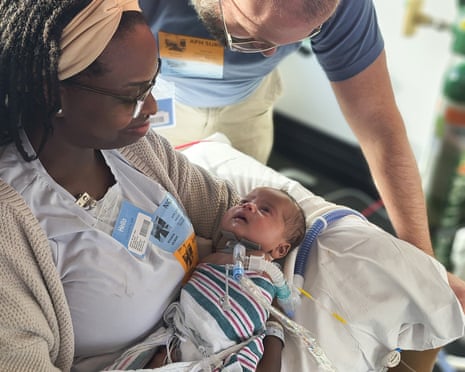
The surgical intervention itself involved carefully extracting Cassian from his mother's womb while maintaining the integrity of the amniotic sac and placental connections as much as possible. Once the partial delivery was accomplished and the surgical team had access to the area requiring treatment, they performed the necessary corrective procedure on the developing fetus. The technical complexity of this operation cannot be understated, as surgeons had to work with extreme precision while managing the unique challenges posed by operating on a fetus at such an early and delicate stage of development.
After successfully completing the medical intervention, the surgical team then performed the remarkable feat of returning Cassian to his mother's womb, essentially reversing the initial delivery process. This reinsertion required careful attention to ensure that all vital connections were properly reestablished and that the fetus could continue developing safely within the uterine environment. The ability to successfully return the infant to the womb represents a significant achievement in fetal medicine and demonstrates the advanced capabilities of modern surgical techniques and the expertise of the medical professionals involved.
Following the successful completion of this extraordinary surgical procedure, Cassian was allowed to continue his gestation naturally within his mother's womb. The decision to return him to the intrauterine environment was based on the understanding that the safest and most natural way for the infant to develop would be to remain in his mother's protective environment for the remaining weeks of pregnancy. This approach allowed Cassian to benefit from the continuous maternal support and nourishment provided by the placenta while his developing body continued to mature and strengthen.
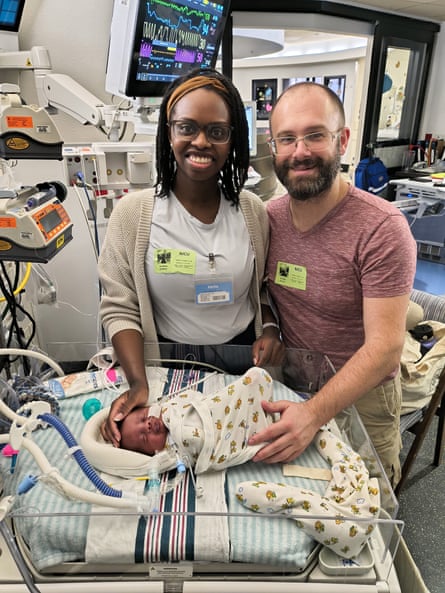
When Cassian was born at term through a conventional delivery process, he became the infant who had experienced birth twice – once during the partial delivery for surgery at 25 weeks, and again when he was fully delivered at full term. This unique distinction has captured the attention of medical professionals worldwide, as the case demonstrates the expanding possibilities of prenatal surgical intervention and the innovative approaches being developed to treat fetal conditions that were previously considered untreatable or would have resulted in poor outcomes.
The Orlando Health Women's Institute, which was instrumental in Cassian's care and recovery, has become a center of excellence for innovative obstetric surgery and fetal medicine. The institute's commitment to advancing the field through groundbreaking procedures and techniques has positioned it at the forefront of maternal and fetal health care. By sharing Cassian's story, the institute aims to increase awareness about the possibilities available to expectant parents facing complex fetal diagnoses and to inspire continued research and development in this critical area of medicine.
The specific condition that required surgical intervention in Cassian's case, along with the detailed medical aspects of the procedure, underscore the complexity of modern fetal medicine. Medical teams at Orlando Health and similar specialized centers across the country are continually developing new techniques and refining existing approaches to treat various fetal conditions that can compromise a pregnancy or a newborn's health. The success of Cassian's case will likely inspire continued research into similar partial delivery and reinsertion techniques for other fetal conditions.
The story of Cassian Joubert also highlights the importance of prenatal care and the critical role that advanced imaging and diagnostic technologies play in identifying fetal conditions early enough to allow for intervention. Modern ultrasound and other diagnostic tools enable physicians to detect potential problems with fetal development, allowing them time to plan appropriate interventions and coordinate care among multiple specialists. This proactive approach to prenatal medicine has transformed outcomes for many conditions that would have been diagnosed only after birth in previous generations.
For Keishera and Greg Joubert, their son's extraordinary medical journey represents both the challenges they faced as expectant parents and the hope provided by advanced medical science. Sharing their story publicly demonstrates their appreciation for the medical team that cared for them and their desire to help other families who may face similar circumstances. The Jouberts' willingness to have Cassian's case documented and shared through medical institutions serves as an inspiration to other families navigating complex prenatal diagnoses.
Looking forward, Cassian's case will likely become a landmark example in medical literature and education, influencing how future physicians approach similar fetal conditions. Medical schools and residency programs will undoubtedly study this case as an example of innovative thinking and surgical excellence in the field of fetal medicine. The precedent set by this successful procedure may encourage other medical centers to develop similar capabilities and explore innovative approaches to treating conditions that were previously considered beyond the reach of prenatal intervention.
The case of Cassian Joubert ultimately represents a triumph of modern medicine and the dedication of highly skilled medical professionals who are committed to advancing the field of maternal and fetal health. His remarkable story demonstrates that with innovation, expertise, and careful planning, medical teams can accomplish extraordinary feats that offer hope to families facing challenging circumstances. As the field of fetal surgery continues to evolve, cases like Cassian's will serve as inspiration and guidance for future advancements that could help countless other infants and their families.
Source: The Guardian

