
Florida Grads Boo AI 'Industrial Revolution' Speaker

UCF's 2026 graduating class vocally rejected a real estate executive's commencement speech comparing artificial intelligence to the Industrial Revolution.
A real estate development executive received an unexpectedly cold reception during a recent University of Central Florida commencement ceremony when she delivered remarks comparing artificial intelligence to the transformative power of the Industrial Revolution. The 2026 graduating class made their displeasure known through audible booing, creating an awkward moment that quickly spread across social media and sparked broader conversations about generational attitudes toward AI technology and economic change.
Unlike typical graduation speeches where audience members politely listen to established wisdom and motivational messages, this particular commencement event turned into a two-way dialogue—albeit an uncomfortable one. The students in attendance chose to vocalize their disagreement with the speaker's characterization of artificial intelligence as the next Industrial Revolution, demonstrating a level of skepticism and concern about the technology's implications that many observers found noteworthy.
The executive's remarks centered on the notion that society is currently experiencing what she described as "a time of profound change," a sentiment that might have resonated differently with audience members in previous years. However, the 2026 graduating class appeared less interested in celebrating technological advancement and more concerned about the potential consequences of rapid AI adoption on job markets, economic inequality, and their own future prospects in an increasingly automated economy.
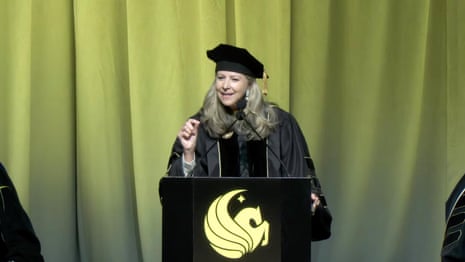
This incident reflects a significant generational divide in perspectives on artificial intelligence integration within society. While tech industry leaders and some business executives have embraced AI development as an inevitable and largely positive force, younger generations—particularly those entering the workforce—have expressed growing concerns about job displacement, ethical implications, and the concentration of AI power among a small number of technology companies. The booing at UCF's graduation serves as a visible manifestation of these underlying tensions and generational anxieties.
The comparison to the Industrial Revolution, while perhaps intended as a framework for understanding transformative change, may have struck many students as tone-deaf given the current economic climate. The Industrial Revolution, despite its long-term benefits, initially displaced millions of workers, created harsh working conditions, and widened wealth gaps—parallels that concerned graduating students likely recognized and rejected. This historical context likely influenced student reactions to the speaker's optimistic framing of AI as transformative technology.
Social media responses to the graduation incident revealed strong support for the students' actions from many users who share concerns about artificial intelligence's impact on employment and society. Comments praised the graduating class for standing up for their generation's interests and refusing to passively accept narratives that minimize legitimate concerns about technological disruption. The incident became emblematic of broader cultural debates happening on college campuses and among young adults nationwide regarding the future of work and the role of AI in shaping it.
University officials have not released official statements regarding how they plan to address the disruption or whether they anticipate changes to future speaker selection processes. The incident raises questions about commencement speaker vetting, ensuring that speakers resonate with graduating class concerns, and creating spaces where genuine dialogue about future challenges can occur. Educational institutions may need to reconsider how they approach speaker selection to better reflect the values and concerns of their students.
The broader conversation prompted by this event extends beyond a single graduation ceremony. It touches on fundamental questions about how society should approach AI implementation, whether the benefits of automation will be equitably distributed, and whether younger generations have legitimate reasons to view AI-driven change with skepticism rather than enthusiasm. These are not rhetorical questions for students about to enter a job market where artificial intelligence is increasingly influencing hiring practices, salary structures, and career trajectories.
Industry observers noted that the incident represents a significant departure from traditional graduation etiquette, where students typically remain polite and receptive regardless of speaker content. The willingness of UCF's 2026 class to publicly register their disagreement suggests either growing frustration with optimistic narratives about AI that ignore potential downsides, or a generational shift toward more active engagement and pushback against messages they perceive as not serving their interests.
The real estate executive's presence as a graduation speaker also raised questions about speaker diversity at major university ceremonies. Real estate and development industries have significant stakes in AI implementation for construction, property management, and urban planning, which may explain her perspective on AI as purely transformative and positive. However, this industry-specific viewpoint may not align with concerns expressed by graduates in fields like education, journalism, creative services, or other sectors potentially disrupted by AI automation.
Moving forward, this incident may influence how universities approach commencement planning and speaker selection. Administrators might consider inviting speakers with diverse perspectives on AI and technological change, or creating formats that allow for student input and dialogue rather than one-way speeches. The UCF graduation serves as a cautionary tale about assuming universal agreement on controversial topics and the importance of understanding audience perspectives before delivering major speeches.
The booing incident ultimately highlights the complex relationship between young people and artificial intelligence. While some view AI as an exciting frontier offering tremendous opportunity, many in the 2026 graduating class appear to view it with warranted caution, recognizing both the potential benefits and the significant risks that inadequately managed AI transformation could pose to their economic security and societal wellbeing.


