
Forgotten Battery Tech Revived: From Thomas Edison to Renewable Energy Storage

Researchers have resurrected Thomas Edison's long-forgotten nickel-iron battery design, which could be ideal for renewable energy storage. Discover the science behind this breakthrough.
Reviving Edison's Battery Design
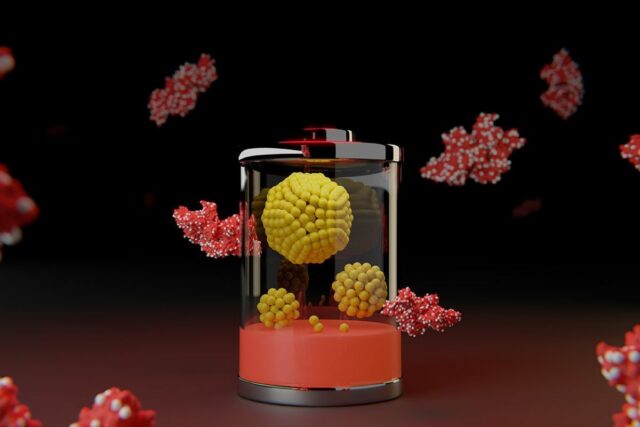
At the onset of the 20th century, electric cars powered by lead-acid batteries outnumbered gas-powered cars. However, the internal combustion engine ultimately won out, in part because those batteries had a range of just 30 miles. Thomas Edison believed a nickel-iron battery could extend that range to as much as 100 miles, while also having a long life and recharging times of seven hours. Now, an international team of scientists has revived Edison's concept of a nickel-iron battery and created their own version.

The new nickel-iron battery developed by the researchers is based on the same fundamental chemistry as Edison's original design, but with modern materials and manufacturing techniques. Unlike lithium-ion batteries, which rely on rare earth metals, this battery uses abundant and inexpensive materials like iron and nickel. The researchers believe this design could be ideal for storing energy from renewable sources like solar and wind power.
Measuring Flatulence with "Smart Underwear"

In another surprising scientific development, researchers have created a snap-on device that can transform ordinary underwear into "smart underwear" capable of measuring flatulence. The device, called FartTech, uses gas sensors to detect the presence and frequency of farts. This data can then be transmitted to a connected smartphone app, allowing users to track their flatulence patterns.
The researchers behind FartTech say the technology could have practical applications in fields like gastroenterology, where doctors may want to monitor a patient's flatulence for diagnostic purposes. However, the device has also sparked some humor and skepticism, with many questioning the practical value of quantifying one's own gas emissions.
Neurons Playing Doom
In a truly remarkable achievement, researchers have successfully trained a dish of living neurons to play the classic video game Doom. By connecting the neurons to a computer, the researchers were able to translate the neural activity into game inputs, allowing the "brain in a dish" to navigate the game's virtual environment.
This experiment is not just a clever party trick - it has significant implications for our understanding of how biological neural networks process information and make decisions. By observing how these living neurons respond to the challenges of the game, researchers hope to gain insights that could be applied to the development of advanced artificial intelligence and neural computing systems.
Source: Ars Technica


