
Former FBI Director Comey Surrenders Over Trump Threat Charges

Ex-FBI chief James Comey turns himself in after prosecutors allege a 2025 Instagram seashell photo constituted a call for violence against former President Trump.
In a significant legal development, former FBI Director James Comey has surrendered to authorities following serious allegations that a social media post represented a threat against former President Donald Trump. The surrender marks an unexpected turn in what prosecutors claim was a deliberate attempt to incite violence through what appeared to be an innocuous photograph shared on the popular social platform Instagram.
According to federal prosecutors, a 2025 seashell photo that Comey posted on his Instagram account contained hidden or coded messaging that was intended to serve as a call for violence targeting the former president. The charges represent one of the most unusual prosecutorial interpretations of social media content in recent memory, raising questions about how imagery shared online can be construed as threatening communication.
The investigation into Comey's Instagram activity appears to have been prompted by concerns from law enforcement regarding threats against Trump made through various channels. Federal authorities have intensified their scrutiny of social media platforms and public figures' online activities in relation to any potential security risks to prominent political figures, particularly those who have faced elevated threat levels.
Comey, who served as the FBI director under both the Obama and Trump administrations before his controversial firing in 2017, has maintained a relatively visible public presence since leaving government service. His departure from the FBI was marked by significant controversy, with Trump citing alleged mishandling of investigations as the reason for his termination, while critics argued the firing was politically motivated.
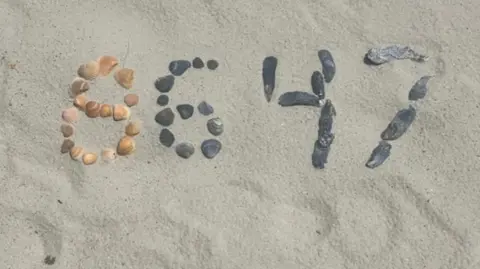
The specifics of how prosecutors determined that the seashell image constituted a threat remain unclear, as images of natural objects typically lack the explicit language or context normally associated with violent threats. This has led legal experts and observers to question the evidentiary basis for the charges and whether the interpretation represents an overreach by federal prosecutors in their assessment of social media content.
Legal analysts have begun examining precedents for cases involving social media threats and how courts have traditionally distinguished between genuine threats and protected speech. The Comey case appears to present novel questions about how indirect or symbolic imagery can be prosecuted under federal statutes designed to address explicit threats of violence.
The former FBI director's decision to surrender rather than resist the charges may reflect strategic legal counsel aimed at demonstrating cooperation and good faith with authorities. Voluntary surrender can sometimes influence judicial decisions regarding bail conditions and may be viewed favorably during the legal process that lies ahead.
This development has sparked considerable debate within political circles and among legal observers regarding the appropriate boundaries of prosecutorial discretion. Some commentators have expressed concern that aggressive interpretation of social media content could set problematic precedents for how future cases involving ambiguous or symbolic communication are handled.
The relationship between Comey and Trump has been contentious since Comey's tenure as FBI director came to an end. The former director subsequently became a vocal critic of Trump's presidency and policies, maintaining a presence on social media platforms where he occasionally offered commentary on political matters and his own experiences in government.
Security concerns involving prominent political figures have escalated in recent years, prompting federal agencies to monitor various forms of communication more closely. The Secret Service and other law enforcement agencies maintain extensive protocols for identifying and assessing potential threats, though the methodology for determining what constitutes a genuine threat versus protected speech remains complex and sometimes contentious.
As the legal case against Comey moves forward, it will likely attract significant media attention and potentially establish important precedents regarding how social media content is evaluated in federal criminal proceedings. The outcome could have broader implications for how public figures and ordinary citizens understand the boundaries of what can safely be posted on social media platforms.
The charges against Comey represent part of a broader effort by federal authorities to aggressively pursue any potential threats to former presidents and their safety. The U.S. Secret Service and FBI have been granted expanded resources and mandates to investigate security threats in recent years, reflecting the elevated concern for the protection of current and former high-ranking government officials.
Comey's legal team will likely argue that the seashell photograph, standing alone or even with contextual analysis, does not constitute a genuine threat of violence and that any interpretation suggesting otherwise represents either prosecutorial overreach or a misunderstanding of the image's meaning. The defense will probably focus on establishing that the former director had no intent to threaten anyone and that the image is incapable of being reasonably construed as a call for violence.
The case has also drawn attention to broader questions about how law enforcement agencies interpret and respond to potential threats in an increasingly digital world. The intersection of social media, political speech, and national security concerns creates complex legal and practical challenges for prosecutors and courts alike.
As Comey navigates the federal legal system, the case will continue to generate discussion about the appropriate balance between protecting public safety and preserving First Amendment protections for political speech and expression. The outcome of this high-profile case may influence how similar matters are handled in the future and could shape the boundaries of permissible online communication for public figures across the political spectrum.
Source: BBC News


