
France Urges Citizens to Evacuate Mali Amid Escalating Rebel Attacks

France advises nationals to leave Mali following intensified rebel violence. UK issues parallel warnings. Security situation deteriorates across West African nation.
France has issued an urgent appeal to its citizens residing in Mali to depart the country immediately, citing escalating rebel attacks and deteriorating security conditions across the West African nation. The French government's advisory marks a significant escalation in travel warnings as regional instability continues to threaten civilian safety and foreign nationals throughout the country. Diplomatic officials emphasized the gravity of the situation, noting that the security environment has become increasingly unpredictable and dangerous for foreign residents.
The decision to recommend evacuation comes in response to a series of coordinated militant attacks that have targeted both military installations and civilian areas throughout Mali. French authorities have expressed deep concern about the rising threat posed by various insurgent groups operating across the Sahel region. Intelligence assessments suggest that extremist organizations have strengthened their operational capabilities, expanding their influence and striking capacity throughout the country's interior regions.
France's advisory extends to all nationals who have established residency in Mali, regardless of their professional affiliations or personal circumstances. The French government has activated diplomatic channels to facilitate orderly departures and is coordinating with international partners to ensure the safe extraction of its citizens. Embassy officials have established hotlines and online portals to assist French nationals in organizing their evacuation from the volatile nation.
The security crisis in Mali has been building steadily over the past several years, with multiple armed groups competing for territorial control and political influence. These organizations range from internationally designated terrorist entities to regional militias with varying ideological motivations. The fragmentation of armed opposition has created a complex security landscape that defies simple military solutions and continues to evolve unpredictably.
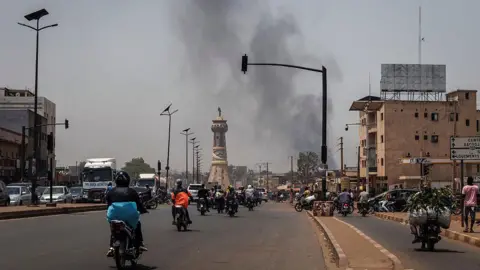
In a parallel development, the United Kingdom has issued comparable guidance to British nationals in Mali, though with a slightly different formulation that emphasizes individual risk assessment. The UK Foreign Office advised citizens who choose to remain in the country that they do so entirely at their own risk, placing responsibility on individuals to evaluate their personal circumstances and security situation. British officials stressed that embassy staff may have limited capacity to provide assistance to those who encounter difficulties while remaining in Mali.
This dual advisory from two major Western nations underscores the international consensus regarding the severity of Mali's security environment. Other countries, including Germany and Canada, have previously issued similar travel warnings and evacuation recommendations. The coordinated messaging from multiple governments suggests that security assessments indicate a genuine and substantial threat to foreign nationals in the region.
The deteriorating situation in Mali must be understood within the broader context of Sahel region instability, which has characterized West Africa for over a decade. The Sahel, the semi-arid zone stretching across Africa south of the Sahara Desert, has become a nexus of militant activity, criminal smuggling networks, and state fragility. Mali, positioned centrally within this troubled region, has experienced particular vulnerability to these interconnected destabilizing forces.
French military presence in Mali has been a defining feature of regional security policy since 2013, when France intervened to prevent militant groups from consolidating control over the entire country. Operation Barkhane, France's multinational counterterrorism campaign, deployed thousands of troops across the Sahel to combat extremist organizations. However, the persistence of attacks despite this significant military commitment has led many to question the effectiveness of current strategies and the sustainability of French military involvement.

The economic ramifications of this security crisis extend far beyond Mali's borders. Foreign investment has dwindled dramatically as international companies reassess their risk exposure in the country. Mining operations, which represent a crucial component of Mali's economy, face operational disruptions and security challenges that affect global commodity markets. The humanitarian impact has been equally severe, with internally displaced populations reaching unprecedented levels and creating refugee crises in neighboring nations.
Local governance structures have been significantly undermined by the security situation, hampering Mali's government capacity to provide essential services to its population. Multiple military coups in recent years have further destabilized institutions and complicated international diplomatic efforts. The combination of security threats, political instability, and institutional weakness has created a perfect storm of challenges that appear increasingly difficult to resolve through conventional approaches.
Humanitarian organizations operating in Mali have also adjusted their operations in response to the heightened threat environment. Many have temporarily suspended or relocated certain programs, reducing the availability of critical services to vulnerable populations. Medical facilities, educational institutions, and development projects have all faced disruption as security considerations take precedence over operational objectives.
The rebel groups in Mali operate with varying degrees of organizational sophistication and territorial control. Some organizations maintain formal command structures and political platforms, while others function as loosely affiliated criminal enterprises. The motivations driving these groups include ideological jihadi objectives, ethnic grievances, economic interests in resource-rich areas, and personal ambitions for power and prestige. Understanding this complexity is essential for comprehending why military solutions alone have proven insufficient.
Regional mediators, including the Economic Community of West African States (ECOWAS), have undertaken diplomatic initiatives to address Mali's political and security crises. These efforts have achieved limited success, hampered by the multiplicity of armed actors and the difficulty of creating inclusive political settlements that address grievances across diverse constituencies. International organizations have struggled to facilitate meaningful dialogue amid the ongoing violence and mutual distrust among conflicting parties.
The timing of France's evacuation advisory coincides with reports of increasing operational tempo by insurgent organizations and expanding geographic reach of their attacks. Recent incidents have targeted supply convoys, military outposts, and civilian infrastructure with growing frequency and coordination. Intelligence assessments suggest that militant groups are consolidating their capabilities and preparing for potential major operations during vulnerable periods when international attention wanes.
For French and British nationals currently in Mali, the evacuation advisories present complex personal and professional decisions. Those employed by international organizations, diplomatic missions, or multinational corporations face pressure to maintain operational continuity while prioritizing personal safety. Families must weigh the disruption of relocation against the genuine security risks presented by remaining in the deteriorating environment.
The broader implications of Western evacuation advisories extend to perceptions of Mali's viability as a functioning state and potential destination for international engagement. Countries considering increased diplomatic or developmental involvement must grapple with the reality that even established international presences cannot guarantee security. This dynamic has created hesitation among nations that might otherwise commit resources to stabilization efforts.
Looking forward, the situation in Mali appears unlikely to stabilize rapidly without significant changes in regional security architecture or international approaches to counterterrorism and state-building. Governments and international institutions must reconcile the stated commitment to supporting Mali's development and security with the practical realities of operating in an increasingly hostile environment. The evacuation advisories represent an acknowledgment that current strategies have not achieved their intended objectives and that protecting foreign nationals now takes priority over longer-term engagement goals.
Source: BBC News


