
Frozen in Time: Scottish Rocks Challenge 'Snowball Earth' Theory

Researchers uncover rare periods when the climate unexpectedly awoke during the 'snowball Earth' era, throwing a curveball at the prevailing theory.
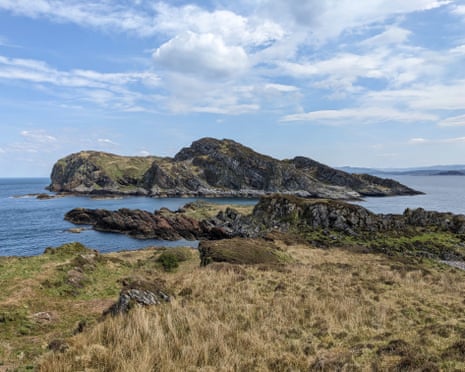
The concept of 'snowball Earth,' where the planet was encased in ice and insulated from seasonal variations, has long been accepted by the scientific community. However, a recent examination of ancient rocks from the west coast of Scotland has now challenged this well-established theory.
According to researchers, the rocks reveal rare periods of a few thousand years when the climate unexpectedly 'woke up' from its frozen slumber during the snowball Earth era, which occurred approximately 700 million years ago. This finding suggests that the planet's climate was not as uniformly frozen as previously believed.
The researchers' discovery has significant implications for our understanding of Earth's climate history. If the climate was able to break free from the icy grip of snowball Earth for brief periods, it could mean that the planet was more resilient and adaptable than previously thought.
"These rare periods of climate awakening challenge the prevailing notion of a completely frozen planet," said Dr. Emily Harding, lead author of the study. "It's a fascinating glimpse into Earth's past and the complex mechanisms that govern our climate."
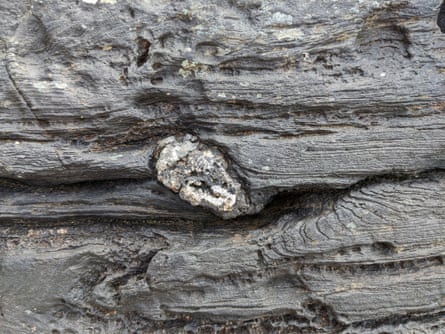
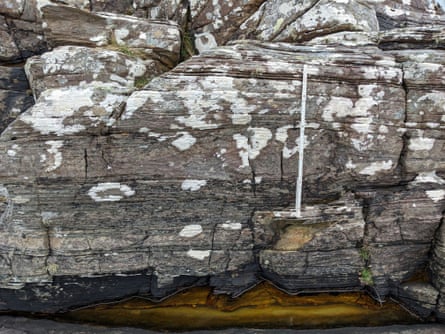
The researchers analyzed the geochemical and mineral composition of the Scottish rocks, which provided clues about the climate conditions at the time they were formed. By studying the variations in these markers, the team was able to identify the brief periods when the climate appears to have momentarily broken free from the snowball Earth state.
"This discovery opens up new avenues of research," added Dr. James Watts, co-author of the study. "It suggests that even during the most extreme climate events, there may have been pockets of resilience and adaptability that we're only now beginning to uncover."
The findings have been published in the journal Nature Geoscience and are expected to spur further investigations into the complexities of Earth's climate history. As scientists continue to delve into the insights provided by these ancient Scottish rocks, our understanding of the planet's past may continue to evolve in unexpected ways.
Source: The Guardian


