
Fur Farming Ban: Essential Protection Against Future Pandemics

Experts warn fur farming poses serious pandemic risks. Banning the industry could be one of the most consequential public health measures in decades.
The practice of fur farming represents one of the most pressing yet overlooked threats to global public health in the modern era. While the industry has garnered significant criticism from animal welfare advocates for decades, emerging evidence suggests that banning this cruel practice could serve as one of the most consequential public health measures in generations. The convergence of animal suffering and pandemic risk makes urgent action on this issue a matter of both moral and epidemiological importance.
Each year, millions of captive animals endure unimaginable suffering within fur farms worldwide. These creatures are systematically gassed or electrocuted, their deaths serving as the final act in a process that transforms living beings into luxury fur coats selling for thousands of dollars. Despite experiencing considerable decline in recent years due to shifting consumer preferences and regulatory pressures, the fur industry continues to operate in numerous countries, maintaining facilities that prioritize profit margins over both animal welfare and human safety considerations.
The structural and operational realities of fur farming create ideal conditions for catastrophic disease emergence and transmission. These facilities confine thousands of animals in extremely close proximity, maximizing contact rates and facilitating rapid pathogen spread through densely packed populations. The crowded conditions found on typical fur farms dwarf those of conventional livestock operations, creating what epidemiologists recognize as a perfect storm scenario for viral evolution and adaptation.
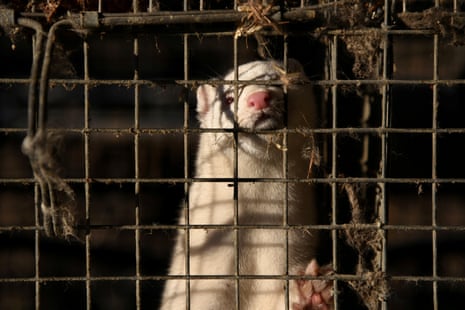
Animals within fur farming operations exist in a state of perpetual confinement that defies basic biological and psychological needs. Housed in tiny wire cages, individual animals can barely move around, their bodies confined to spaces barely larger than their own frames. Living conditions are uniformly squalid, with animals forced to exist directly atop accumulating waste from the thousands of other creatures packed into the same facility, creating a sanitary nightmare that would be unacceptable under any circumstances.
The combination of extreme crowding, deplorable sanitary conditions, and endemic animal stress creates an environment uniquely suited to disease transmission and viral mutation. When animals live in such close contact with their own waste and with thousands of other stressed creatures, pathogens spread with devastating efficiency. The stress hormones flooding these animals' systems simultaneously compromise their immune function, reducing their ability to mount effective defenses against infection. This biological reality transforms fur farms into potential incubators for the next catastrophic pandemic.
Recent global health crises have demonstrated conclusively that zoonotic diseases originating in animal agriculture pose existential risks to human civilization. The COVID-19 pandemic, which claimed millions of lives and disrupted global society, likely originated in circumstances involving wildlife and industrial animal operations. Experts across multiple disciplines now agree that pandemic prevention requires fundamentally restructuring our relationship with animals in agricultural settings, particularly those involving species known to harbor coronaviruses and other dangerous pathogens.
Fur farms present a uniquely dangerous convergence of risk factors that distinguish them from other animal agricultural operations. Mink and other animals raised for fur are known coronavirus reservoirs, species capable of hosting and transmitting the exact type of virus that spawned the current global pandemic. The intensive confinement conditions found on fur farms essentially guarantee rapid transmission throughout entire populations, while the stress and poor sanitation compromise the animals' immune responses, creating conditions favorable for viral mutation and adaptation to new hosts.
The epidemiological case for banning fur farming extends beyond theoretical concerns about pandemic risk. Documented cases of disease outbreaks within fur farming operations provide concrete evidence of the danger these facilities represent. When respiratory viruses spread through densely packed animal populations housed in poorly ventilated facilities, the consequences can be severe both for the animals themselves and potentially for human handlers and surrounding communities. Each outbreak demonstrates the inadequacy of regulatory frameworks designed to manage rather than eliminate this risk.
Beyond the immediate pandemic threat, animal welfare considerations alone provide overwhelming justification for eliminating fur farming from modern society. The deliberate infliction of suffering on sentient creatures for luxury goods contradicts fundamental ethical principles that most contemporary societies ostensibly endorse. The combination of ethical imperative and public health necessity creates an unusually powerful argument for regulatory action, one that appeals to both humanitarian concerns and enlightened self-interest in pandemic prevention.
Several countries and regions have already taken the step of banning fur farming, providing models and evidence that such prohibitions are both feasible and beneficial. These jurisdictions have demonstrated that economies can transition away from fur production without catastrophic consequences, while simultaneously improving animal welfare outcomes and reducing pandemic risks. The success of these bans undermines industry arguments that such prohibitions are impractical or economically devastating, revealing those claims as the self-serving rhetoric of an industry facing well-justified opposition.
The transition away from fur farming would require support for workers and communities currently dependent on the industry, creating an opportunity to build a just transition that acknowledges the legitimate economic interests of those affected. However, the magnitude of pandemic risk and animal suffering involved in fur farming justifies whatever transition costs must be incurred. Governments have a responsibility to provide resources enabling workers to transition to alternative employment while simultaneously protecting public health and animal welfare through comprehensive policy changes.
Implementing a comprehensive fur farming ban represents a particularly efficient approach to pandemic prevention compared to many other public health interventions. Unlike medications or vaccines that must be developed, tested, and distributed to billions of people, eliminating fur farming simply requires stopping a specific industry from operating. The relative simplicity and cost-effectiveness of this intervention, combined with its multiple co-benefits for animal welfare and other public health considerations, makes it an extraordinarily wise allocation of policy attention and resources.
The path forward requires coordinated international action to eliminate fur farming as a widespread commercial practice. While individual country bans represent important progress, the global nature of pandemic risk and animal trade demands comprehensive international cooperation and unified standards. Trade agreements should explicitly restrict fur products, making it economically unviable for any nation to maintain large-scale fur farming operations regardless of local regulations.
The evidence supporting a comprehensive ban on fur farming continues to accumulate as scientific understanding of zoonotic disease transmission improves and public awareness of animal welfare concerns increases. Future generations will likely view the persistence of fur farming with the same incomprehension and horror that we now direct toward past practices like slavery or child labor. The opportunity to eliminate this industry before it generates the next catastrophic pandemic represents one of the clearest choices our society currently faces regarding public health policy and animal ethics.
Source: The Guardian

