
Fury Over Ebola Death: Angry Mob Torches Hospital Tents in DR Congo

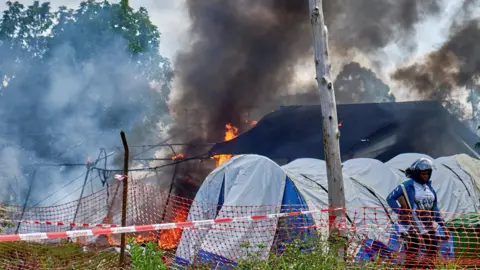
Grieving relatives and community members set Ebola hospital tents ablaze in Democratic Republic of Congo after being prevented from retrieving a suspected victim's body for traditional burial.
In a dramatic escalation of tensions between local communities and health authorities, an angry crowd in the Democratic Republic of Congo set fire to hospital tents designated for Ebola patients after being denied access to the body of a suspected Ebola victim. The incident reflects the deep cultural conflicts and mistrust that have persistently hindered disease containment efforts in the war-torn region.
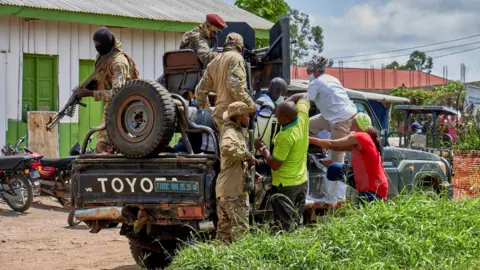
The confrontation erupted when grieving relatives and friends of the deceased individual arrived at the medical facility to claim the body for burial according to traditional customs. Hospital staff and health officials, following strict Ebola containment protocols, refused to release the remains, citing the biological hazard risks associated with handling bodies of those suspected or confirmed to have contracted the highly contagious virus. This refusal ignited an immediate and volatile response from the gathered crowd.
The Democratic Republic of Congo has been grappling with recurring Ebola outbreaks, making disease control measures an increasingly contentious issue. Local populations often view government health interventions with suspicion, viewing them through the lens of historical medical exploitation and broken promises. The resistance to standard public health procedures underscores the complex social and historical factors that complicate disease management in the region.
Health officials and epidemiologists have long emphasized that proper handling of deceased Ebola patients is critical to preventing transmission of the virus. The virus can remain viable in bodily fluids even after death, making the bodies of deceased patients a significant contamination risk to those who come into direct contact with them during traditional burial ceremonies. The strict protocols established by the World Health Organization and international health bodies are designed to protect both the grieving families and the broader community from potential infection.
The destruction of the hospital tents represents a significant setback for local health response operations in the affected area. These medical facilities are essential infrastructure for isolating, treating, and monitoring suspected and confirmed cases of the disease. The loss of this equipment could compromise the ability of health workers to respond effectively to future cases and could potentially accelerate transmission rates within the community.
Cultural and religious practices surrounding death and burial represent a fundamental aspect of community identity in the Democratic Republic of Congo. Many families view the denial of traditional burial rites as deeply disrespectful to their deceased loved ones and contrary to their cultural values. This collision between modern medical science and longstanding cultural traditions has created persistent friction throughout Ebola response efforts in Central Africa.
The incident in the Democratic Republic of Congo is not an isolated occurrence but rather part of a troubling pattern of resistance to health measures. Previous outbreaks in the region have documented numerous instances of communities rejecting official medical guidance, hiding suspected cases, and conducting unauthorized burials that have led to secondary transmission chains. These behaviors, while understandable from a cultural perspective, have repeatedly extended the duration of outbreaks and increased the total number of infections and deaths.
Trust-building between health authorities and local communities has become a focal point of international health organizations working in the region. Many experts argue that simply enforcing containment protocols without engaging in meaningful dialogue and cultural sensitivity will continue to generate resistance and undermine disease control efforts. Effective communication, community participation in decision-making, and respect for cultural practices—where medically feasible—are increasingly recognized as essential components of successful outbreak response.
The burning of the hospital tents also raises concerns about the safety of health workers deployed to the affected areas. Many medical personnel in the Democratic Republic of Congo operate under difficult and dangerous conditions, facing not only the biological threat of Ebola infection but also the physical danger posed by hostile populations. Ensuring adequate security and protection for these essential workers remains an ongoing challenge for health authorities.
International health organizations have responded to the incident by calling for increased investment in community engagement and health education initiatives. These programs aim to explain the scientific rationale behind containment measures while demonstrating respect for local customs and beliefs. Some health systems have experimented with compromise solutions, such as allowing family members to participate in body preparation under strict protective protocols, to balance public health needs with cultural practices.
The Ebola crisis in Congo continues to present complex challenges that extend far beyond the purely medical and epidemiological dimensions. Addressing the root causes of community resistance requires sustained investment in education, employment, infrastructure development, and political stability in the affected regions. Without simultaneous efforts to address these underlying issues, health interventions will likely continue to face resistance and prove less effective than they could be.
Moving forward, health authorities and international partners acknowledge that successful outbreak control depends critically on establishing and maintaining community trust. The tragic incident involving the burning of hospital tents serves as a stark reminder of the urgent need for more culturally sensitive and community-centered approaches to disease control. Only through genuine partnership between health officials and local populations can the region hope to effectively manage future disease outbreaks and protect vulnerable populations from preventable transmission.

Source: BBC News


