
Gateway Founder's Maxwell Relationship Exposed in House Testimony

Billionaire Ted Waitt reveals romantic relationship with Ghislaine Maxwell and $7.2M breakup payout in congressional testimony transcript.
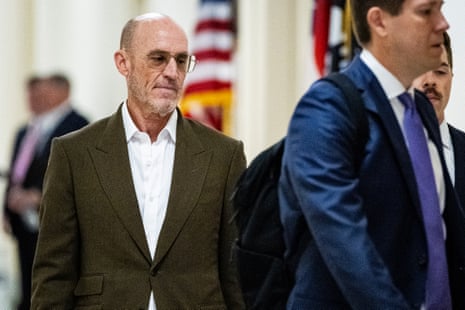
Ted Waitt, the billionaire cofounder of the Gateway computer company, disclosed during closed-door congressional interviews that he maintained a romantic relationship with Ghislaine Maxwell spanning from 2004 to 2010. In his testimony before the House oversight and reform committee, Waitt expressed deep regret about the relationship, stating that he would have made drastically different decisions had he possessed knowledge about Maxwell's future crimes and associations with Jeffrey Epstein.
According to the official transcript of his testimony released by the House oversight and reform committee, Waitt conveyed his profound remorse in his opening statement delivered on April 30. "If I knew then what I know now about Ms Maxwell, I never would've befriended her or allowed her to be around my four children," Waitt stated during his congressional deposition. He further elaborated: "I never would've spent six years in a romantic relationship with her." These candid remarks represented a significant moment in the ongoing investigation into Maxwell's conduct and her associations with wealthy individuals.
The testimony provided unprecedented details regarding Waitt's relationship with Maxwell, offering fresh insights into their six-year involvement. During his questioning before lawmakers, Waitt also directly contradicted Maxwell's previous claims about how their relationship concluded. Maxwell had previously stated that their romantic involvement ended following a mysterious blackmail attempt related to Epstein's civil cases, but Waitt's testimony suggested a different narrative regarding the circumstances of their separation.
The $7.2 million breakup payout emerged as a particularly noteworthy detail from Waitt's congressional testimony. The substantial financial settlement indicated the significant depth of their relationship and the complexity of their separation process. This monetary figure raised important questions about the nature of their arrangement and the reasons behind such a considerable financial transfer between the two parties. The disclosure of this breakup amount added another layer of complexity to the already intricate narrative surrounding Maxwell and her relationships with prominent businessmen.
Waitt's testimony contributed to a broader body of evidence regarding Maxwell's conduct and her ability to cultivate relationships with wealthy, influential individuals. The congressional record now includes his detailed account of their romantic involvement, which spanned a critical period in Epstein's criminal history. The timing of their relationship, occurring during the mid-2000s when Epstein's activities were becoming increasingly known in certain circles, raised important questions about what Waitt may have known or observed during their time together.
The Gateway computer cofounder's congressional testimony represented part of ongoing legislative efforts to understand Maxwell's role in Epstein's criminal enterprise and the broader network of individuals who may have been aware of or enabled his activities. Lawmakers sought to establish a comprehensive understanding of how Maxwell navigated her relationships with powerful figures while simultaneously facilitating Epstein's access to victims. Waitt's insights proved valuable in constructing a timeline of Maxwell's movements and her associations during a crucial period before her eventual arrest.
The release of Waitt's testimony transcript marked an important moment in the public disclosure of previously confidential congressional interviews. House oversight committees had conducted numerous closed-door sessions with individuals connected to Epstein and Maxwell, gathering testimony that would help inform potential policy changes and legislative responses. The gradual release of these transcripts allowed the American public to understand the extent of Maxwell's network and the sophistication with which she cultivated relationships across different sectors of society.
Waitt's account highlighted the personal toll that Maxwell's crimes had on those who had developed genuine relationships with her prior to her arrest. The billionaire entrepreneur expressed not only regret about his personal involvement with Maxwell but also concern about her influence on his children during the years they spent time together. This emotional dimension of his testimony humanized the broader narrative about Maxwell's deceptions and the ripple effects of her criminal associations.
The testimony also shed light on the financial complexities of ending relationships with individuals involved in criminal activities. The $7.2 million settlement suggested that Waitt may have sought to completely sever ties with Maxwell through a substantial financial arrangement. Such settlements often include confidentiality clauses and non-disparagement agreements that can complicate public disclosure of the circumstances surrounding relationship endings. The eventual release of his congressional testimony provided rare insight into agreements that are typically kept confidential.
The broader context of Waitt's testimony involved ongoing efforts by federal authorities and congressional committees to map the full extent of Maxwell's criminal network. Maxwell's conviction in 2021 on sex trafficking charges represented a significant milestone in the investigation into Epstein's criminal enterprise, but questions remained about her relationships with powerful individuals who may not have faced criminal charges. Waitt's congressional testimony contributed to filling those informational gaps and provided lawmakers with more complete understandings of her social and professional relationships.
As additional transcripts from congressional interviews continue to be released, the American public gains clearer visibility into the investigation's scope and findings. The detailed nature of Waitt's testimony demonstrates how congressional oversight committees conducted thorough inquiries into Epstein-related matters. His willingness to provide candid responses about his romantic relationship with Maxwell and to correct Maxwell's previous statements showed cooperation with legislative fact-finding efforts.
The Gateway cofounder's testimony serves as a reminder of how criminal conspiracies can extend far beyond the primary perpetrators and involve relationships with individuals who may not have directly participated in criminal acts. Waitt's account illustrates how Maxwell's manipulation and deception affected her personal relationships and how individuals close to her were misled about her true character and activities. His six-year romantic involvement with Maxwell occurred largely before her arrest, highlighting how effectively she concealed her role in Epstein's enterprise.
The release of these congressional testimonies contributes to broader public discourse about accountability, criminal networks, and the sophistication with which individuals can deceive those around them. Waitt's detailed account provides valuable historical documentation of this significant criminal case and the far-reaching consequences of Epstein and Maxwell's actions. Moving forward, these transcripts will likely serve as important reference materials for journalists, researchers, and the public seeking to understand the complete narrative of one of the most significant criminal cases of recent decades.
Source: The Guardian


