
Gaza War Strategy: Echoes of 2006 Lebanon Offensive

Analysis of Israel's military strategy in Gaza and its roots in the 2006 Lebanon war. Examining the evolution of modern warfare tactics and civilian impact.
The devastating campaign unfolding in Gaza did not emerge from a strategic vacuum. Rather, its foundational tactics were forged and tested years earlier during a pivotal conflict that reshaped Middle Eastern military doctrine. The 2006 Lebanon war served as a crucial proving ground for what would become a comprehensive approach to asymmetric warfare, one that prioritizes overwhelming force and rapid territorial subjugation. Understanding this historical continuum is essential for comprehending the current trajectory of conflict in the region and the broader implications for modern warfare in the 21st century.
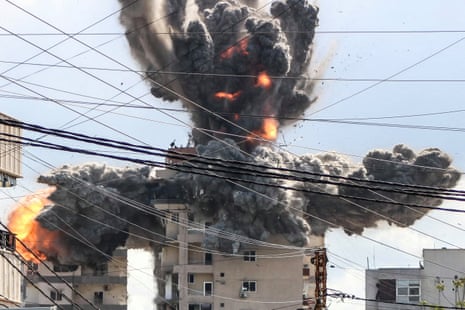
On April 8th, a date that would become etched in Lebanese collective memory, Beirut experienced what residents initially mistook for a natural disaster of catastrophic proportions. The afternoon assault was swift and merciless—within a mere ten-minute window, multiple residential apartment complexes were reduced to rubble. The scale of destruction was immediately apparent: mountains of concrete debris scattered across neighborhoods, twisted reinforcing steel protruding from collapsed structures, and countless pieces of shattered glass coating the streets like a grotesque carpet. What had moments before been thriving urban neighborhoods transformed into landscapes of devastation and human suffering.
The Israeli military operation that day represented one of the most concentrated bombing campaigns in the country's modern history. Dozens of military aircraft participated in the assault, executing a coordinated strike pattern against approximately 100 targets distributed across Lebanon's small but densely populated territory. The country, roughly equivalent in size to the American state of Connecticut, found itself under simultaneous attack across multiple regions: the capital city of Beirut itself, the strategically important Bekaa Valley in the east, and the southern border regions that had long been a flashpoint for regional tensions.
The human toll from this single day of operations was staggering and heartbreaking. When rescue and recovery teams finally completed their gruesome work two days later, extracting the remains of victims from the twisted wreckage, the Lebanese health ministry released preliminary casualty figures that shocked the international community. The official count stood at 357 confirmed dead, with an additional 1,200 individuals wounded—many suffering from severe injuries that would require extensive medical treatment and rehabilitation. These figures, however, represented only the initial accounting, as health officials acknowledged that the actual death toll would likely climb higher as rescue operations continued and additional bodies were discovered in the rubble.
What made this assault particularly significant was its strategic purpose within the broader military doctrine that Israel had begun developing. This wasn't simply a retaliatory strike or a limited tactical response to a specific incident. Rather, it was part of a carefully planned campaign designed to demonstrate overwhelming capability and willingness to inflict massive civilian and infrastructural damage. The operation reflected a calculated shift in warfare strategy that emphasized total destruction over targeted precision, collective punishment alongside military objectives, and the deliberate targeting of civilian infrastructure as a means of breaking societal will to resist.
The 2006 conflict in Lebanon established several key precedents that would later inform military planning in other conflicts. The strategic playbook developed during this period included the systematic bombardment of civilian areas under the justification of counterinsurgency operations, the destruction of basic infrastructure including power plants and water facilities, and the displacement of large civilian populations through campaigns of terror bombing. These tactics were not accidental byproducts of military operations but rather deliberate elements of an overall strategy designed to achieve political objectives through the infliction of maximum civilian suffering and economic devastation.
Military analysts at the time noted the unusual scope of the campaign, which seemed to exceed what would be necessary for addressing specific military threats. The breadth of targets struck—including civilian neighborhoods, commercial areas, and infrastructure facilities—suggested a broader ambition than simple counterterrorism or military defense. This pattern would become increasingly recognizable in subsequent conflicts, as military planners who had participated in or studied the Lebanon operation applied similar methodologies in other theaters of conflict.
The implementation of this strategy during the 2006 Lebanon war demonstrated both its effectiveness in terms of achieving certain military objectives and its profound humanitarian costs. Entire neighborhoods were rendered uninhabitable, hundreds of thousands of civilians were displaced from their homes, and the country's already fragile infrastructure was pushed to the brink of complete collapse. The psychological impact on the civilian population was equally severe, creating generational trauma and deep-seated grievances that would persist for years.
The connection between the 2006 operations and current conflict dynamics becomes even more apparent when examining specific tactical elements. Both campaigns have employed similar targeting methodologies, similar patterns of civilian bombardment, and similar justifications rooted in security imperatives. The scale may vary, and the specific context differs, but the fundamental strategic approach remains remarkably consistent. This suggests a deliberate adoption and refinement of tactics that proved effective in earlier operations, adapted for application in new geographic and political contexts.
Understanding this historical trajectory is crucial for comprehending not just what is happening in the current moment, but where future conflicts may be heading. The establishment of this strategic template raises important questions about the evolution of modern military tactics and the normalization of practices that blur traditional distinctions between military operations and mass civilian harm. If this playbook continues to be applied with minor variations across different conflicts, it suggests a troubling pattern in how contemporary armed forces conceptualize and execute military strategy.
The international response to these developments has been mixed and often insufficient. While humanitarian organizations and some governments have condemned the tactics employed, the lack of significant consequences has seemingly emboldened further application of similar strategies. The absence of meaningful accountability mechanisms or serious diplomatic pressure has effectively allowed the refinement and expansion of these tactics across multiple conflict zones. This permissive environment suggests that without fundamental changes in international norms or enforcement mechanisms, similar campaigns will likely continue.

The broader implications extend beyond the immediate humanitarian catastrophe to questions about the future of modern warfare itself. If wholesale destruction and mass civilian casualties become accepted components of military strategy, it represents a fundamental shift in how international conflicts are conducted. The establishment of such precedents potentially normalizes conduct that previous generations would have considered unacceptable, thereby lowering thresholds for acceptable behavior in future conflicts.
As military strategists around the world study these campaigns and draw lessons from them, there is a risk that successful tactics will be replicated and expanded. The example set by large-scale military operations against civilian populations may serve as a template for other actors seeking to achieve political or military objectives. This cyclical reinforcement of destructive tactics through imitation and adaptation could lead to an escalatory spiral that becomes increasingly difficult to reverse or constrain.
Source: The Guardian


