
Germany's Rising Military Power: A New European Defense

As German defense spending surges to lead Europe, experts examine how to ensure this military buildup strengthens the continent amid Russian threats and NATO uncertainty.
As Europe commemorates the 81st anniversary of the conclusion of World War II in Europe this Friday, May 8th, a significant geopolitical shift is becoming increasingly apparent: Germany is positioned to reclaim its role as the continent's leading military power once again. This development arrives at a critical juncture when European security faces unprecedented challenges from Russian aggression and the uncertainty surrounding America's commitment to transatlantic defense alliances.
The numbers tell a compelling story about Germany's military transformation. Within the next year, German defense spending will eclipse the combined military budgets of France and Britain, two nations with centuries-long traditions of military prominence. Projections indicate that by 2030, Germany's defense expenditure will be substantially larger still, positioning it as unquestionably the continent's dominant military spender. The German government has explicitly articulated its objective: to develop and maintain Europe's strongest conventional army, a statement that carries profound historical weight given the nation's 20th-century past.
This emergence of German military predominance presents a paradox that historians, policymakers, and security experts are grappling with intensely. While France and Britain retain nuclear arsenals that provide strategic deterrence capabilities, these nuclear programs consume significant portions of their defense budgets, leaving fewer resources for conventional military modernization, equipment procurement, and troop readiness. The arithmetic is straightforward: Germany's massive investment in non-nuclear military capabilities will inevitably result in the most formidable conventional forces on the European continent.

The trajectory toward German military dominance appears virtually inevitable unless unforeseen geopolitical upheavals dramatically alter current circumstances. Multiple factors are driving this transformation: the Russian invasion of Ukraine has galvanized European security concerns; the potential shift in American foreign policy under different administrations threatens traditional NATO commitments; and Germany, as Europe's largest economy and most centrally positioned nation, possesses both the economic capacity and strategic motivation to invest heavily in defense infrastructure.
Yet the historical resonance of these developments cannot be overlooked or minimized. Germany's last period of military dominance in Europe led to two catastrophic world wars and untold suffering across the continent. The question that scholars and policymakers are now urgently asking is not whether Germany will achieve military predominance—the economic and strategic logic suggests it almost certainly will—but rather how Europe can ensure that this concentration of military power serves defensive, stabilizing purposes rather than becoming a source of destabilization.
The mechanism through which Germany's growing military strength can be constructively channeled lies in deeper European integration and collective security arrangements. Rather than Germany wielding its military capabilities unilaterally or according to purely national interests, the optimal path forward involves embedding German military power within comprehensive European defense structures and decision-making frameworks. This approach differs fundamentally from the geopolitical environment of the early 20th century, when European powers operated within a competitive, anarchic system with minimal institutional constraints on national military behavior.

Contemporary European defense architecture, centered on NATO and increasingly supplemented by European Union defense initiatives, provides the institutional foundations for managing German military power responsibly. The NATO alliance establishes collective decision-making mechanisms where Germany's military strength serves the interests of all member nations rather than individual German strategic objectives. Simultaneously, developing robust European defense capabilities that operate independently of American leadership helps ensure that European security is not hostage to shifts in American political preferences or strategic priorities.
The timing of Germany's military ascendance is particularly significant given current threats to European security. Russian military aggression, exemplified by the invasion of Ukraine and continued threats to NATO members in Eastern Europe, has created a security environment where Europe can no longer rely primarily on American military protection. Meanwhile, the potential unpredictability of American commitment to NATO—particularly if different political administrations prioritize other strategic regions or adopt isolationist approaches—necessitates that Europe develop greater military autonomy and capability.
Germany's economic strength and technological sophistication position it uniquely to lead Europe's military modernization. German defense companies possess advanced capabilities in weapons systems, military technology, and equipment manufacturing. A German-led European defense initiative, operating within collective institutional frameworks, could enhance the military capabilities of all European nations while ensuring that German military power remains embedded within consensual European structures rather than operating according to nationalist impulses.
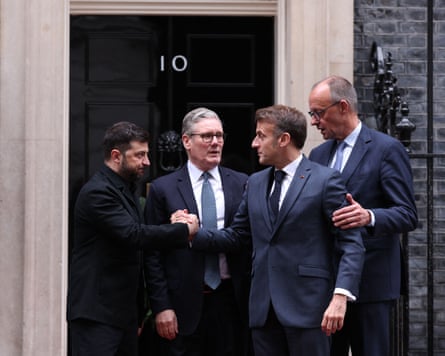
The historical lessons from previous eras of German military dominance underscore the critical importance of institutional constraints and multilateral cooperation. The current international system offers advantages that did not exist in earlier periods: Germany is a fully integrated member of democratic international institutions; it has adopted constitutional frameworks limiting executive military power; and it operates within alliance structures that include collective decision-making mechanisms. These structural features can help ensure that German military growth contributes to rather than undermines European stability.
European leaders must proactively shape how Germany's military power is developed and deployed. This involves strengthening mechanisms for collective defense decision-making within both NATO and the European Union, ensuring that German military capabilities are developed in coordination with other European nations' strategic objectives, and creating institutional frameworks where German military strength is explicitly directed toward collective European defense rather than autonomous national purposes. Policymakers should view German military power not as a threat to be constrained but as a resource to be channeled toward strengthened European defense.
The symbolism of Germany's military rearmament during the week commemorating the end of World War II is not lost on observers. However, the context has fundamentally changed. Germany today faces external threats from Russia and potential abandonment by its American ally, not imperial ambitions or territorial conquest. European integration, democratic institutions, and collective security arrangements provide safeguards against the historical patterns that characterized earlier periods of German military dominance. Provided these institutional frameworks remain robust and Europeans commit to collective decision-making on security matters, Germany's military power can become a stabilizing force for the entire continent.
The path forward requires deliberate political choices from Germany and its European partners. Germany must commit unequivocally to operating its military power within European institutional frameworks and according to collective decisions rather than unilateral national interests. Other European nations must recognize that German military strength, properly embedded within collective European structures, serves their security interests far better than continued reliance on the United States or military fragmentation among European nations. The 81st anniversary of World War II's conclusion in Europe is an appropriate moment to reflect on how far the continent has come while acknowledging the ongoing work necessary to ensure that European security remains based on cooperation rather than competition.
Source: The Guardian


