
Germany Warned of 'China Shock 2.0' Deindustrialization Crisis

Leading Brussels thinktank warns Germany risks industrial collapse like 2001 US if it doesn't address China's $94bn trade imbalance and surging imports.
Germany faces a critical economic crossroads as leading policy experts sound the alarm over the nation's increasingly vulnerable position in global trade dynamics. A prominent Brussels-based thinktank has issued an urgent warning that Germany must fundamentally reassess its economic relationship with China, or risk experiencing the same devastating industrial collapse that ravaged the United States two decades ago. The stark assessment underscores growing concerns about how China's economic strategy is systematically reshaping European industrial capacity and employment patterns.
The Centre for European Reform (CER), a respected institution focused on European policy analysis, has painted a sobering picture of Germany's trade relationship with Beijing. According to their analysis, China's surplus with Germany has experienced a dramatic acceleration, doubling from $12 billion in 2024 to an alarming $25 billion in 2025. This explosive growth in the bilateral surplus reflects broader structural imbalances in the European-Chinese trade relationship, creating what economists describe as a $94 billion trade deficit for Germany that demands immediate policy attention and strategic recalibration.
The CER's warning carries particular historical weight when compared to the economic transformation that reshaped American industrial centers in the early 2000s. When the United States experienced a sudden surge in imports around 2001, the consequences proved devastating and largely permanent for manufacturing communities, particularly in the Midwest. Entire industrial ecosystems that had provided stable employment for generations collapsed, creating long-term unemployment, community decline, and social disruption that persists to this day. The thinktank's analysis suggests that Germany could be on the precipice of experiencing a similar "China Shock 2.0" scenario if current trade imbalances continue unabated.

The trade imbalance with China represents far more than simple numerical disparities in bilateral commerce. Rather, it reflects fundamental shifts in global supply chains, competitive pressures on German manufacturers, and the strategic positioning of Chinese enterprises in sectors critical to European economic security. German industrial leaders have long prided themselves on manufacturing excellence and engineering innovation, yet increasing competitive pressures from Chinese producers—particularly in emerging technologies, automotive components, and advanced manufacturing—threaten to erode these traditional advantages. The speed and magnitude of China's trade surplus growth suggests that structural economic forces are working powerfully in China's favor.
One particularly striking observation from the CER's analysis is that Germany appears to be "admiring" China's economic success rather than recognizing it as a competitive threat. This characterization suggests a level of complacency or perhaps misplaced optimism among German policymakers and business leaders about the sustainability of current arrangements. While China continues to rapidly expand its industrial capabilities and market share across multiple sectors, Germany appears content to maintain existing trade relationships without fundamentally restructuring its approach to bilateral economic engagement. This passive posture stands in sharp contrast to the more assertive strategies being deployed by other European nations and the United States.
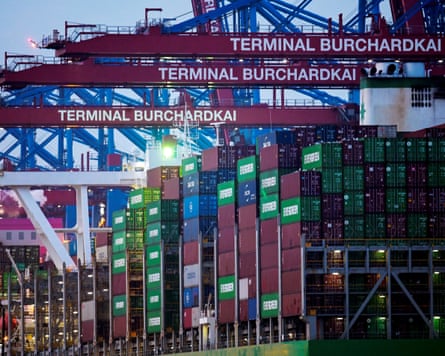
The historical parallel to the "China Shock" of 2001 in America provides essential context for understanding the stakes involved in Germany's current economic decisions. When Chinese imports surged into the American market in the early 2000s, the effects proved far more consequential than conventional trade theory suggested. Rather than creating minor adjustments across the economy, the import surge produced concentrated, devastating impacts on specific regions and sectors. Manufacturing towns in Pennsylvania, Ohio, Michigan, and Indiana experienced employment collapses that triggered cascading social and economic problems, including increased poverty, substance abuse, political polarization, and generational economic stagnation that continues affecting these communities today.
German policymakers should take careful note of these cautionary lessons from the American experience. The CER's warning suggests that current trajectory—characterized by rapidly expanding trade deficits and mounting competitive pressures—creates genuine risk of similar localized industrial devastation within Germany's manufacturing heartland. The "lunch" metaphor employed by the thinktank vividly captures the incremental nature of this process: China has already captured substantial portions of traditional German industrial markets, and increasingly threatens to expand this dominance into sectors that currently provide the foundation of German prosperity and employment.
The stakes extend beyond simple economic statistics or corporate profit margins. Germany's industrial capacity has been the cornerstone of its postwar economic miracle and contemporary prosperity. The nation's engineering expertise, manufacturing quality reputation, and technological sophistication have enabled it to maintain premium market positions and command price premiums for its products globally. If German industrial competitiveness becomes systematically eroded by Chinese competition, the consequences would ripple across employment, regional development, government tax revenue, and social stability. Communities that depend on manufacturing employment would face the same destabilization that affected American industrial centers.

The European Union's largest economy faces a strategic choice about how to respond to these emerging competitive pressures. Some policy options focus on defensive protections—implementing tariffs, trade restrictions, or subsidies designed to shield German manufacturers from foreign competition. Other approaches emphasize innovation acceleration and competitive upgrades, seeking to maintain German advantages through superior technology and specialized product development. Still other voices advocate for more fundamental supply chain reorientation, reducing dependence on trade relationships with China and building more resilient, diversified commercial networks across Europe and with allied nations.
The timing of the CER's warning also matters significantly. Germany currently faces its own economic challenges, including relatively slow growth rates, demographic pressures, and energy transition costs associated with the transition away from Russian fossil fuels. These domestic pressures create windows of vulnerability when manufacturing sectors struggle with simultaneous headwinds from multiple directions. Rising energy costs, aging infrastructure, and labor availability challenges already strain German manufacturers; adding intensified Chinese competition to this equation creates a genuinely precarious situation for many industrial employers.
What makes the CER analysis particularly urgent is the recognition that defensive responses may already be arriving too late. Industrial competitiveness cannot be quickly restored through emergency policy measures once fundamental competitive positioning has shifted. The American experience demonstrates that once major manufacturing capacity relocates or closes, the social and economic infrastructure supporting those industries atrophies, making restoration extraordinarily difficult and expensive. Regional expertise networks dissolve, skilled workforces disperse, and community reindustrialization typically requires decades of intensive, expensive effort.
The escalating China trade surplus with Germany thus represents not merely a temporary imbalance but potentially a signal of deeper structural shifts in global manufacturing advantage. German business leaders and policymakers can no longer afford to admire China's economic achievements from a distance while hoping that traditional German strengths will prove adequate to maintain competitive positions. The data increasingly suggests that passive acceptance of current trends will produce results remarkably similar to what American manufacturing communities experienced in the early 2000s—concentrated, devastating, and largely irreversible industrial decline affecting millions of workers and hundreds of communities.
The path forward requires acknowledgment of the competitive reality, strategic clarity about which industrial sectors deserve protection and investment, and coordinated efforts across German businesses, government, and educational institutions to maintain technological leadership and manufacturing excellence. Without such proactive repositioning, Germany risks sleepwalking toward the deindustrialization that transformed American economic geography. The window for effective response remains open but is closing rapidly as China's industrial capabilities continue advancing and trade imbalances accelerate. Germany's economic future and the prosperity of millions of workers may depend on how quickly and effectively policymakers respond to this increasingly urgent warning.
Source: The Guardian

