
Global Press Freedom Hits 25-Year Low Amid Authoritarianism

World Press Freedom Index reveals journalism under severe threat globally. 180 countries assessed show lowest press freedom scores in 25 years due to authoritarian pressures.
Journalism worldwide is experiencing unprecedented challenges, with press freedom reaching its lowest point in a quarter-century according to the latest comprehensive global assessment. The sobering findings underscore an increasingly hostile environment for media professionals and independent reporting across virtually every continent. Established news organizations face mounting obstacles to fulfill their fundamental role as watchdogs of democracy and accountability in their respective nations.
The World Press Freedom Index, an authoritative annual report compiled by Reporters Without Borders (RSF), has released its latest evaluation covering all 180 countries around the globe. This meticulous ranking system provides one of the most detailed snapshots of media conditions worldwide, measuring factors such as government pressure, censorship, violence against journalists, and legal restrictions on press operations. The index has been tracking these trends for 25 years, making it a reliable barometer of long-term shifts in the freedom with which journalists can operate.
The average score across all 180 countries assessed represents the lowest point in the index's entire quarter-century history, marking a significant deterioration from previous years. This decline is not merely statistical—it reflects real consequences for journalists, newsrooms, and the communities that depend on reliable information. The data paints a troubling picture of how authoritarian pressure continues to expand its grip on media institutions and individual reporters worldwide.
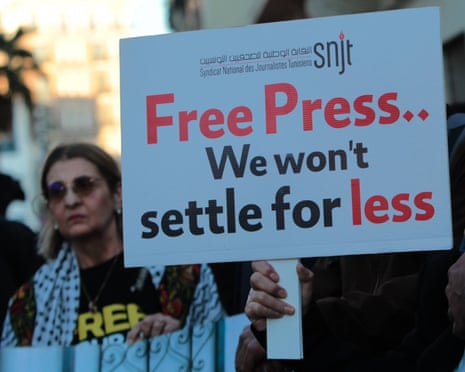
Reporters Without Borders characterizes the current situation as one where established journalism is "being asphyxiated" under the weight of mounting governmental and institutional constraints. This vivid language reflects the severity of the crisis facing news organizations that have served their communities for decades or even generations. The organization's assessment goes beyond mere political rhetoric—it is grounded in documented cases of censorship, imprisonment of journalists, and systematic attacks on media freedom worldwide.
The report identifies several key mechanisms through which authoritarian governments restrict press freedom in the modern era. These tactics include direct censorship of content, financial strangulation of independent media outlets, legal harassment and imprisonment of journalists on dubious charges, and the proliferation of state-controlled media that drowns out independent voices. In many regions, physical violence and intimidation have become common tactics used to silence critical reporting and deter journalists from investigating government corruption or misconduct.
The deterioration in global press freedom has accelerated in recent years, driven by several interconnected factors. Democratic backsliding in numerous countries has empowered leaders to justify increased controls over media outlets as necessary for national security or social stability. The rise of digital surveillance technologies has given governments more sophisticated tools to monitor and track journalists' activities, sources, and movements. Additionally, the economic challenges facing traditional media have made news organizations more vulnerable to pressure from both government and wealthy individuals with political agendas.
The consequences of this global press freedom crisis extend far beyond the newsrooms themselves. When journalists cannot report freely, entire populations lose access to critical information needed to make informed decisions about their leaders and their countries' futures. Democratic institutions weaken without a robust fourth estate to investigate wrongdoing and hold power accountable. Communities become more vulnerable to misinformation, propaganda, and conspiracy theories that flourish in information vacuums created by restricted press freedom.
Regional variations in the crisis reveal some particularly alarming trends in specific parts of the world. In some Asian countries, governments have strengthened media control mechanisms, using anti-terrorism laws and cyber regulations to suppress dissent. In Europe, even established democracies have seen incremental erosions of press freedom through strategic legal challenges and financial pressure on media outlets perceived as hostile to ruling parties. Latin America continues to grapple with violence against journalists, while African nations struggle with both government censorship and the economic sustainability of independent news organizations.
The index examines numerous specific indicators to arrive at its comprehensive rankings and assessments. Researchers evaluate the legal framework governing press operations, the degree of political pressure exerted on media organizations, the physical safety of journalists, press ownership concentration, and access to information. They also consider the independence of public broadcasting systems and the extent to which journalists can pursue investigations without fear of retaliation. This multi-faceted approach ensures that the index captures the full complexity of press freedom challenges globally.
Reporters Without Borders emphasizes that defending journalist safety and independence requires coordinated action from international organizations, national governments that respect democratic principles, and civil society groups committed to transparency. The organization advocates for strengthening legal protections for journalists, reforming laws that are frequently used to silence critical reporting, and providing support to media outlets under pressure. Furthermore, international pressure must be brought to bear on governments that imprison journalists or allow violence against media professionals to go unpunished.
The latest World Press Freedom Index findings arrive at a critical moment when many democracies are questioning the role of media in their societies and when authoritarian models are gaining admiration in some quarters. The report serves as a crucial reminder of what is at stake when press freedom erodes—not just for journalists themselves, but for the functioning of democratic societies and the public's right to truthful information. The data compiled by RSF provides evidence-based documentation of these trends, making it harder for governments and international institutions to ignore the severity of the global crisis.
Moving forward, the international community must recognize that media freedom is not a luxury but a fundamental requirement for healthy societies. The alarming trajectory documented in the latest index should serve as a wake-up call to policymakers, donors, and civil society organizations that more aggressive action is needed to reverse these trends. Without significant intervention and support for independent journalism, the world faces a future where authoritarian governments have even greater ability to control narratives, suppress dissent, and operate without accountability to their citizens.
The World Press Freedom Index remains one of the most important tools available for tracking global developments in media independence and highlighting countries and regions where urgent intervention is needed. By documenting these trends year after year, Reporters Without Borders creates an invaluable historical record of how press freedom has evolved—or deteriorated—in different parts of the world. This data serves journalists, civil society organizations, and international bodies as they work to defend one of the most fundamental pillars of democratic society.
Source: The Guardian


