
Global South Outraged: US-Israel War on Iran Condemned as 'Imperialist'

Leaders from China, South Africa, and the global south condemn US-Israeli attacks on Iran as illegal, questioning the 'pre-emptive' justification and 'blatantly killing' a sovereign state's leader.
China has called it unacceptable to 'blatantly kill the leader of a sovereign state', while South Africa has questioned the 'pre-emptive' justification for the US-Israeli war on Iran. Across much of the global south, the conflict is being condemned as illegal and an exercise of colonial-style might, with many arguing that negotiations over Iran's nuclear program and missile capability should have been given a chance to succeed before the bombing began.
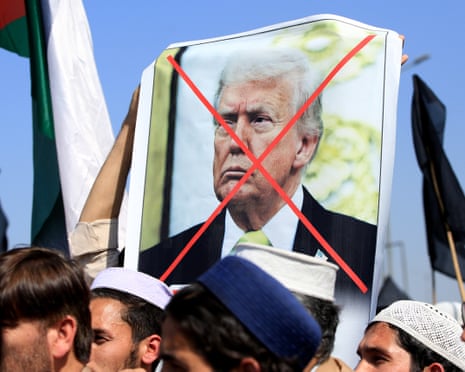
The US and Israel launched a devastating military assault on Iran earlier this week, striking key nuclear facilities, military bases, and the residence of Supreme Leader Ayatollah Ali Khamenei. The two allies claimed the attacks were necessary to prevent Iran from developing nuclear weapons and destabilizing the region, but their actions have been widely criticized as disproportionate and lacking proper justification.
China, a key Iranian ally, has been unequivocal in its condemnation. Foreign Minister Wang Yi stated: 'It is unacceptable for the US and Israel to blatantly kill the leader of a sovereign state. This is a grave violation of international law and the basic norms of international relations.'
South African President Cyril Ramaphosa also expressed deep concern, questioning whether the US and Israel had exhausted all diplomatic options before resorting to military force. 'The concept of pre-emptive strikes goes against the principles of the UN Charter. We urge all parties to exercise maximum restraint and return to the negotiating table,' Ramaphosa said.
Analysts across the global south have often characterized the US-Israeli intervention as a colonial-style exercise of power, with little regard for Iran's sovereignty or the potential for broader regional instability. 'This reeks of imperialist undertones,' said Thabo Mbeki, former President of South Africa. 'The global south has seen this playbook before - powerful nations using military might to impose their will on weaker states.'
Many developing nations have also expressed concern that the conflict could disrupt vital trade and energy supplies, with the fallout likely to be felt most acutely by poorer countries. 'We cannot afford another major war in the Middle East,' said Nigerian President Muhammadu Buhari. 'The global south is already reeling from the economic impacts of the pandemic and climate change - this will only exacerbate our challenges.'
As the US and Israel show no signs of backing down, the international outcry from the global south is only likely to grow louder. Analysts warn that prolonged conflict could further erode trust in Western institutions and accelerate efforts to build alternative economic and political alliances independent of the US-led order.


