
Google Adds Voice-Powered Conversational AI to Gmail, Docs, Keep

Google's latest update brings advanced conversational features to Gmail, Docs, and Keep. Users can now dictate drafts and let AI organize thoughts automatically.
Google's latest productivity suite expansion marks a significant shift toward more natural, voice-centric workflows across its most popular workplace applications. The tech giant has introduced innovative conversational features that fundamentally transform how users interact with Gmail, Google Docs, and Google Keep, enabling a more intuitive and efficient approach to content creation and communication.
The centerpiece of this update is the ability to voice dictate documents directly into Google Docs, with the application automatically organizing and structuring your spoken thoughts into coherent written content. Rather than laboriously typing out initial drafts or struggling with fragmented notes, users can now simply speak their ideas aloud, and Google's AI-powered organization system will handle the heavy lifting of formatting, structuring, and refining those raw thoughts into a more polished form. This feature represents a substantial time-saver for professionals who prefer verbal brainstorming over traditional typing methods.
The implementation of these conversational AI features demonstrates Google's commitment to reducing friction in the creative writing process. By leveraging advanced natural language processing and machine learning algorithms, the system can distinguish between casual speech patterns and intentional structural cues, allowing it to properly segment ideas into paragraphs, bullet points, and other organizational elements without requiring manual formatting intervention.
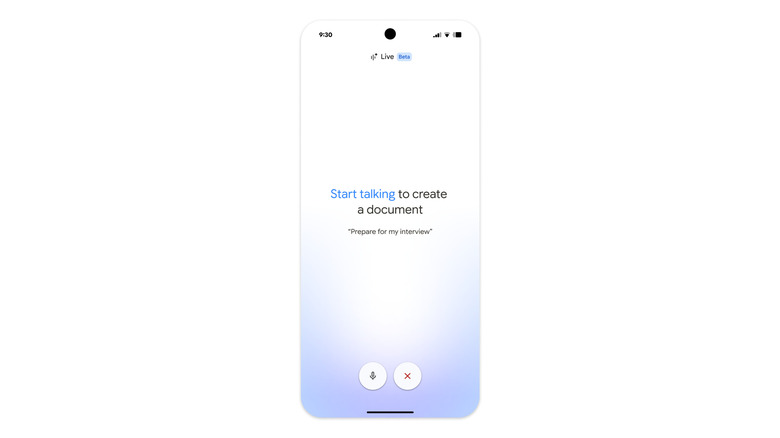
Beyond Docs, Google has extended similar conversational capabilities to Gmail, enabling users to compose messages through voice input rather than typing. This enhancement is particularly valuable for busy professionals who are frequently on the move or juggling multiple tasks simultaneously. The Gmail conversational tools work seamlessly with Google's voice recognition technology to ensure accurate transcription while maintaining the professional tone typically expected in business correspondence.
Google Keep, the company's note-taking application, has also received substantial improvements with enhanced conversational note-taking features. Users can now capture ideas through voice memos that are automatically transcribed and organized within the application's existing framework. This creates a more fluid workflow where quick voice notes can be captured on the fly and later converted into more detailed written content within Keep's familiar interface.
The rollout of these features reflects broader industry trends toward voice-activated productivity tools and natural language interfaces. As users increasingly expect their applications to understand and respond to conversational input, Google is positioning itself at the forefront of this transformation by integrating these capabilities directly into the tools that millions of people use daily for work and personal organization.
Integration across Google's ecosystem appears seamless, with the conversational features working consistently whether users are accessing Gmail on desktop, tablet, or mobile devices. The company has prioritized maintaining privacy and security while implementing these more interactive AI capabilities, ensuring that voice data is processed securely and that users retain full control over their information.
The timing of this Google productivity update is particularly noteworthy, as remote work and hybrid office arrangements have become normalized across many industries. These conversational features address real pain points for distributed teams and individuals working from various locations, providing flexible options for how users engage with their work materials and communications.
Early adoption indicators suggest that professionals in creative fields, customer service, and content creation are particularly enthusiastic about these new capabilities. The ability to rapidly transform spoken ideas into organized written documents could significantly accelerate project timelines and reduce the cognitive load associated with traditional composition methods.
Google's commitment to advancing conversational AI in workplace tools positions the company to compete more effectively with alternative productivity platforms and demonstrates its understanding of evolving user expectations. As artificial intelligence continues to mature and become more sophisticated, the integration of these technologies into everyday applications like Docs, Gmail, and Keep represents a natural evolution of productivity software.
The voice-to-text and organization features also come with accessibility benefits for users with mobility challenges, dyslexia, or other conditions that make traditional typing difficult. By providing alternative input methods and automated organization, Google is making its productivity suite more inclusive and usable for a broader audience.
Looking forward, these conversational features likely represent just the beginning of Google's broader push toward more AI-integrated productivity solutions. The company has indicated plans to expand these capabilities further, potentially adding more sophisticated context understanding, multilingual support, and cross-application intelligence that could make workflow management increasingly seamless and intuitive across the entire Google Workspace ecosystem.
Source: Engadget


