
Google's AI Overviews Struggle With Basic Word Definitions

Google's new AI-powered search results are failing to accurately define common words like 'disregard' and 'ignore', replacing traditional dictionary entries with flawed AI-generated content.
Google's AI Overviews feature is experiencing significant challenges in providing accurate definitions for everyday vocabulary words, raising concerns about the reliability of the search giant's artificial intelligence implementation. The technology, designed to offer quick answers and summaries at the top of search results, has been replacing traditional dictionary definitions with AI-generated content that often falls short of expectations. Users searching for basic word meanings are increasingly encountering inaccurate or incomplete definitions, highlighting potential issues with how AI-generated search results are being prioritized over established reference materials.
The problem has become particularly noticeable when searching for common words such as "disregard," "stop," and "ignore." Rather than displaying straightforward dictionary definitions from authoritative sources, Google's system is inserting its own AI-generated overviews that frequently miss the mark. This represents a fundamental challenge in deploying large language models for factual retrieval tasks, where accuracy and precision are paramount. The search engine's approach to replacing traditional definitions with machine learning summaries appears to be creating more confusion than clarity for users seeking straightforward answers.
Google's integration of AI technology into search has been a major strategic initiative, with the company positioning AI Overviews as a revolutionary way to surface information. However, the execution has revealed critical gaps in the system's ability to handle basic linguistic tasks. The artificial intelligence models powering these overviews, while impressive in many respects, seem to struggle with the precise, unambiguous nature of word definitions. This disconnect between technological capability and practical application is becoming increasingly apparent to users who interact with the feature daily.

The implications of these search result inaccuracies extend beyond mere inconvenience. When users rely on Google for fundamental information like word meanings, they expect authoritative, reliable answers. The platform's shift toward AI-generated summaries risks undermining user trust, particularly when those summaries diverge from established dictionary standards. This is especially problematic for educational users, language learners, and professionals who depend on precise linguistic information for their work. The tension between Google's desire to showcase AI capabilities and its responsibility to provide accurate information has rarely been more apparent.
Industry analysts have pointed out that defining basic vocabulary should theoretically be one of the easier tasks for an AI system to accomplish. The fact that Google's implementation is failing at this relatively straightforward challenge suggests deeper architectural or training issues. Dictionary definitions are finite, well-documented, and have been standardized for centuries, making them ideal test cases for AI reliability. Yet the system appears to be generating novel interpretations rather than simply retrieving and presenting established definitions, which represents a fundamental misuse of AI technology in this context.
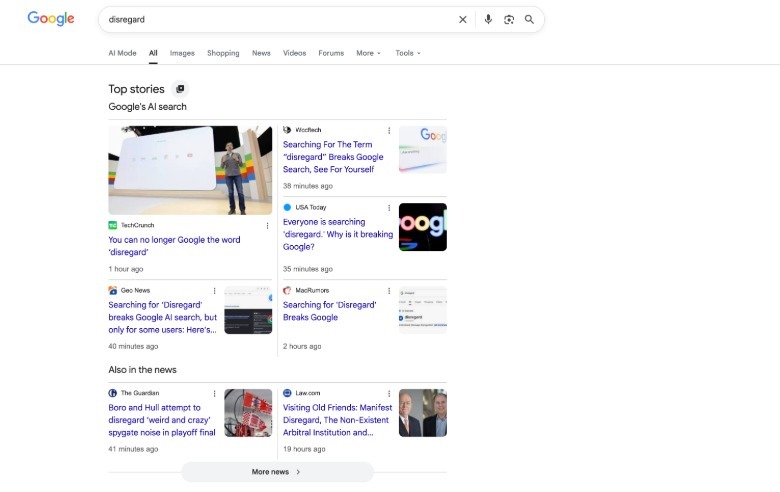
Google's response to these issues will be critical in determining the future viability of AI-powered search results. The company has invested heavily in this technology and promoted it as a core feature of its next-generation search experience. Acknowledging failures in such a visible area could impact user confidence in other AI applications. Conversely, ignoring the problem or attempting to defend inaccurate definitions would represent a concerning prioritization of AI showcase over user welfare. The tech giant faces a delicate balancing act between innovation and reliability that will likely influence how other companies approach similar implementations.
The broader context of this issue involves the ongoing debate about whether AI systems should be used for factual retrieval tasks at all. While generative AI excels at creative tasks and handling nuanced discussions, it has well-documented limitations when precision and accuracy are required. Replacing curated, human-verified dictionary definitions with machine-generated summaries represents a potentially problematic approach to search functionality. This situation raises fundamental questions about when and where AI should augment human expertise versus when traditional information sources should remain primary.
Users experiencing these issues with Google's definition feature have taken to social media and forums to report their frustrations. The visibility of these failures has contributed to broader skepticism about AI integration in consumer-facing applications. Many users express concern that Google is prioritizing the deployment of flashy AI features over ensuring the fundamental accuracy that has historically been the search engine's greatest strength. This feedback represents valuable signal that could guide Google's development priorities going forward, though it remains unclear whether the company will recalibrate its approach.
Looking ahead, resolving these definition accuracy issues will require Google to likely implement additional quality controls and possibly reinstate traditional dictionary sources as the primary reference for word meanings. A hybrid approach that uses AI summaries only when they enhance rather than replace established definitions could offer a path forward. The company may also need to acknowledge that certain types of queries are better served by traditional methods than by cutting-edge AI generation. This situation ultimately demonstrates that technological advancement isn't automatically superior to well-established solutions, particularly when reliability is paramount.
The challenges with AI-generated search definitions represent just one manifestation of broader concerns about rapid AI deployment in critical systems. As artificial intelligence becomes more prevalent across consumer applications, ensuring accuracy and reliability must take precedence over showcasing technological capabilities. Google's situation serves as an important case study for other companies considering similar implementations. The experience underscores the importance of rigorous testing, human oversight, and willingness to prioritize user needs over technological innovation timelines. Moving forward, the tech industry would be wise to learn from these visible failures and implement more thoughtful, measured approaches to AI integration.
Source: Engadget


