
Google Unveils Gemini 3.5 Flash and Omni AI Model

Google launches Gemini 3.5 Flash with frontier-level intelligence and introduces Omni, a versatile AI model designed for complex agentic tasks at scale.
Google's artificial intelligence roadmap has evolved dramatically over the past year, marking a significant acceleration in the development of its Gemini AI models. At last year's I/O conference, the company was still focused on the 2.5 branch of Gemini, but the rapid progression through versions 3.0 and 3.1 demonstrates the intensifying pace of innovation in the field. Now, Google has unveiled Gemini 3.5 Flash, the latest iteration in its generative AI lineup, along with an ambitious new model called Omni that promises to redefine what's possible with AI technology.
The rollout of Gemini 3.5 Flash is beginning immediately across Google's extensive product ecosystem, representing one of the most significant AI announcements from the search giant this year. According to Google's leadership, this new model represents a substantial leap forward in capabilities, surpassing even the performance metrics of its predecessor, the Pro model. The achievement is particularly noteworthy because it arrives at a time when the AI industry faces mounting pressure to deliver practical, cost-effective solutions that can handle increasingly complex operations.
What sets this release apart from previous updates is Google's confidence that Gemini 3.5 Flash has finally cracked the code on making sophisticated agentic tasks economically viable at scale. Tulsee Doshi, who serves as senior director of product management for the Gemini division, emphasized that the innovations embedded within Gemini 3.5 Flash are strategically woven throughout multiple Google products and services. This indicates a comprehensive integration strategy rather than a isolated model release, suggesting that users across Google's entire platform will benefit from enhanced AI capabilities.

The AI model landscape has become increasingly competitive, with organizations worldwide racing to develop more capable and efficient systems. Google's approach with Gemini 3.5 Flash reflects a shift in priorities within the industry, moving beyond pure capability benchmarks toward practical efficiency metrics. The company's track record with regular model updates—the so-called tick-tock release cycle—has established a pattern of incremental but meaningful improvements that build upon previous generations.
The introduction of Omni represents a more ambitious undertaking altogether. Unlike previous models that were optimized for specific tasks or use cases, Omni is being positioned as a general-purpose AI model capable of handling diverse applications. This "do-anything" approach reflects the industry's broader movement toward more versatile artificial intelligence systems that can seamlessly transition between different types of tasks without requiring separate models or fine-tuning procedures.
Industry observers have noted that Google's focus on making agentic AI tasks practical at scale addresses one of the field's most pressing challenges. While previous generations of AI models excelled at answering questions or generating text, deploying them for complex, multi-step operations—what researchers call agentic behavior—remained computationally expensive and economically questionable for many applications. Gemini 3.5 Flash's efficiency improvements could fundamentally change this equation.
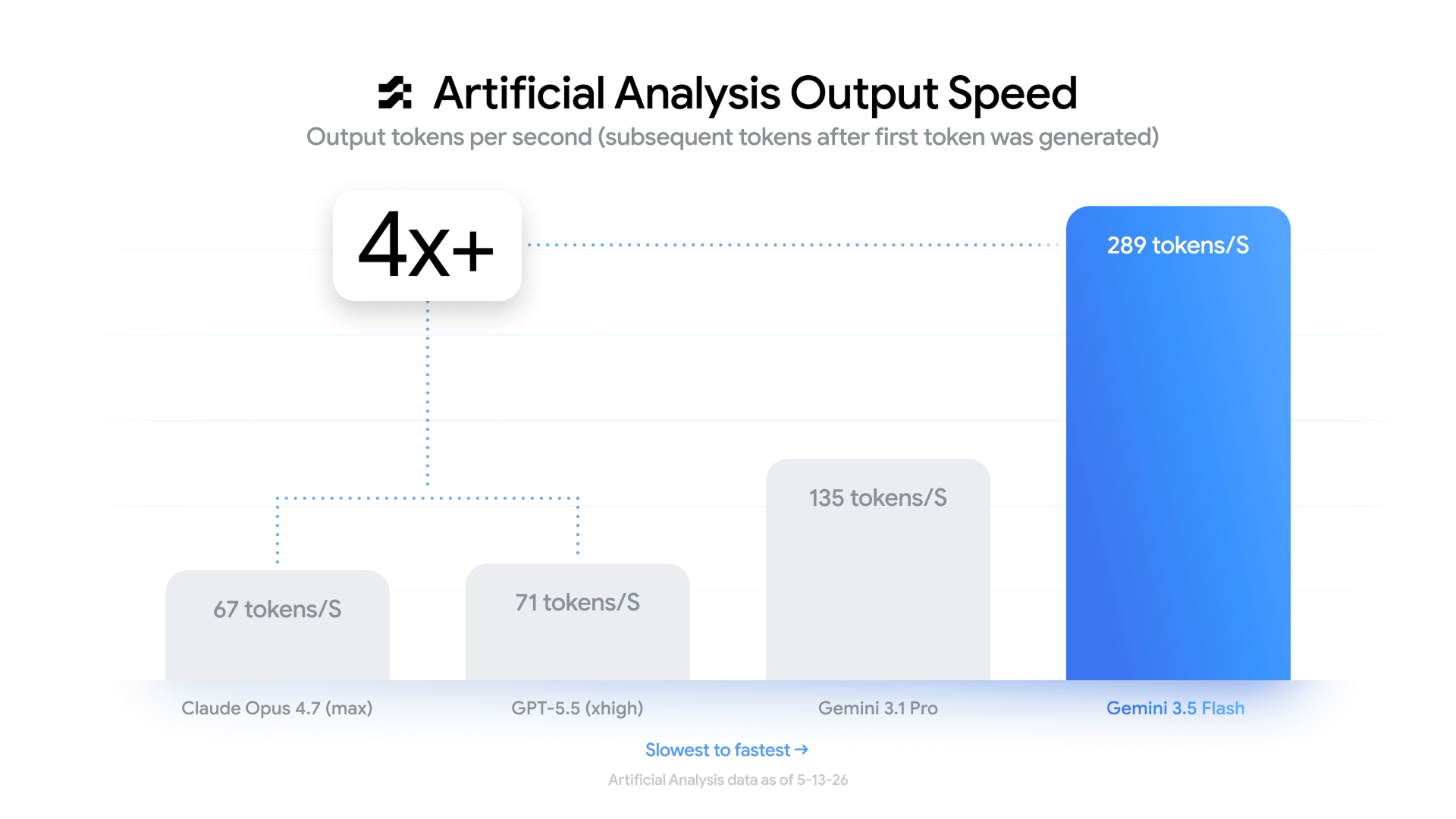
The timing of these announcements cannot be separated from the broader competitive dynamics in the generative AI market. Other technology giants have been aggressively pursuing similar goals, developing more capable models while simultaneously reducing computational requirements and costs. Google's dual announcement of an enhanced Flash model and the ambitious Omni platform suggests a comprehensive strategy to maintain its leadership position in artificial intelligence development.
From a technical perspective, the advancements in Gemini 3.5 Flash likely involved improvements in multiple areas, including better understanding of context, more accurate reasoning across complex problems, and enhanced ability to follow intricate instructions. The frontier-level intelligence that Google claims for the model represents the theoretical cutting edge of what current AI systems can achieve, though the practical implications vary depending on specific use cases and applications.
The integration of Gemini 3.5 Flash across Google's product portfolio signals the company's confidence in the model's reliability and performance. This broad deployment strategy means that Gmail users, Google Search users, Google Cloud customers, and users of other Google services will gradually experience improvements powered by the new model. Such widespread integration also serves as a massive beta test, providing Google with real-world performance data that can inform future iterations.
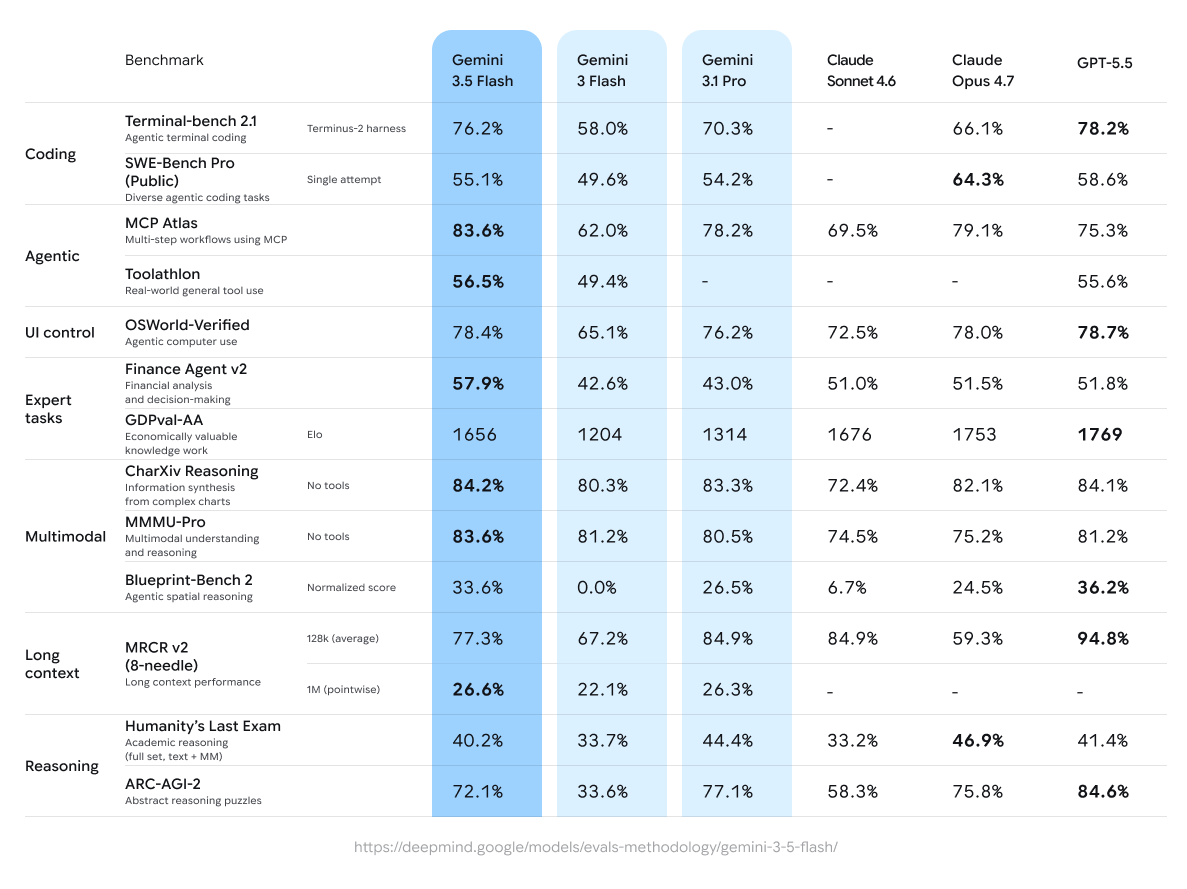
Doshi's comments about this being just the beginning of the Gemini 3.5 Flash integration across Google products suggest that the full scope of improvements and new capabilities enabled by the model have not yet been fully revealed. Typically, Google follows up major model releases with announcements of new features and capabilities in various products over subsequent weeks and months. This measured rollout approach allows the company to manage expectations and celebrate incremental announcements rather than overwhelming users with simultaneous changes.
The focus on agentic AI capabilities particularly stands out as a strategic priority for Google. Agentic systems are those that can operate with some degree of autonomy, breaking down complex tasks into subtasks, reasoning about the best approach, and executing multiple steps with minimal human intervention. Making these systems practical and affordable could unlock substantial value across industries—from customer service automation to scientific research to software development.
Google's evolution from version to version over the past year demonstrates the accelerating pace of progress in large language models and generative AI broadly. What was cutting-edge capability in early 2025 has become baseline functionality by mid-2026. This acceleration raises important questions about the trajectory of AI development and the competitive landscape facing both established technology companies and newer AI startups.
The announcement of Omni as a "do-anything" model may represent Google's response to the limitations developers have encountered with specialized models. Creating separate models for different tasks increases complexity in production environments and can lead to suboptimal performance when tasks don't fit neatly into predefined categories. A unified, versatile model like Omni could simplify deployment while potentially improving performance on unexpected task combinations.
As Google continues to expand its AI model portfolio and integrate these systems throughout its business, the company is setting the stage for a future in which artificial intelligence is as fundamental to computing as databases or operating systems. The immediate availability of Gemini 3.5 Flash across multiple products means that millions of users will begin experiencing its benefits almost immediately, whether they're aware of the underlying model change or not. This seamless integration has always been one of Google's strengths—deploying technology in ways that feel natural and invisible to end users while delivering substantial improvements in functionality and intelligence.
Source: Ars Technica


