
Green Leader's False Charity Credential Claims Exposed

Zack Polanski accused of falsely claiming British Red Cross spokesperson role during leadership campaign and on website.
Zack Polanski, the prominent Green party leadership candidate, faces serious allegations regarding misrepresented professional credentials and organizational affiliations. The British Red Cross, one of the United Kingdom's most respected humanitarian organizations, has publicly refuted claims made by Polanski that he served as an official spokesperson for the charity during his recent campaign for party leadership.
The false affiliation with the British Red Cross appears to have been promoted across multiple platforms, including his personal website as recently as 2020, where Polanski made specific statements about his involvement with the organization's work. In these statements, he expressed that he was "really proud of the work we do," implying a direct professional relationship and active participation in the charity's operations and communications strategy.
Beyond the British Red Cross controversy, Polanski's credentials face additional scrutiny regarding his claimed membership status with the National Council of Hypnotherapy. According to reports and organizational verification, Polanski incorrectly stated that he held a full membership position within this professional body, raising further questions about the accuracy of information presented in his professional background and campaign materials.
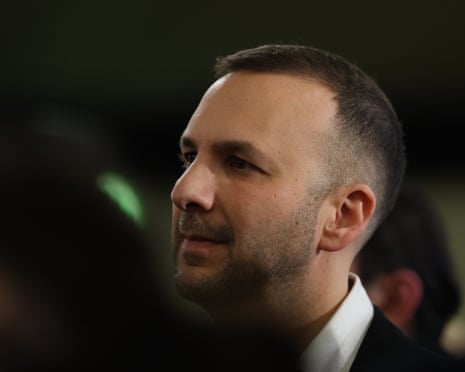
These revelations have sparked considerable debate within political circles about the importance of credential verification and the responsibility of candidates to maintain accurate professional representations. The Green party has faced questions regarding the vetting process for leadership candidates and whether such claims should have been caught during initial background checks. Political analysts suggest that such credential discrepancies can significantly impact public perception and voter trust, particularly when they involve claims about involvement with well-known charitable organizations.
The British Red Cross's formal statement clarifying that Polanski did not hold an official spokesperson position represents a significant blow to his credibility heading into the critical final stages of the leadership race. The organization's willingness to publicly correct the record indicates the seriousness with which they treated what they considered to be a misrepresentation of their staffing and official representatives. Such public corrections from established institutions are relatively uncommon and typically reserved for instances where misinformation could cause genuine reputational harm.
The timeline of these misrepresentations is particularly noteworthy, as the website claims date back to 2020, suggesting that the false information had been publicly available for a considerable period before being challenged. This raises questions about whether proper due diligence was conducted by campaign staff, web administrators, or the candidate himself regarding the accuracy of biographical information presented to the public.
Professional credential verification has become an increasingly important issue in contemporary politics, with voters and party members alike placing greater emphasis on the authenticity of candidates' claimed experiences and affiliations. The case of Polanski demonstrates how claims about involvement with respected institutions can significantly influence perceptions of competence, character, and trustworthiness. When such claims prove to be unfounded, they can undermine a candidate's entire credibility and campaign narrative.
The National Council of Hypnotherapy, another organization mentioned in the controversy, provides professional oversight and standards for hypnotherapy practitioners in the United Kingdom. The distinction between different membership levels within such organizations is typically important for professional legitimacy, making claims about membership status particularly significant. Misrepresenting one's standing within professional bodies could have implications not only for political candidacy but for broader professional accountability.
This incident occurs within a broader context of heightened scrutiny of political candidates' backgrounds and stated qualifications. Media organizations, rival campaigns, and advocacy groups increasingly conduct detailed background research to verify claims made by political figures. The digital age has made it easier to uncover historical statements and claims, meaning that misrepresentations from years past can emerge and become significant campaign issues.
The response from both the British Red Cross and the scrutiny surrounding these false credential claims raises important questions about accountability and transparency in political campaigns. Party leadership races, in particular, carry significant weight in determining the direction and public face of political organizations. Voters participating in such contests naturally expect that candidates will provide accurate information about their experiences, qualifications, and professional affiliations.
As Polanski's leadership campaign continues, these credential controversies are likely to feature prominently in discussions about his suitability for the role. Supporters may argue that the claims represent misunderstandings or administrative oversights, while critics will point to them as evidence of a broader pattern of inaccuracy or exaggeration. The Green party membership will ultimately weigh these factors alongside other considerations when determining their preferred candidate.
The broader implications of this situation extend beyond a single candidate or election cycle. They underscore the importance of maintaining rigorous standards for credential verification in political campaigns and the responsibility of candidates and their teams to ensure the accuracy of all biographical information made public. As political discourse continues to evolve in an increasingly transparent information environment, such incidents serve as reminders of the lasting consequences of misrepresented credentials and false professional claims.
Source: The Guardian


