
Green Party's Growing Threat to Labour in Starmer's London

Green Party surges in London elections, threatening Labour strongholds in inner-city boroughs including Camden. Explore the political shift reshaping progressive voters.
The political landscape across London's inner boroughs is undergoing a significant transformation as the Green Party continues to gain momentum in traditionally Labour-dominated constituencies. Prime Minister Keir Starmer's own backyard of Camden has become a focal point for this emerging electoral challenge, where progressive voters are increasingly reconsidering their long-standing party allegiances. The shift represents one of the most substantial threats to Labour's political dominance in the capital in recent years, with multiple council contests set to determine the future balance of power across London's most densely populated areas.
On the streets of Highgate New Town, a distinctive north London housing estate celebrated for its striking brutalist architecture and frequent appearances in film and television productions, the magnitude of Labour's predicament became abundantly clear. Residents expressing frustration with the party's direction indicated a growing appetite for alternative voices in local governance. Cynthia Boampong, a longtime Labour voter whose entire family had consistently supported the party across generations, articulated the sentiment driving many voters toward change. "I've always voted Labour. My entire family has, but it feels like a time for a change," she reflected while discussing her electoral considerations with Lorna Jane Russell, currently the sole Green representative on Camden council but positioned to lead a substantially expanded group following the elections scheduled for 7 May.
The emergence of Green Party candidates across London's electoral landscape reflects broader dissatisfaction with traditional Labour messaging and governance priorities, particularly among younger and environmentally conscious voters. Lorna Jane Russell's potential to expand Green representation in Camden exemplifies how individual candidates are successfully channeling voter frustration into tangible electoral gains. The strategic focus on inner London boroughs, where progressive values resonate strongly with constituent bases, has enabled Greens to position themselves as a credible alternative to Labour's establishment approach. This realignment suggests that the political ground beneath Labour's feet has shifted more substantially than many observers anticipated heading into these local elections.

The borough of Hackney has emerged as particularly significant in this political realignment, with polling data suggesting that Green Party performance in the council elections could achieve unprecedented levels of support. Analysts and local observers anticipate Hackney could become the epicenter of a broader reshuffling of progressive voter coalitions across the capital. The possibility that Greens could secure the mayoralty in this traditionally Labour stronghold would represent a watershed moment in London electoral politics. Such an outcome would not merely reflect dissatisfaction with Labour but would signal a fundamental reorganization of how progressive voters distribute their electoral support across London's political spectrum.
Other traditionally secure Labour domains are also facing unexpected pressure from Green challengers. Lambeth and Lewisham, boroughs that have long served as reliable Labour bastions with deep roots in working-class and progressive politics, now find themselves under siege from energized Green campaigns. The Green electoral strategy has focused on local issues including housing, environmental protection, and social welfare provisions, areas where Labour's record in these constituencies has drawn increasing criticism. The convergence of multiple challenges facing Labour in these councils suggests that the party's historical dominance cannot be taken for granted, even in areas where it has held sway for decades.
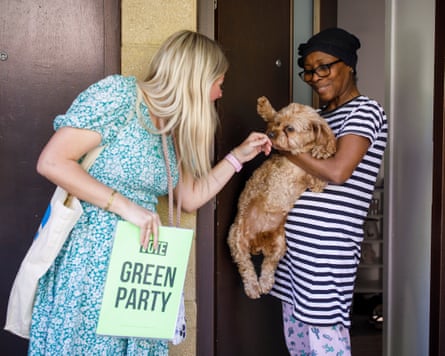
Zack Polanski's leadership of the Green Party's London campaign has been instrumental in galvanizing support across the capital's diverse neighborhoods. His strategic messaging has resonated particularly strongly with voters concerned about climate change, housing affordability, and economic inequality. The party's ability to attract defectors from Labour, particularly among younger demographics and university-educated professionals, has accelerated the Green surge in ways that established political analysts failed to predict. This electoral momentum reflects genuine shifts in voter priorities and policy preferences rather than temporary protest voting against Labour's current direction.
The timing of these elections coincides with broader national discussions about Labour's governance and policy agenda under Prime Minister Starmer. Local voting patterns frequently serve as referendums on national government performance, and London's progressive electorate appears to be expressing reservations about the government's trajectory. Environmental policy, social housing commitments, and economic justice remain central concerns for many voters considering switching their support to the Green Party. The concentration of Green gains in inner London reflects a geographic pattern where these issues resonate most intensely with constituent populations.
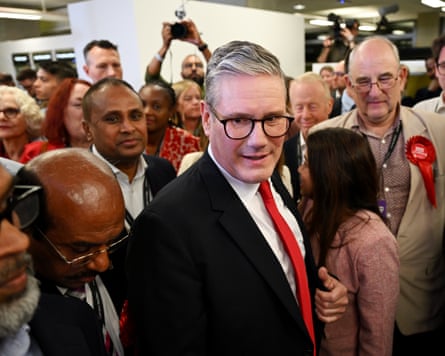
The potential for Green Party victories in multiple councils would create immediate operational challenges for Labour's national leadership and metropolitan strategy. Losing control of councils where Labour has maintained dominance for generations would necessitate fundamental reassessment of party messaging and policy positioning in urban areas. The financial and organizational implications of reduced council representation would be substantial, affecting Labour's capacity to deliver local services and maintain organizational infrastructure across these boroughs. Such losses would reverberate beyond London, signaling to Labour parties in other metropolitan areas that traditional support bases cannot be assumed to remain loyal indefinitely.
Voters in these contested boroughs cite multiple frustrations with Labour's current trajectory, ranging from insufficient action on climate change to inadequate responses to housing crises affecting younger generations. The Green Party's ability to articulate clear positions on these issues while maintaining appeal to progressive voters has created genuine electoral opportunities. Many longtime Labour voters express the sentiment that their party has drifted from its foundational commitment to social and environmental justice, creating space for Green alternatives to capture their votes. This perception, whether entirely accurate or not, has proven powerful enough to reshape electoral dynamics across London's inner boroughs.

The May elections in London will provide crucial data about the sustainability and scope of Green Party growth across the capital and beyond. Whether these gains represent a permanent realignment of progressive politics or a temporary expression of dissatisfaction with Labour will become clearer as results accumulate and broader patterns emerge. The performance in key contests like Hackney will be particularly instructive, as mayoral and council races in that borough are being closely watched by political analysts seeking to understand the depth of the Green surge. For Labour, these elections represent an inflection point where the party's strategic approach to metropolitan politics may require significant recalibration to address voter concerns and regain trust among constituencies it has long taken for granted.


