
Griffin Responds to Mamdani's Wealth Tax Video

Hedge fund founder Ken Griffin addresses safety concerns raised by activist Mamdani's video filmed outside his apartment building.
Hedge fund magnate Ken Griffin has publicly responded to a controversial video created by activist Abigail Mamdani, characterizing the footage as troubling and raising significant safety concerns. The video in question was filmed directly outside Griffin's residence, sparking considerable debate about activism, privacy, and personal security in the age of social media-driven advocacy campaigns.
Griffin, the founder and chief executive officer of one of the world's most prominent investment firms, took to public channels to express his dismay at what he described as a "creepy" approach to activism. The billionaire investor emphasized that the filming of his home residence crosses an important line between legitimate political discourse and invasive behavior that threatens personal safety and security protocols.
The activist video, which centered on wealth tax advocacy and income inequality, was designed to highlight the disparity between ultra-wealthy individuals and ordinary citizens. However, Griffin's response suggests that the method of delivery—specifically targeting his private residence—has become a point of intense contention, raising broader questions about the boundaries of acceptable protest and activism.
In his statement, the billionaire founder emphasized that such tactics create genuine concerns for his personal safety and that of his family members. He argued that while he respects diverse political viewpoints, including those advocating for wealth redistribution policies, the act of filming outside one's home represents an unacceptable intrusion into private life that goes beyond legitimate policy debate.
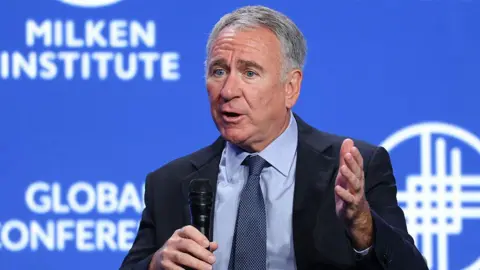
Ken Griffin's net worth places him among the world's richest individuals, and his business acumen has made him a frequent target for activists focused on economic inequality and progressive taxation. The video created by Mamdani appears to be part of a broader movement to draw attention to wealth concentration and advocate for policy changes that would impose higher taxes on the ultra-wealthy population.
Mamdani's activism has focused on highlighting the paradox of extreme wealth accumulation alongside growing wealth disparity. The video strategy appears designed to make abstract concepts of wealth inequality more tangible by connecting them to specific, identifiable billionaires and their luxurious living situations. However, this approach has ignited fierce debate about appropriate activist tactics and where the line exists between public interest and private harassment.
The incident touches on broader tensions within modern activism regarding methodology and proportionality. While advocates for wealth redistribution argue that public pressure on wealthy individuals can drive policy change, opponents contend that targeting specific individuals' homes represents vigilante activism that can escalate into dangerous territory. Griffin's response underscores these conflicting perspectives about how social change movements should operate.
Security experts have increasingly warned about the risks posed by publicly identifying and filming the residences of high-net-worth individuals. Such tactics can potentially expose targets to various security threats, from opportunistic crimes to coordinated harassment campaigns. Griffin's safety concerns appear grounded in these legitimate security considerations that apply to any individual whose home location becomes public knowledge through activism.
The wealth inequality debate has intensified significantly over recent years, with economists, politicians, and activists increasingly focusing on the concentration of assets among a small percentage of the population. Proposals for wealth taxes, enhanced capital gains taxation, and other progressive fiscal policies have gained prominence in policy discussions across multiple countries and political contexts.
Griffin himself has been outspoken regarding his own political perspectives, having donated substantial sums to various political candidates and causes. His financial influence in the political sphere has itself drawn scrutiny from those concerned about wealthy individuals' outsized influence on electoral processes and policy formation. The tension between his political participation and activist critiques of his wealth represents a microcosm of larger debates about money in politics and economic power structures.
Mamdani's video represents one in a growing catalog of content created by activists seeking to raise awareness about wealth concentration through direct, sometimes confrontational tactics. Similar campaigns have targeted other billionaires and wealthy individuals, attempting to translate abstract statistics about inequality into concrete, personalized examples that resonate with broader audiences on social media platforms.
The response from Griffin highlights how wealthy individuals increasingly feel compelled to publicly defend themselves against activism and criticism. While some view such responses as defensive posturing by the privileged class, others see them as legitimate assertions of privacy rights and personal safety concerns that transcend one's wealth status or political position.
Moving forward, this incident will likely contribute to ongoing conversations about appropriate boundaries for activist tactics and how movements advocating for economic change can operate ethically and effectively. The collision between Griffin's assertions of privacy and safety on one hand, and activist demands for accountability and change on the other, reflects a fundamental tension in contemporary American political discourse.
The broader context matters here: discussions about taxation policy and economic fairness remain legitimate and important elements of democratic debate. However, the methods used to advance these conversations—whether through policy advocacy, public discourse, or targeted campaigns—significantly impact their reception and effectiveness. Griffin's criticisms suggest that at least in his view, targeting individuals' homes crosses from acceptable activism into problematic territory.
This confrontation between a hedge fund leader and an activist represents a larger pattern of increasing polarization and conflict between different visions of economic justice and proper wealth distribution. Both sides of this debate command significant constituencies and demonstrate deep commitment to their respective positions regarding how society should structure economic policy and redistribute resources.
As the conversation continues to evolve, it will likely influence how future activism campaigns target wealthy individuals and how wealthy individuals respond to public criticism and advocacy efforts directed at them. The incident serves as a reminder that questions about economic equality, personal privacy, and appropriate activism tactics remain unresolved and increasingly contentious in contemporary society.
Source: BBC News


