
Gulf States Bear Brunt of Conflict They Didn't Start: Anger and Frustration Mount

Closure of the Strait of Hormuz puts pressure on the region's economies as Gulf states express growing resentment about a conflict sparked by the US and Israel.
An eerie quiet has descended upon Ras Al Khaimah's industrial port, usually a thriving maritime hub of the United Arab Emirates. Now, ships stand docked and silent as a backlog of hundreds of tankers have lined up in recent days, halted along a waterway flooded with danger. Any vessel heading past Ras Al Khaimah out to the Arabian Sea must traverse the world's most treacherous strip of water for shipping today: the Strait of Hormuz.
Just over 20 nautical miles from Ras Al Khaimah, two oil tankers heading for the strait were attacked by Iranian missiles this week, with one catching fire. This incident has put immense pressure on the region's economies amid growing resentment about a conflict that the Gulf states did not start.

The closure of the Strait of Hormuz, a critical global chokepoint for oil shipments, has left the Gulf states in a precarious position. Their economies, heavily dependent on maritime trade and energy exports, are now facing a worst nightmare scenario. "This is our nightmare come true," lamented a senior Emirati official. "We are bearing the brunt of a conflict we did not start."
The anger and frustration among the Gulf states is palpable. They find themselves caught in the crossfire of a conflict that was instigated by the US and Israel, two of their closest allies. "We are collateral damage in a war that is not ours," said a Kuwaiti diplomat, expressing the sentiment shared across the region.
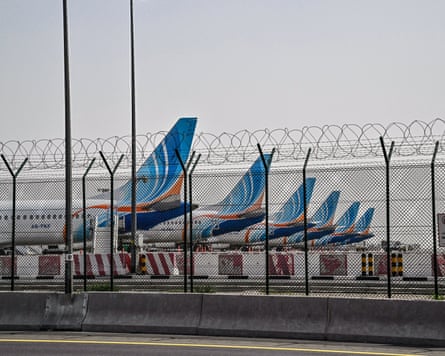
The economic consequences of the Strait of Hormuz closure are already being felt. Ports across the Gulf states are experiencing a significant slowdown in activity, with delayed shipments and disrupted supply chains. "Our businesses are suffering, our citizens are anxious, and we are powerless to stop this," said a Qatari businessman.
As the crisis deepens, the Gulf states are caught in a geopolitical quagmire, forced to navigate a delicate balance between their alliances and the realities on the ground. Their governments are urgently seeking diplomatic solutions to de-escalate the conflict and reopen the vital maritime chokepoint, but the path forward remains uncertain.
Source: The Guardian


