
Haas Principal Komatsu: Why We Shouldn't Be Fourth

Ayao Komatsu's unconventional leadership has pushed Haas to unprecedented heights this F1 season. Meet the rebel principal reshaping American motorsport.
There exists a unique presence in the Formula One paddock unlike any other team principal currently competing at motorsport's highest level. Ayao Komatsu, the Japanese leader of the Haas F1 Team, represents a distinctive blend of unconventional thinking and strategic risk-taking that has fundamentally altered the trajectory of American motorsport. His background is as compelling as his approach to team management—a rugby enthusiast with an unwavering passion for Coventry City Football Club, Komatsu deliberately departed his native Japan to break free from the rigid expectations of conformity that he found stifling in his homeland.
What makes Komatsu's story particularly fascinating is how he has channeled his rebellious spirit into tangible success within the Formula One ecosystem. Rather than adhering to the conservative, tradition-bound methodologies that have long dominated the sport, he has introduced fresh perspectives and bold decision-making that challenge conventional wisdom. His approach to team management, driver development, and strategic planning has earned him recognition as F1's most maverick principal—a leader who isn't content to simply follow established protocols when innovation and creative thinking might yield superior results.
The timing of Komatsu's rise to prominence within the Haas organization could not be more significant for American motorsport. As the team prepares for their inaugural home race at Miami this weekend, they find themselves in an extraordinary position that would have seemed improbable just months earlier. The Haas team currently occupies fourth place in the constructors' championship, an achievement that carries profound historical implications for the sport and for American competitiveness in Formula One.

This fourth-place standing represents the highest championship position ever achieved by an American-based Formula One team after the opening three races of any season in the entire history of the sport. To contextualize this accomplishment: Haas is simultaneously the smallest team competing in Formula One in terms of budget, staff, and infrastructure when compared to the established giants like Ferrari, Mercedes, and Red Bull. The disparity in resources between Haas and its competitors makes their current performance even more remarkable and speaks volumes about Komatsu's operational efficiency and strategic vision.
Komatsu's influence extends particularly strongly to young British driver Oliver Bearman, who has become something of a protégé under the team principal's mentorship this season. The relationship between Komatsu and Bearman exemplifies how unconventional leadership combined with unwavering support can unlock exceptional performance from emerging talent. Bearman has responded to Komatsu's confidence and strategic guidance by delivering consistent, competitive performances that have contributed substantially to Haas's unexpected surge up the championship standings.
The unconventional philosophy that Komatsu brings to his role as team principal stands in sharp contrast to the corporate, risk-averse culture that typically characterizes major Formula One organizations. Where other teams might shy away from bold driver selections, experimental setup choices, or strategic pit stop gambles, Komatsu has consistently demonstrated a willingness to embrace calculated risks. This approach has transformed Haas from a perennial midfield team into genuine contenders, forcing other teams to reassess their own strategies and operational models.
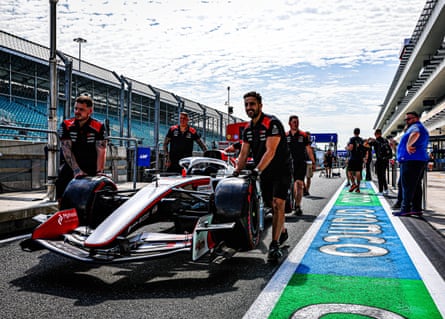
Komatsu's leadership philosophy is deeply rooted in his personal history and the experiences that shaped him as a manager and strategist. His decision to leave Japan represented more than mere geographical relocation; it symbolized a deliberate rejection of conformist expectations and a commitment to pursuing excellence through unconventional means. This same ethos now permeates the entire Haas organization, creating a culture where creative problem-solving is valued and where team members are encouraged to challenge assumptions rather than blindly accepting established procedures.
The Haas F1 team's unexpected performance this season has already begun to generate significant discussion within the broader motorsport community. Analysts, competitors, and fans are all attempting to understand how a relatively small, under-resourced organization has managed to outpace significantly better-funded rivals. Much of the credit must be attributed to Komatsu's strategic decision-making, his ability to attract top technical talent, and his relentless focus on maximizing every marginal gain available within the team's constraints.
When Komatsu initially entered Formula One, the sport represented something of a great escape for him—an opportunity to operate within an environment where his unconventional thinking could thrive rather than be suppressed. However, his journey from outsider to principal of an increasingly competitive team demonstrates that F1, while steeped in tradition, remains sufficiently flexible to reward innovation and fresh thinking. His presence at the helm of Haas has effectively served as a catalyst for change within an organization that might otherwise have resigned itself to perpetual midfield mediocrity.
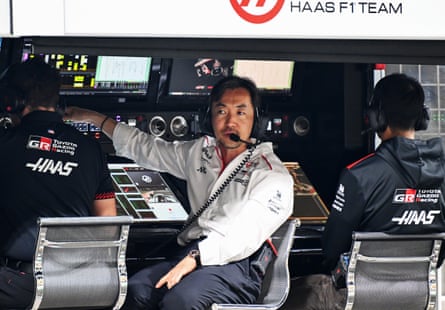
The Miami Grand Prix this weekend holds particular significance as Haas's first home race of the season, with the team positioned to potentially extend their championship lead and consolidate their standing as genuine championship contenders. For Komatsu personally, the Miami race represents validation of his approach—proof that his unconventional team management strategies can deliver tangible success even when competing against wealthier, more established rivals. The pressure will be considerable, but Komatsu has demonstrated throughout his tenure at Haas that he thrives in high-pressure situations and uses adversity as motivation rather than obstacle.
Understanding Komatsu's success requires acknowledging the broader context of Formula One's organizational structures and competitive dynamics. Haas's fourth-place standing in the championship must be viewed not merely as a statistical achievement, but as validation of a fundamentally different approach to team organization and strategic planning. The team's success suggests that bigger budgets and larger support staff are not necessarily prerequisites for competitive success—a conclusion that has profound implications for the future direction of the sport and for how other organizations might restructure their own operations.
The journey of Ayao Komatsu from outsider seeking escape in Formula One to principal leading one of the sport's smallest teams to unprecedented competitive heights remains one of the most compelling narratives currently unfolding in international motorsport. His story encapsulates broader themes about innovation, cultural exchange, and the power of unconventional thinking to challenge established hierarchies. As Haas prepares for their crucial Miami race, all eyes will be on Komatsu and his remarkable team to see whether they can sustain their momentum and continue defying expectations in a sport traditionally dominated by giants.
Source: The Guardian


