
Head-On Train Collision Near Copenhagen Leaves 4 Critical

A devastating head-on train collision occurred early Thursday at a level crossing north of Copenhagen, Denmark, with four people critically injured in the incident.
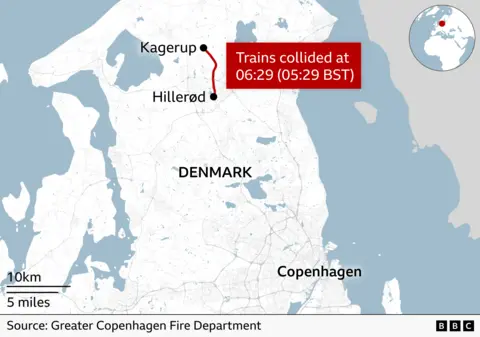
A head-on train collision has left four people in critical condition following a tragic accident that unfolded in the early morning hours of Thursday near Copenhagen, Denmark. The train crash occurred at a level crossing situated in a northern area of the Danish capital, prompting an immediate emergency response from local authorities and rescue teams who rushed to the scene to assist the injured passengers and crews involved.
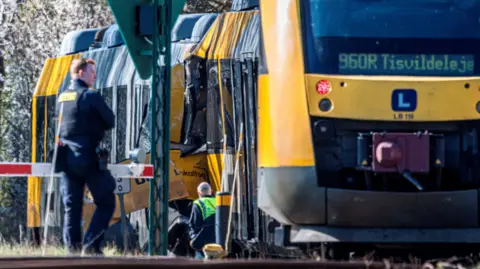
Emergency services arrived quickly at the location following reports of the collision, with paramedics and firefighters working diligently to extract victims from the wreckage and provide critical medical care. The severity of the impact resulted in significant structural damage to both trains involved in the accident, complicating rescue operations and extending the time needed to safely remove all individuals from the scene. Medical personnel established triage areas to assess and prioritize treatment for the numerous individuals affected by this railway accident.
Authorities have initiated a comprehensive investigation into the circumstances that led to this Denmark train accident, examining potential causes including signaling failures, operator error, or mechanical malfunctions. Initial reports suggest the collision was particularly severe due to the high speeds at which both trains were traveling at the moment of impact, amplifying the force of the crash and the extent of injuries sustained. Transportation safety officials have cordoned off the affected area and begun collecting evidence and witness statements to reconstruct the exact sequence of events.
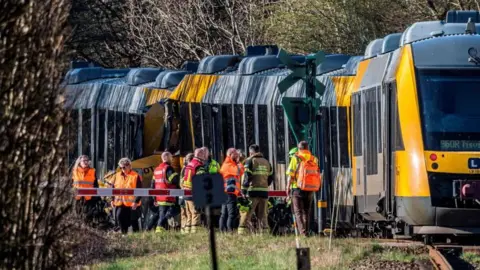
The level crossing where the accident transpired has been identified as a critical infrastructure point along Denmark's rail network, raising questions about safety protocols and maintenance procedures at such vulnerable junctures where road and rail traffic intersect. Railway operators have suspended service on the affected line while investigations continue, potentially impacting thousands of commuters who depend on this corridor for daily transportation. Authorities are evaluating whether additional safety measures or infrastructure upgrades may be warranted at this location to prevent similar incidents in the future.
The four individuals reported in critical condition were immediately transported to nearby medical facilities where they are receiving specialized trauma care from teams of experienced physicians and surgeons. Family members and loved ones have been notified of the incident and are being provided support services during this distressing time. Hospital officials have issued statements indicating they are monitoring the conditions of the injured individuals closely and will provide updates as their medical status evolves.
This incident marks a significant event in Danish transportation history and has drawn attention to broader rail safety concerns across the country's extensive network. Railway accident investigations in Denmark typically involve multiple agencies, including the Danish Safety Board, which coordinates with international experts to ensure thorough and impartial analysis of such catastrophic events. The findings from this investigation will likely result in recommendations aimed at enhancing safety protocols and technological systems that help prevent future collisions.
Witnesses to the train collision have reported harrowing accounts of the moment of impact, describing a sudden violent shock followed by the sounds of metal grinding and passengers crying out for help. Some bystanders near the level crossing rushed to assist injured parties before professional emergency personnel could arrive on scene. These eyewitness accounts are proving invaluable to investigators seeking to understand exactly what transpired during those critical moments.
The psychological impact on survivors, witnesses, and first responders is also being addressed through counseling services and support programs offered by Danish health authorities. Train operators and crew members who were on duty during the accident are receiving debriefing sessions and mental health support as they process the traumatic nature of the event. Mental health professionals recognize that such incidents can have lasting effects on those directly involved and affected by the tragedy.
Infrastructure and safety experts are now scrutinizing the design and operation of the level crossing in question, examining whether current systems adequately alert drivers and train operators to potential hazards. Modern railway systems typically employ various warning mechanisms including lights, bells, and gates, but their effectiveness depends on proper maintenance and timely response from all parties involved. Engineers will determine whether technological upgrades such as automated collision avoidance systems might be beneficial for this and similar crossings.
Denmark's railway system, operated primarily by Danske Statsbaner and other approved operators, carries millions of passengers annually and maintains a generally strong safety record compared to rail networks in other European nations. However, this incident serves as a sobering reminder that even well-maintained systems can experience catastrophic failures when multiple factors align unfavorably. Ongoing investment in rail infrastructure modernization and safety technology remains a priority for Danish transportation officials and policymakers.
The investigation into this head-on train accident will likely continue for several weeks or months as authorities examine technical data, conduct forensic analysis, and interview all parties involved. Preliminary findings will eventually be published, followed by a comprehensive final report detailing conclusions and recommendations for preventing similar incidents. This transparent approach to accident investigation is standard practice in Denmark and helps ensure public confidence in rail transportation safety measures.
Source: BBC News


