
HMS Victory's 15-Tonne Mast Lifted in Historic Restoration

Expert team removes iconic foremast from Nelson's flagship during £42m conservation project. Discover how they protected this historic vessel.
In one of the most delicate maritime operations ever undertaken, a specialized team of craftspeople successfully removed the 15-tonne foremast from HMS Victory, Nelson's legendary flagship from the Battle of Trafalgar. The intricate extraction, which took place over the course of Monday night into Tuesday morning, represents a crucial milestone in the HMS Victory restoration project, a comprehensive £42 million conservation initiative aimed at preserving this globally treasured naval monument for future generations. The painstaking operation demonstrates the extraordinary lengths heritage conservators will go to maintain the integrity of Britain's most celebrated warship.
The removal of such a massive and historically significant component required unprecedented precision and planning. A team of 30 skilled professionals, including master shipwrights and experienced riggers, worked in perfect coordination to safely extract the wrought iron mast without causing any damage to the vessel's structure or compromising the integrity of this 18th-century engineering marvel. Every movement was calculated, every measurement verified multiple times, and every contingency plan carefully rehearsed before the operation commenced. The collective expertise assembled for this task represented decades of combined experience in maritime heritage conservation and historical ship restoration.
The foremast itself is an engineering marvel from its era, crafted from wrought iron and standing as a testament to the craftsmanship of 18th-century shipbuilders. Over the course of more than two centuries since the ship's commissioning, this massive timber and metal structure has endured countless challenges, from the ravages of salt water and weather to the vibrations and stresses of naval warfare. The historic mast removal allows conservators to thoroughly inspect, document, and preserve this irreplaceable component of the ship in ways that would be impossible if it remained in place. The detailed examination will provide invaluable insights into the original construction techniques and materials used during HMS Victory's construction in the 1760s.

The £42 million conservation project represents one of the largest heritage restoration undertakings in recent British history. This ambitious initiative aims to address decades of wear and deterioration, ensuring that HMS Victory can be properly preserved and displayed for at least another century. The project encompasses far more than simply removing and reinstalling the foremast; it includes comprehensive structural repairs, restoration of the ship's interior spaces, stabilization of the hull, and detailed conservation work on thousands of individual components. Each phase of the project is conducted under the watchful eye of conservation experts who understand the historical significance and technical complexities involved.
The operational logistics of removing such a massive object from a confined historic vessel presented extraordinary challenges. The team had to design and build custom lifting apparatus that could safely distribute the weight of the 15-tonne mast across multiple support points, ensuring that no single area of the ship's structure bore undue stress. Advanced engineering calculations determined the precise angles of lift, the speed of descent, and the positioning of support equipment. Weather conditions, tidal movements, and seasonal factors all had to be carefully considered in scheduling this critical operation. The expertise required to execute such work demonstrates why heritage ship conservation represents one of the most specialized and demanding fields within the broader conservation industry.

HMS Victory holds an almost mythological status within British maritime history and national cultural consciousness. The ship served as Admiral Lord Nelson's flagship during the Battle of Trafalgar in 1805, one of the most significant naval engagements in world history, where the British Royal Navy decisively defeated combined French and Spanish forces. Nelson's victory at Trafalgar established British naval supremacy for more than a century and remains one of the most studied and celebrated military engagements of the Napoleonic era. The ship itself has survived shipwreck, multiple refits, and the general passage of time to remain largely intact, making it one of the oldest naval vessels still in existence.
The conservation work being undertaken on HMS Victory extends beyond simple maintenance or cosmetic restoration. This is a comprehensive architectural and structural intervention designed to address fundamental deterioration while maintaining the historical authenticity of the vessel. Conservators have employed cutting-edge diagnostic technologies, including structural analysis, materials testing, and three-dimensional imaging, to understand the exact nature and extent of damage and decay. The insights gained from removing and examining the foremast will inform decisions about how to approach other critical structural elements of the ship. This methodical, evidence-based approach to conservation ensures that decisions are grounded in scientific understanding rather than assumptions or guesswork.
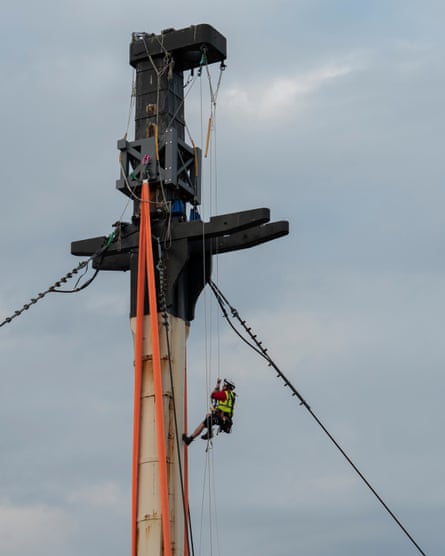
The successful removal of the foremast represents the culmination of months of planning, preparation, and coordination among multiple specialist teams. Project managers had to coordinate not only the physical removal operation but also the design and construction of temporary support structures, the arrangement of specialized equipment, and the scheduling around other ongoing conservation work. Communication between team members was absolutely critical, with constant updates and adjustments made as conditions changed. The operation proceeded without incident, a testament to the professionalism and expertise of everyone involved in this historic preservation effort.
Looking forward, the detailed examination and conservation of the foremast will provide information that extends well beyond the immediate needs of the restoration project. Historians and archaeologists will be able to study the construction techniques, materials sources, and repair work conducted throughout the ship's long history. These insights could contribute to broader scholarly understanding of 18th-century naval engineering and shipbuilding practices. The documentation of this work, including detailed photography, measurements, and analysis, will create a comprehensive record that will be valuable to future researchers and conservators.
The £42 million HMS Victory conservation initiative demonstrates the cultural importance that Britain places on preserving its maritime heritage and historical monuments. This investment reflects recognition that some buildings and objects possess such profound historical and cultural significance that they warrant extraordinary efforts and expenditures to ensure their survival. HMS Victory is not merely a ship; it is a physical embodiment of an important moment in history, a testament to the courage and sacrifice of those who served aboard her, and a tangible link to the past for contemporary visitors and future generations. By successfully removing and conserving the foremast, the project team takes another important step toward ensuring that this iconic warship will continue to educate and inspire for decades to come.
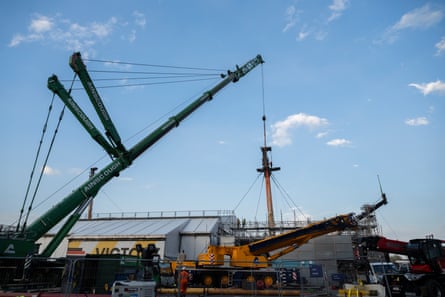
The completion of the foremast removal marks the conclusion of one significant phase in an ongoing restoration journey. The carefully orchestrated operation showcased the remarkable skills and dedication of modern heritage conservators who combine traditional craftsmanship with contemporary technology and scientific methods. As the project moves forward with the detailed examination and conservation of the removed foremast, and as work continues on other aspects of the ship's restoration, HMS Victory will be progressively transformed. The final result promises to be a fully restored historic ship that is structurally sound, thoroughly documented, and ready to serve as an inspiring monument to British naval history for at least another hundred years.
Source: The Guardian


