
Homeland Security Nominee Markwayne Mullin Advances in Senate

Republican senator's nomination to lead the Department of Homeland Security moves forward despite concerns over his approach to immigration and past controversies.
Markwayne Mullin, the Republican senator, has seen his nomination to lead the Department of Homeland Security (DHS) advance through a key Senate committee. The nomination will now be considered by the full Senate, where the GOP appears poised to confirm him despite some concerns over his past comments and actions.
On Thursday, the Senate committee on homeland security and governmental affairs voted largely along party lines to move Mullin's nomination forward. The sole exception was the panel's chair, Rand Paul of Kentucky, who had previously criticized Mullin for comments he made about a neighbor who assaulted Paul in 2017, as well as an incident six years later in which Mullin readied himself to fight a witness at a committee hearing.
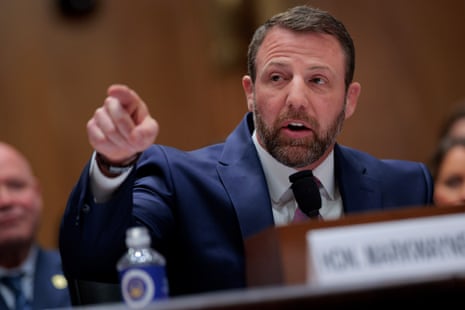
Mullin's nomination comes as the Republican-controlled Senate is expected to confirm him, reflecting the party's priorities on immigration enforcement and homeland security. However, his past comments and actions have raised concerns among some lawmakers about his approach to these issues.
During his confirmation hearing, Mullin faced questions about his stance on Donald Trump's immigration enforcement agenda and allegations that he had encouraged violence. While he sought to assuage these concerns, his nomination has become a flashpoint in the ongoing debate over the direction of the nation's homeland security policies.
The advancement of Mullin's nomination sets the stage for a pivotal Senate vote, where the Republican majority appears poised to confirm him as the next leader of the Department of Homeland Security. This decision will have significant implications for the agency's priorities and approach to a range of critical issues, including immigration, border security, and domestic threats.
As the confirmation process continues, the debate over Mullin's suitability for the role is likely to intensify, with both supporters and critics weighing in on his qualifications and his potential impact on the nation's homeland security efforts.
Source: The Guardian


