
Houston Comets: The Team That Electrified Women's Basketball

How the Houston Comets won the WNBA's first championship in 1997, featuring Cynthia Cooper and a historic inaugural season that changed women's sports forever.
When the Houston Comets took the court for the WNBA's inaugural season in 1997, few could have predicted the electrifying impact this team would have on professional women's basketball. Against all odds, the Comets did more than just participate—they dominated, capturing the league's first-ever championship and cementing their place in sports history. The journey from opening tipoff to the championship parade was filled with unforgettable moments, legendary performances, and the kind of drama that would define an era in women's athletics.
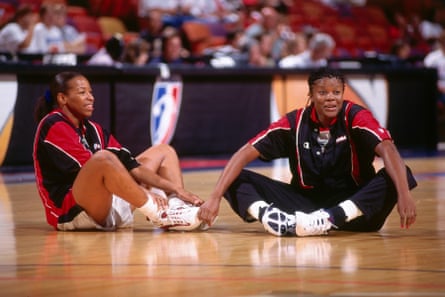
The story of the Comets' remarkable season is one of talent colliding with opportunity, ambition meeting preparation, and a group of athletes determined to prove that women's basketball could captivate audiences across the nation. Featuring superstar Cynthia Cooper, whose scoring prowess seemed almost unstoppable, alongside key contributors like Fran Harris, Tammy Jackson, and Kim Perrot, the Comets represented something revolutionary. These weren't just skilled players—they were pioneers who would reshape the landscape of professional sports and inspire generations to come.
Fran Harris, one of the cornerstones of that championship team, recalls a pivotal moment that encapsulates the confidence and chemistry that propelled Houston to glory. Following a commanding 10-point victory over the Sacramento Monarchs on July 25, 1997, Harris and several teammates ventured out for a celebratory late-night dinner in Sacramento. The conversation during that meal would later symbolize the unshakeable self-belief that defined their championship run.

During that Sacramento dinner, Harris found herself marveling at the performance Cooper had just delivered. "I said to Cynthia, 'I just cannot believe how great you're playing – and I know how great you are!'" Harris explains to the Guardian with obvious admiration in her voice. Cooper's response was characteristically bold and unapologetic: "And she goes, 'I know!' She was just, like, Yeah, I'm the motherfucker! I was like, 'You absolutely are!'" The exchange captured the essence of Cooper's dominance that season and the mutual respect shared among her teammates.
Cynthia Cooper's 44-point performance against Sacramento exemplified why she would become one of the defining figures of early WNBA history. Her scoring ability was not merely a statistical accomplishment—it was a statement that women's professional basketball had arrived and could produce world-class athletes capable of executing at the highest levels. Cooper's consistency, range, and basketball intelligence throughout the 1997 season served as the foundation upon which the Comets' championship aspirations were built.
The inaugural WNBA season arrived at a unique moment in American sports culture. Women's athletics had gained increased visibility through events like the 1996 Olympics, and there was genuine curiosity about whether a professional women's basketball league could sustain itself. The Houston Comets, wearing their distinctive red, white, and blue uniforms, became the standard-bearers for this bold new experiment. Their success would prove skeptics wrong and validate the investment in professional women's basketball.
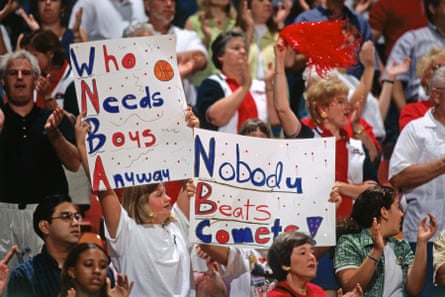
Beyond the court, the Comets' championship run was marked by the kind of personal drama and human moments that make sports narratives so compelling. The team had to navigate their own internal dynamics—personalities that sometimes clashed, competitive spirits that occasionally conflicted, and the inevitable tensions that arise when talented individuals share a singular goal. Yet through it all, they remained focused on their mission.
One of the most poignant moments of the entire championship season came during the title night celebrations, when the reality of world events intruded upon the joy of athletic achievement. As the Comets were savoring their historic triumph, news of Princess Diana's tragic death reached the jubilant crowd. The collision of these two monumental moments—one representing the pinnacle of professional accomplishment and the other representing profound loss—created an emotional complexity that the team and fans would never forget. The celebration, though joyful in its essence, took on a more somber and reflective character.
The presence of Hakeem Olajuwon, the NBA superstar who called Houston home, created fascinating dynamics around the Comets' championship season. The basketball world was watching to see how the city's male and female stars would coexist in the sports landscape. Rather than competition for attention, there was mutual respect, and the Olajuwon-Comets connection became another interesting narrative thread in Houston's sports tapestry. These interactions between NBA and WNBA players helped legitimize the fledgling women's league in the eyes of casual sports fans.
The championship parade through Houston's downtown core became a watershed moment for the franchise and the city. Thousands of fans lined the streets to celebrate their heroes, creating scenes that would have been unimaginable just months earlier. The parade wasn't merely a victory lap—it was a validation that women's professional basketball could generate genuine excitement and community pride. The sight of Cynthia Cooper, Fran Harris, and their teammates being honored by their home city sent a powerful message about the legitimacy and importance of what they had accomplished.
What made the Comets' 1997 championship so significant extended far beyond the immediate victory. This team proved that a women's sports team could build a championship-caliber roster, execute at the highest levels of competition, and capture the imagination of basketball fans. The combination of elite talent, championship-level coaching, and team chemistry created a blueprint that other WNBA franchises would study and attempt to replicate.
The legacy of that 1997 Houston Comets team continues to resonate through professional women's basketball. They established standards of excellence that remain relevant today. Every WNBA championship winner that has followed owes a debt to the Comets, who proved it was possible, who showed that women's professional basketball wasn't a curiosity but a genuine sporting endeavor worthy of respect and attention.

The personal relationships forged during that championship season became lasting bonds. The dinners, the celebrations, the challenges overcome together—these experiences created a fraternity among the Comets that transcended basketball. Years later, Harris and her teammates would reflect on 1997 not just as a season of wins and losses, but as a transformative period in their lives and in the history of women's athletics.
Today, when people discuss the WNBA's first championship, they are not merely recounting a historical fact—they are celebrating a moment when women's professional basketball arrived in full force. The Houston Comets, led by the incomparable Cynthia Cooper and supported by Harris, Jackson, Perrot, and others, didn't just win a title; they launched a new era in sports. Their 1997 season remains the gold standard for inaugural success, a shining example of what becomes possible when talent, determination, and opportunity align perfectly. That city of Houston was indeed electric, and the vibrations from that championship season continue to power women's basketball to this day.
Source: The Guardian


