
ICE Plans Facility on PFAS-Contaminated Louisiana Site

ICE plans to build a family detention facility on England Airpark in Louisiana, a site heavily contaminated with toxic PFAS 'forever chemicals' at dangerous levels.
The Trump administration's Immigration and Customs Enforcement (ICE) agency is moving forward with plans to construct a detention facility designed to house children and families at a location marked by significant environmental contamination concerns. The proposed facility would be situated at England Airpark, a former military installation located in Louisiana that environmental experts have identified as one of the nation's most severely PFAS-contaminated sites.
The planned detention center represents a controversial expansion of the Trump administration's immigration enforcement initiatives and would serve as a central hub for the government's aggressive deportation programs. This development has raised substantial questions about the appropriateness of housing vulnerable populations, particularly children, at a location with documented environmental hazards that could pose significant health risks to residents.
England Airpark, formerly known as England Air Force Base, stands as a sprawling former military facility that has struggled with serious environmental contamination issues in recent years. The site's groundwater has been discovered to contain dangerously elevated levels of per- and polyfluoroalkyl substances (PFAS), commonly referred to as 'forever chemicals' due to their persistence in the environment and human body.
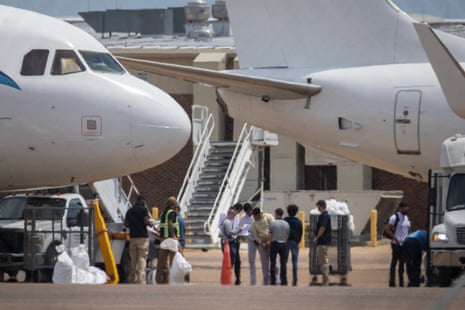
Testing conducted at the England Airpark site has revealed PFAS concentrations of at least 41 million parts per trillion (ppt) in the groundwater, levels that far exceed safe drinking water standards established by environmental protection agencies. These measurements place the facility among the most polluted locations in the entire United States when it comes to PFAS contamination. The persistent presence of these chemicals in the groundwater raises serious questions about potential exposure pathways and health implications for anyone residing at or near the facility.
PFAS chemicals have become increasingly recognized as a significant public health concern across the United States and globally. These synthetic compounds, widely used in industrial applications and consumer products such as non-stick cookware, stain-resistant textiles, and aqueous film-forming foams used in firefighting, have contaminated water supplies and soil across numerous communities. The chemicals do not break down naturally in the environment, hence their designation as "forever chemicals," and they have been linked to various health problems including liver damage, thyroid disease, and compromised immune function.
The decision to establish a family detention center at England Airpark comes as part of the broader Trump administration strategy to expand detention capacity for migrants and asylum seekers. The facility would specifically house families with children, a population that requires particular consideration regarding health, safety, and environmental conditions. Critics argue that placing such vulnerable populations in an area with known environmental contamination represents a troubling disregard for public health and children's welfare.
The England Airpark site's history as a military installation is significant to understanding the source of its contamination. Military bases across the United States have been identified as major sources of PFAS pollution, particularly due to the extensive use of aqueous film-forming foams (AFFF) in aircraft firefighting training and emergency response activities. These foams, which contain high concentrations of PFAS compounds, were used at military installations for decades before the environmental and health risks became widely recognized.
Environmental advocacy organizations and public health experts have expressed serious concerns about the plan to develop a detention facility at this contaminated site. The decision appears to prioritize the expansion of immigration enforcement infrastructure while minimizing or ignoring the environmental health risks associated with the location. Advocacy groups have called for a comprehensive environmental assessment and consideration of alternative sites that would not expose vulnerable populations to known chemical contaminants.
The ICE detention facility project also raises broader questions about the Trump administration's immigration enforcement priorities and resource allocation. Rather than investing in humane processing centers with adequate legal representation and services, the administration has chosen to expand detention capacity, a strategy that critics argue perpetuates a costly and ineffective approach to immigration management.
Louisiana's environmental challenges extend beyond the England Airpark site, as the state has historically struggled with industrial pollution and environmental contamination. The state's long history of petrochemical industry development and military installations has left numerous sites with varying degrees of environmental degradation. Placing a federal detention facility at one of the state's most contaminated locations adds to these existing environmental justice concerns that predominantly affect communities with limited political power and resources.
The health implications of PFAS exposure for detained populations deserve careful consideration. Research has demonstrated that PFAS compounds accumulate in human blood and tissues over time, and exposure to contaminated water sources represents a direct pathway for bioaccumulation. Individuals held in detention for extended periods could face prolonged exposure to these persistent chemicals, with unknown long-term health consequences.
Federal regulations regarding PFAS in drinking water have been slow to develop, and safe levels of exposure remain subjects of scientific debate. The Environmental Protection Agency has issued health advisories and is working to establish enforceable drinking water standards, but these regulatory efforts have proceeded at a measured pace. In the interim, many contaminated sites remain inadequately addressed, and facilities continue to operate in areas where PFAS levels exceed recommended safety thresholds.
The decision to locate the ICE family detention facility at England Airpark represents a convergence of immigration policy priorities and environmental oversight failures. Rather than viewing environmental contamination as a barrier to facility development, the Trump administration appears to have proceeded with plans despite documented health risks. This approach raises fundamental questions about the government's obligations to protect the health and safety of individuals in its custody, particularly vulnerable populations such as children and families.
Local communities and environmental groups in Louisiana have begun mobilizing opposition to the facility. However, the federal government's broad authority over immigration enforcement and facility development, combined with the site's status as federal property, may limit the ability of state and local authorities to prevent or significantly modify the project. The situation highlights ongoing tensions between federal immigration enforcement priorities and state and local environmental protection concerns.
Looking forward, the England Airpark detention facility project will likely face legal and legislative challenges as awareness of the PFAS contamination issue grows. Environmental health advocates and immigration rights organizations are expected to work together to oppose the facility and push for more suitable locations for any necessary detention infrastructure. The outcome of these efforts remains uncertain, but the case has already become emblematic of broader debates about immigration enforcement, environmental justice, and government priorities.
Source: The Guardian


