
Immigration Judges Under Pressure in Trump's Deportation Era

Former and current immigration judges face firing and buyouts as Trump administration escalates deportation enforcement. Judges report pressure to toe government line.
The landscape of American immigration law has undergone a dramatic transformation in recent months, with immigration judges finding themselves at the center of an intensifying political and administrative storm. The Trump administration's aggressive approach to deportation enforcement has fundamentally altered the working conditions, job security, and ethical landscape for those tasked with adjudicating immigration cases across the nation. Judges who have spent years interpreting immigration law now report unprecedented pressure to align their decisions with executive priorities, while those who resist face termination or are being systematically encouraged to leave through voluntary buyout programs.
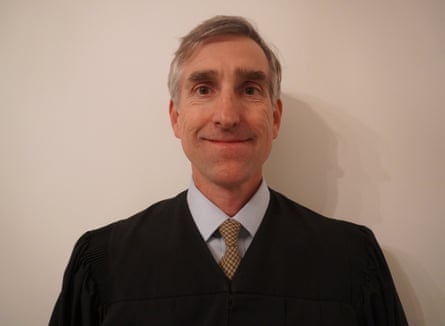
David Koelsch, a former immigration judge based in Maryland, has become an unlikely witness to the human toll of this enforcement surge. When he traveled to Minneapolis to visit his mother and sister, he found himself drawn to Nicollet Avenue on a day that would become emblematic of the administration's approach to immigration enforcement. The shooting death of Alex Pretti by federal agents during an immigration-related incident served as a stark reminder of the high stakes involved in immigration enforcement operations. Koelsch's decision to simply stand and bear witness to the tragedy—without protest signs or formal activism—reflected the complex emotional landscape many immigration professionals now navigate.
"I didn't go there to protest. I didn't bring a sign. I didn't bring anything. I just went to stand and bear witness," Koelsch explained, capturing the quiet resistance some immigration judges feel toward policies they view as ethically troubling. His presence at the scene represented more than casual interest; it symbolized the internal conflict many judges experience as they grapple with their professional responsibilities and personal moral convictions. The incident highlighted how immigration enforcement actions have extended beyond courtroom decisions into street-level confrontations that sometimes turn tragic.

The current crisis in immigration judging has been building for months as the administration has pursued an aggressive agenda of removing undocumented immigrants and tightening asylum policies. Judges across the country have reported receiving directive after directive to expedite cases, deny asylum claims at higher rates, and generally adopt a stricter interpretation of immigration law. These directives, while not explicitly requiring judges to rule in particular ways, create an unmistakable pressure that many describe as incompatible with judicial independence. The cumulative effect has been a wholesale transformation of how immigration cases are handled in American courts.
Several immigration judges have already departed their positions, either through involuntary termination or by accepting buyout packages offered by the administration. The departures represent a significant loss of institutional knowledge and experience within the immigration court system. Those judges who have been terminated often cite their refusal to accelerate proceedings or deny asylum cases without proper consideration as the reason for their dismissal. The buyout programs, while ostensibly voluntary, carry an implicit threat: accept the offer and leave quietly, or face potential termination proceedings for insufficient deportation productivity.
The judges who remain in their positions describe an environment of profound professional discomfort and ethical tension. They report that their caseloads have increased dramatically while the time allocated for hearings has decreased. This combination makes it increasingly difficult to properly hear asylum claims, examine evidence, or provide due process to immigrants who appear before them. The pressure to produce higher deportation rates effectively transforms judges from neutral arbiters into de facto enforcement agents for the administration's immigration policy.

Judicial independence has emerged as a central concern in discussions among immigration law professionals. Historically, federal judges have been protected from political pressure through lifetime appointments and institutional safeguards. However, immigration judges technically serve at the pleasure of the Attorney General and lack the same protections afforded to other federal judges. This distinction has allowed the administration to exert direct control over immigration judges in ways that would be unthinkable in other judicial contexts. The lack of structural protection has made immigration judges particularly vulnerable to pressure and intimidation.
The psychological and moral toll on remaining judges cannot be overstated. Many entered the field believing they would serve as fair arbiters interpreting complex immigration law. Instead, they find themselves in an environment where they are expected to align decisions with executive priorities rather than with their understanding of the law. Some judges have described the situation as untenable, noting that they cannot ethically continue in positions where they feel pressured to violate due process principles or deny asylum to people with legitimate claims.
One judge, speaking anonymously to protect her career, stated: "Everyone has a breaking point." This simple but profound observation captures the current crisis in immigration adjudication. Judges are reaching their limits—the point at which they can no longer reconcile their professional ethics with administrative expectations. Some have already crossed that line by accepting buyouts or transferring to other positions. Others continue to work within the system while silently resisting through more thorough case review or by writing detailed opinions explaining their decisions, even when those decisions contradict administration preferences.

The deportation drive has also affected the broader immigration legal community. Immigration attorneys report difficulty predicting outcomes in cases before particular judges, as the application of law has become increasingly inconsistent. This unpredictability makes it harder to advise clients and develop legal strategies. The loss of experienced judges means that less experienced adjudicators are handling increasingly complex cases, which paradoxically may lead to legal errors that could result in lawsuits against the government.
Legal advocacy organizations have begun documenting the changes in immigration court proceedings and their impact on case outcomes. Statistics show significant increases in deportation rates and decreases in asylum grants in recent months. These trends correlate closely with administrative changes and new policies, suggesting that the environment of pressure is indeed affecting judicial decision-making. The data-driven evidence of these trends has provided ammunition for critics who argue that the system is becoming politicized.
The situation facing immigration judges reflects broader tensions in American governance regarding the proper balance between executive power and judicial independence. While the executive branch has legitimate authority over immigration enforcement policy, the judicial system's traditional role includes checking executive power and ensuring that laws are applied fairly and consistently. When these two functions come into conflict, the system itself suffers. Immigration judges find themselves squeezed between competing demands: serving as judges bound by law and professional ethics, while simultaneously being employees of an administration with clear enforcement priorities.
Looking forward, the sustainability of the current system remains questionable. If experienced judges continue to depart and the environment of pressure intensifies, the immigration court system may face a crisis of legitimacy and functionality. The loss of skilled adjudicators could lead to increased legal challenges, appeals, and costly litigation. Additionally, the transformation of immigration judges from neutral arbiters to enforcement agents undermines public confidence in the fairness of the system.
David Koelsch's decision to stand witness at the scene of Alex Pretti's death symbolizes the broader position many immigration judges find themselves in—present at the intersection of law, policy, and human consequence, struggling to maintain their integrity while working within a system undergoing fundamental transformation. The stories of judges leaving their positions, the reports of those remaining under pressure, and the documented changes in case outcomes all point to a system in crisis. Whether the immigration court system can survive this period of stress while maintaining its judicial integrity remains one of the defining questions of the current political moment.
Source: The Guardian


