
India's Silk Revolution: Scientists Turn Tech Innovators

Discover how Indian scientists are modernizing silk production with cutting-edge technology. Explore the transformation of India's ancient silk industry.
India's silk industry, one of the world's most ancient and revered textile sectors, is undergoing a profound transformation driven by scientific innovation and technological advancement. What was once a labor-intensive craft passed down through generations is rapidly evolving into a high-tech business that combines traditional sericulture practices with modern scientific methods. This remarkable shift represents a new chapter in India's economic development, particularly in rural regions where silk farming has historically been a cornerstone of community livelihoods.
The transition from conventional silk farming to technology-driven production reflects a broader trend in Indian agriculture where scientific expertise meets traditional knowledge. Scientists and researchers who once focused purely on theoretical work are increasingly stepping into the role of silk entrepreneurs and industry innovators. These professionals bring with them sophisticated understanding of genetics, entomology, biochemistry, and industrial engineering—disciplines that are revolutionizing how silk is cultivated, processed, and marketed in the modern economy.
India holds a significant position in global silk production, accounting for a substantial share of the world's supply. The country's silk industry employs hundreds of thousands of workers across multiple states, with particularly strong concentrations in Karnataka, Andhra Pradesh, Tamil Nadu, and West Bengal. However, the sector has long faced challenges related to productivity, quality consistency, and economic viability for small-scale farmers. These obstacles have created an urgent need for innovation and modernization to keep the industry competitive in contemporary international markets.
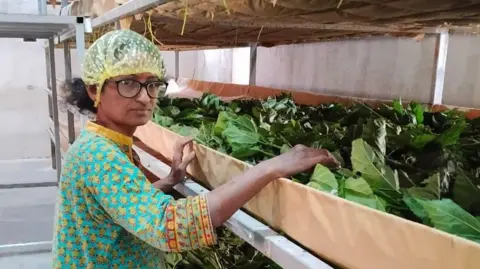
The integration of scientific research and development into silk production has led to remarkable improvements in several critical areas. Advanced breeding programs have produced silkworm varieties with enhanced productivity, disease resistance, and silk quality characteristics. Scientists have developed new strains that thrive in diverse climatic conditions, allowing silk farming to expand into previously unsuitable regions. Additionally, computerized monitoring systems now track environmental conditions within sericulture facilities, optimizing temperature, humidity, and light exposure to maximize cocoon yields and silk quality.
One of the most significant developments has been the application of biotechnology and genetic research to create superior silkworm strains. Researchers have utilized molecular genetics to identify and enhance traits such as disease resistance, feed efficiency, and silk production capacity. These innovations have resulted in silkworms that produce more silk per insect while consuming less mulberry leaf food, directly improving the economic returns for farmers. The scientific approach has also enabled the development of silkworms capable of producing colored silk naturally, eliminating the need for chemical dyes and appealing to environmentally conscious consumers.
The mechanization of silk processing and manufacturing represents another critical component of the industry's technological transformation. Traditional methods of cocoon cooking, filature, and weaving are being complemented or replaced by automated systems that increase efficiency and consistency. Digital looms controlled by computer programs can produce complex patterns and designs with precision previously unattainable through manual methods. These technological advances have enabled Indian silk producers to meet international quality standards and compete effectively with silk manufacturers in other countries.
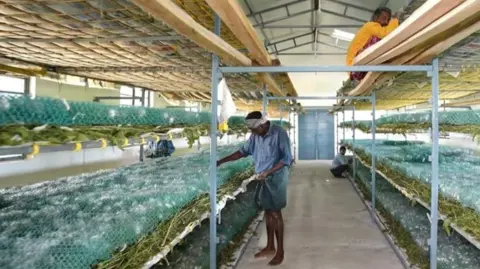
Sustainable production practices have become increasingly important as consumers worldwide demand environmentally responsible products. Scientists working in the silk industry have developed eco-friendly methods for cocoon treatment and silk extraction that minimize water usage and chemical waste. Research into organic mulberry cultivation has yielded insights that help farmers reduce dependence on synthetic pesticides and fertilizers. These innovations not only address environmental concerns but also allow Indian silk producers to access premium markets willing to pay higher prices for sustainable, ethically produced silk.
The emergence of silk industry entrepreneurs with scientific backgrounds has brought a new business perspective to the sector. These scientifically trained professionals understand both the technical aspects of production and the principles of modern commerce, marketing, and supply chain management. Many have established research centers, technology hubs, and innovation incubators dedicated to advancing silk production methods. Their ventures demonstrate how knowledge-intensive approaches can transform traditional agricultural sectors into modern, profitable industries capable of generating employment and economic growth.
Government support and investment in silk industry research have played a crucial role in facilitating this technological transition. The Central Silk Board and various state agricultural departments have funded numerous research projects aimed at improving sericulture practices and commercializing new technologies. Educational institutions across India have developed specialized programs in sericulture and silk technology, training the next generation of scientists and entrepreneurs who will continue advancing the industry. These initiatives reflect recognition of silk production's potential as a significant economic driver for rural India.
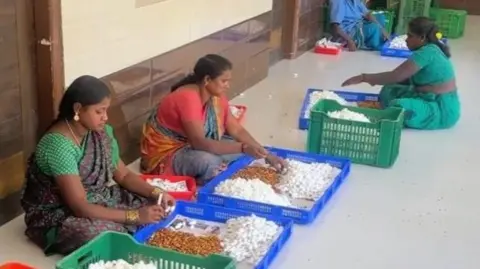
Export markets have responded positively to improvements in Indian silk quality and consistency resulting from technological advances. International buyers increasingly recognize Indian silk as a premium product that combines traditional craftsmanship with modern quality assurance. The ability to produce specialized silk varieties for specific applications—from fine fashion fabrics to technical textiles—has opened new market opportunities and increased profitability for Indian producers. This expansion into diverse market segments demonstrates the commercial viability of the modernized silk industry.
The digital economy is also playing an increasingly important role in the silk industry's transformation. E-commerce platforms now connect Indian silk producers directly with international retailers and consumers, reducing intermediary costs and increasing profit margins. Digital marketing and social media enable small-scale silk farmers and processors to build brand recognition and reach customers worldwide. Data analytics tools help producers optimize their operations by identifying market trends, managing inventory efficiently, and making informed decisions about production planning and resource allocation.
Training programs and knowledge-sharing initiatives have become essential components of the industry's modernization strategy. Universities, research institutions, and industry associations regularly conduct workshops and seminars to disseminate information about new technologies and best practices among silk farmers and producers. Mentorship programs connect experienced entrepreneurs with newcomers entering the industry, facilitating the transfer of knowledge and expertise. These collaborative efforts create an ecosystem where innovation flourishes and continuous improvement becomes the norm rather than the exception.
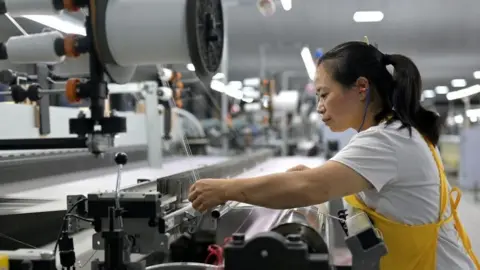
Challenges remain as the silk industry continues its technological transformation. Small-scale farmers often lack the capital necessary to invest in new equipment and technologies, creating a digital and innovation divide within the sector. Infrastructure limitations in some regions restrict access to reliable electricity and internet connectivity required for modern production methods. Additionally, the industry must balance modernization efforts with preservation of traditional knowledge and practices that have defined silk production for centuries. Addressing these challenges requires continued investment, supportive policies, and collaborative efforts among government, industry stakeholders, and scientific institutions.
The future of India's silk industry appears promising as scientific innovation continues to reshape production methods and business models. Ongoing research into advanced materials, sustainable practices, and automation technologies suggests that productivity and profitability will continue to improve. As younger generations of scientists and entrepreneurs engage with the industry, fresh ideas and perspectives will drive further innovation and expansion. The transformation of India's silk sector from a traditional agricultural practice into a modern, technology-driven industry demonstrates the potential for similar evolution across India's broader agricultural and manufacturing landscapes, offering valuable lessons for economic development and rural prosperity.
Source: BBC News


