
Indian Politicians Campaign With Fish

West Bengal election campaigns take unusual turn as politicians embrace fish as cultural symbol of identity and regional pride during polling season.
In an unexpected turn of events that has captured the attention of political observers and social media users alike, Indian politicians in West Bengal have taken to campaigning while holding fish, transforming a culinary staple into a powerful political symbol. This peculiar phenomenon has become increasingly visible during the ongoing election campaigns, where candidates from various political parties are strategically incorporating fish into their public appearances and rallies. The unusual campaign tactic reveals deeper insights into regional identity, cultural symbolism, and the evolving strategies politicians employ to connect with voters.
The practice of using fish as a campaign prop stems from the deep cultural significance this ingredient holds in West Bengal politics and society. Fish is not merely a food item in Bengali culture; it represents centuries of tradition, livelihood, and regional pride. For millions of residents in West Bengal, particularly those in rural areas, fishing has historically been a primary source of income and sustenance. By prominently displaying fish during campaign events, politicians are making a deliberate statement about their understanding and respect for local traditions and the concerns of fishing communities.
The symbolism extends beyond simple cultural recognition. Fish as a political symbol in West Bengal campaigns represents a direct appeal to voters who depend on fishing industries and related agricultural activities. Politicians recognize that holding fish during public appearances creates an immediate visual connection with these communities, communicating that their concerns and livelihoods matter. This approach reflects a broader understanding among campaign strategists that tangible, culturally resonant symbols often communicate more effectively than abstract political messaging.

The trend gained particular momentum as multiple parties realized the effectiveness of this tactic in gaining voter attention and social media engagement. Photographs of politicians cradling fish at campaign events have gone viral across various platforms, generating discussions about regional identity and political messaging. The unusual nature of these images ensures they stand out in the crowded information landscape of modern election campaigns, making them more likely to be shared, discussed, and remembered by voters compared to traditional campaign materials.
Cultural identity in Indian elections has always played a significant role in shaping political discourse, but the use of fish elevates this to a particularly localized and tangible level. West Bengal has a distinct cultural identity shaped by its Bengali heritage, linguistic traditions, and local customs. The fish campaign represents politicians' acknowledgment of this unique identity and their commitment to preserving and celebrating the traditions that define the region. This approach demonstrates how politicians adapt their campaigns to resonate with the specific characteristics of their constituencies.
The fishing community in West Bengal comprises hundreds of thousands of individuals whose economic survival depends on the health of fish stocks, water quality, and government policies affecting the industry. By visibly supporting fish and highlighting this important sector, politicians signal that they understand and prioritize the economic concerns of these communities. Issues such as sustainable fishing practices, fish market regulations, water pollution, and fishing rights are brought into focus through these symbolic campaign gestures, making them part of the broader political dialogue.
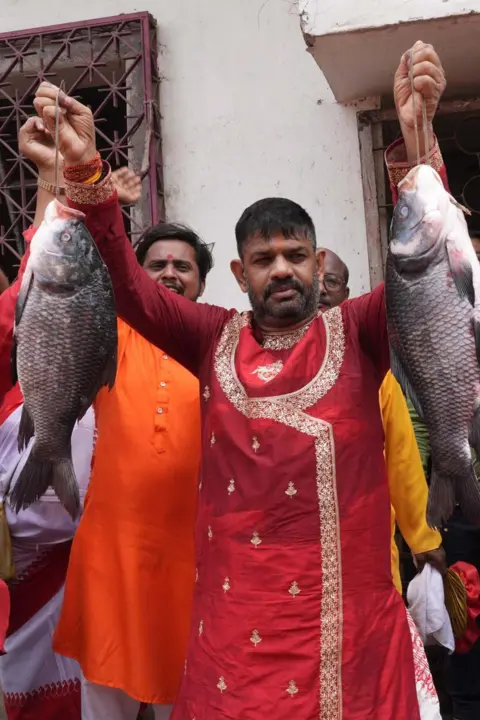
The incorporation of fish into electoral campaigns also reflects broader trends in how modern politicians use visual symbolism and cultural markers to build voter coalitions. Rather than relying solely on policy papers or lengthy speeches, candidates increasingly employ memorable images and symbols that create emotional connections with voters. A photograph of a politician holding fish is far more likely to circulate on social media and create conversation than a complex policy position on agricultural subsidies, yet both may communicate similar messages about supporting rural livelihoods.
Media coverage of this phenomenon has been extensive, with journalists and political analysts examining what the trend reveals about contemporary Indian politics and electoral strategies. Some commentators view it as a genuine expression of solidarity with local communities, while others question whether it represents authentic engagement or merely performative politics designed to gain votes. This debate itself has become part of the campaign narrative, generating additional publicity for politicians participating in this trend and for the political parties they represent.
The practice also highlights the importance of regional politics in India's democratic system. While national political parties operate across the country with largely uniform messages, regional parties and local candidates must adapt their approaches to appeal to specific constituencies with distinct cultural characteristics. West Bengal, with its proud cultural heritage and strong regional identity, naturally gives rise to campaign strategies that emphasize local symbols and traditions. Politicians who fail to acknowledge and respect these regional markers risk appearing disconnected from the communities they seek to represent.
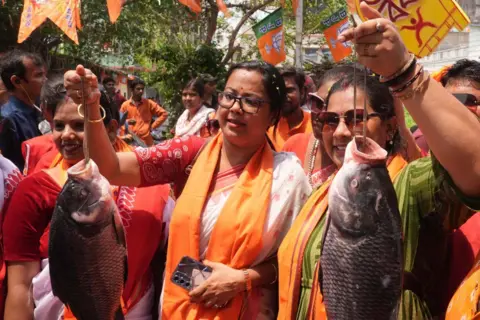
Beyond the immediate electoral implications, the fish campaign phenomenon offers insights into how food and culture intertwine in Indian politics. Food choices, agricultural practices, and dietary traditions often carry political significance in India, where various communities have distinct relationships with different food items based on cultural, religious, or economic factors. The use of fish in West Bengal campaigns is specifically tailored to a region where fish consumption is ubiquitous, where fishing is a respected profession, and where the fish markets are central to community life and commerce.
The visual spectacle of politicians holding fish also serves a practical purpose in a crowded information environment where countless political messages compete for voter attention. Election season in India involves an overwhelming amount of information, propaganda, and campaign materials from numerous candidates and parties. By choosing such a distinctive and unusual prop, politicians ensure that their campaign events generate media coverage and social media buzz that extends far beyond the immediate rally or event. This amplified reach represents significant value in terms of free publicity and voter engagement.
Political strategists recognize that campaign messaging and symbolic representation must evolve with changing media landscapes and voter behavior. Younger voters increasingly consume political information through social media rather than traditional channels, and engaging content that is shareable and discussable performs better in these environments. A politician holding fish at a campaign event creates exactly the kind of content that generates conversation, memes, shares, and comments across social platforms, effectively multiplying the campaign's reach and impact.
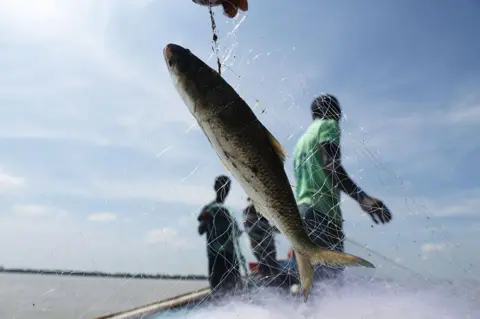
The trend continues to evolve as the election campaign progresses, with politicians finding creative ways to incorporate fish into their political messaging while remaining sensitive to the cultural significance of the symbol. Some candidates have organized events at fish markets, others have highlighted policies supporting the fishing industry, and still others have used the fish imagery in campaign literature and advertisements. Each variation represents a different approach to leveraging this cultural symbol for political advantage.
As West Bengal heads toward decisive voting days, the fish campaign phenomenon stands as a distinctive feature of this election cycle, one that reveals how local traditions and political strategy intersect in India's electoral democracy. Whether viewed as clever political theater or genuine expression of solidarity with local communities, the trend demonstrates that in Indian politics, understanding and respecting regional cultural symbols can be as important as policy positions and campaign promises. The fish, transformed from market ingredient to political symbol, embodies the complex relationship between tradition, identity, and democratic participation in contemporary India.
Source: BBC News


