
Indian Startup Skyroot Aerospace Preps Historic Orbital Launch

Skyroot Aerospace approaches maiden orbital flight as India's private space sector takes off following 2020 government liberalization opening market to private companies.
For decades, India's space ambitions remained the exclusive domain of government agencies and their closely guarded operations. The landscape shifted dramatically in 2020 when the Indian government made a watershed decision to fundamentally restructure how spaceflight would be conducted within the nation. This pivotal policy change permitted private companies to develop and manufacture their own rockets, navigate the regulatory approval process, and leverage India's state-operated launch facilities for their missions. This represented a seismic transformation from the historically monopolized aerospace sector that had defined Indian spaceflight for generations.
The strategic impetus behind this liberalization stemmed from observing how commercial space industries in the United States had revolutionized the sector through innovation and competitive efficiency. Companies like SpaceX, Blue Origin, and Rocket Lab demonstrated that private enterprises could achieve remarkable milestones while dramatically reducing launch costs. China's subsequent development of its own thriving commercial space sector further reinforced the urgency of India's need to modernize its approach. ISRO, India's national space agency, recognized that maintaining global competitiveness required embracing private sector participation rather than continuing to operate under a centralized government monopoly.
The rationale for this transformation was multifaceted and economically sound. The Indian government understood that fostering a vibrant private space industry could accelerate technological advancement, create high-skilled employment opportunities, and position India as a significant player in the burgeoning global commercial space economy. By opening access to launch infrastructure and permitting regulatory pathways for private operators, policymakers hoped to catalyze an ecosystem where entrepreneurial ventures could flourish. This approach aligned with global trends showing that commercial competition consistently drives innovation and efficiency gains that benefit entire nations.
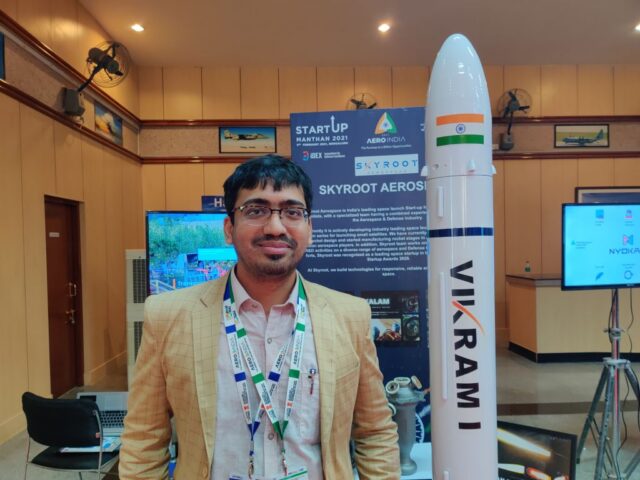
Now, approximately six years after this transformative policy decision, the Indian private space sector is beginning to demonstrate tangible results that validate the government's strategic gamble. The most prominent beneficiary of this liberalized regulatory environment is Skyroot Aerospace, an Indian launch startup that has emerged as the nation's leading contender for achieving significant commercial spaceflight milestones. The company represents the new generation of space entrepreneurs operating under India's reformed framework, leveraging both indigenous talent and state resources to advance their ambitious launch vehicle programs.
Skyroot Aerospace has made remarkable progress in developing its rocket technology and launch capabilities. The startup has successfully conducted extensive ground testing, secured necessary regulatory approvals, and completed critical milestones in its development roadmap. The company's engineering teams have worked tirelessly to design, build, and validate their orbital-class rocket system. With each successful test and validation, Skyroot has inched closer to the moment when it can attempt its maiden orbital spaceflight, an achievement that would mark a watershed moment for India's commercial space sector.
The imminent first orbital test flight represents far more than a single company's achievement—it symbolizes the broader success of India's decision to embrace private sector participation in spaceflight. Should Skyroot successfully reach orbit, it would demonstrate that India's regulatory framework, government support mechanisms, and domestic aerospace talent can successfully spawn world-class commercial space ventures. This accomplishment would inspire confidence in other entrepreneurs considering launching their own space companies and would validate the government's prescient decision to liberalize the sector.

The competitive landscape for commercial spaceflight has evolved dramatically since 2020, with numerous nations recognizing the economic and strategic importance of developing indigenous launch capabilities. India's move to permit private companies to participate in this domain positions the nation to capture market share in satellite launches, orbital logistics, and emerging space services. Skyroot's advancement toward an orbital flight demonstrates that this strategy is already bearing fruit, attracting investment capital and engineering talent to India's space sector.
Beyond the immediate implications for Skyroot, the company's progress reflects broader developments within India's aerospace and technology infrastructure. The nation has cultivated world-class engineering talent across multiple sectors, and the space industry provides an outlet for this expertise. By removing regulatory barriers and offering access to government facilities, the 2020 policy created pathways for talented engineers and entrepreneurs to pursue their ambitions within India rather than seeking opportunities abroad. This brain drain prevention has substantial long-term economic benefits for the nation.
The global commercial space market continues expanding rapidly, driven by growing demand for satellite communications, Earth observation services, and emerging in-space manufacturing applications. Companies worldwide are investing billions to develop advanced launch vehicles and expand their operational capabilities. India's entry into this competitive arena through companies like Skyroot Aerospace represents the nation's determination to secure a meaningful position in this lucrative and strategically important industry.

Looking ahead, Skyroot's historic first orbital flight will serve as a crucial test case for India's private space sector. Success would validate not merely the company's engineering capabilities but also the government's policy framework supporting commercial spaceflight. The achievement would likely catalyze additional investment in other Indian space startups and demonstrate to international partners and customers that India can reliably provide launch services. This single mission could substantially accelerate the timeline for India's emergence as a major player in commercial spaceflight.
The journey from 2020 liberalization to the present moment represents the culmination of strategic planning, substantial capital investment, and extraordinary engineering effort. Skyroot's team has navigated technical challenges, regulatory processes, and the inherent risks associated with developing new launch vehicles. Their persistence and capabilities have positioned the company on the threshold of a remarkable achievement that will reverberate throughout India's technology and aerospace sectors. As the startup counts down toward its maiden orbital flight, the entire nation watches with anticipation, recognizing that this moment embodies the promise of India's reformed approach to space exploration and commercial spaceflight development.
Source: Ars Technica


