
Inside Ukraine's Kill-Zone: How New Weapons Transform Modern Warfare

Explore how advanced weapons technology is reshaping combat on Ukraine's front lines while troops remain essential for territorial defense.
The landscape of modern warfare has undergone a dramatic transformation along Ukraine's front lines, where cutting-edge military technology and traditional ground forces converge in unprecedented ways. In what military strategists are calling the "kill-zone"—a designation referring to areas of intensive combat where opposing forces engage in relentless exchanges—new weapons systems have fundamentally altered how conflicts are conducted. These technological innovations, ranging from drone systems to advanced artillery platforms, represent a significant shift from conventional battlefield tactics that have dominated military strategy for decades.
Throughout the ongoing conflict, unmanned aerial vehicles have emerged as game-changing assets that reconnaissance teams deploy with increasing frequency and sophistication. These drones provide real-time intelligence, target acquisition capabilities, and direct engagement options that were previously unavailable to ground forces operating in exposed positions. The integration of drone technology into tactical operations has created new layers of complexity in frontline warfare, fundamentally changing how soldiers assess threats and coordinate defensive maneuvers. Military analysts point to drone deployment as one of the most significant tactical innovations of the current conflict, offering unprecedented surveillance capabilities while reducing direct exposure to enemy fire.
Despite the proliferation of automated and remote systems, human soldiers remain absolutely indispensable in the ongoing struggle for territorial control and defensive positions. No amount of technological advancement can completely replace the strategic thinking, adaptability, and resilience that trained military personnel bring to the battlefield. Ground troops continue to occupy trenches, fortify positions, and conduct close-quarters combat in situations where machines cannot operate effectively or where human judgment proves essential for mission success.
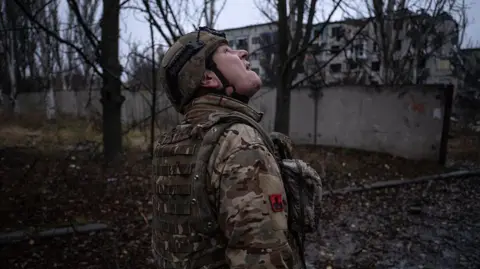
The integration of autonomous systems with human operators has created a hybrid warfare model that maximizes the strengths of both technological and human elements. Military units now operate with specialized personnel who monitor drone feeds, coordinate artillery strikes, and maintain communication networks that keep dispersed forces synchronized across vast stretches of contested territory. This partnership between man and machine has proven more effective than either component functioning independently, as soldiers provide the contextual awareness and decision-making capability that automated systems currently lack. The synergy between these elements has allowed Ukrainian forces to defend territory more efficiently while maintaining flexibility in response to rapidly changing battlefield conditions.
Advanced artillery systems have also revolutionized fire support operations, enabling commanders to deliver precision strikes at significantly greater distances than historical weapons platforms allowed. These systems incorporate sophisticated targeting mechanisms, real-time data processing, and enhanced accuracy capabilities that dramatically reduce collateral damage while maximizing operational effectiveness. The deployment of such technology has shifted the nature of defensive strategy, allowing smaller numbers of personnel to defend larger areas by leveraging technological superiority over volume of troops. However, operators still require extensive training, situational awareness, and judgment calls that cannot be fully automated or delegated to computer systems.
Communications infrastructure has become increasingly critical in modern battlefield environments where coordinated action depends on reliable data transmission and rapid decision-making cycles. Military technology now enables real-time sharing of battlefield information across multiple units, allowing commanders to respond to threats with unprecedented speed and coordination. Soldiers on the front lines benefit from access to intelligence feeds, weather data, and tactical analysis that previous generations would have considered science fiction. This information advantage translates directly into improved survival rates and more effective defensive operations, demonstrating how technology enhances rather than eliminates the human element of warfare.
The psychological and logistical demands on troops have intensified as the pace of technological integration accelerates across military operations. Soldiers must now master complex systems, interpret data streams, and make split-second decisions based on information flowing from multiple sources simultaneously. Training requirements have expanded dramatically, reflecting the need for personnel capable of operating effectively within technology-enhanced environments while maintaining the discipline and focus essential for survival in combat zones. Military units have adapted by implementing specialized training programs that combine traditional combat skills with technological proficiency and system operation.
Defensive positions along Ukraine's front lines now incorporate layered protection strategies that blend electronic warfare capabilities with physical fortifications and personnel-intensive monitoring systems. These multi-layered approaches provide redundancy and resilience against attacks targeting specific technologies or tactics. If one system becomes compromised or neutralized, human operators can adapt and implement alternative strategies, demonstrating why complete automation remains impractical in military contexts. The flexibility and improvisation that seasoned soldiers bring to combat situations continue to prove invaluable in scenarios where enemy tactics evolve and technological systems face unexpected challenges.
Supply chain logistics have become increasingly complex as military forces rely on maintaining steady flows of specialized equipment, ammunition, and technical components required to support technology-intensive operations. Troops stationed along the front lines depend on functioning supply networks that deliver not only traditional provisions but also replacement parts, software updates, and maintenance supplies for sophisticated systems. The interdependence between technological platforms and logistical support means that any disruption in supply chains can rapidly degrade operational effectiveness, underscoring why human-managed logistics remain essential to modern military operations. Soldiers continue to perform crucial roles in transporting, installing, and maintaining equipment that sustains the technology-enhanced warfare model.

Medical response capabilities have evolved alongside technological advancement, with military innovation extending to battlefield medical care that saves lives by enabling rapid triage and evacuation. Communication systems allow medics to coordinate with field hospitals and specialists, transmitting vital information that guides treatment decisions. However, the presence of trained medical personnel at forward positions remains absolutely critical, as automated systems cannot provide the immediate care that wounded soldiers require during active combat. The human element of medical response—compassion, experience, and adaptability—cannot be replaced by technology, though technology can enhance and support these essential functions.
Looking forward, military strategists recognize that the future of warfare will continue to evolve as new technologies emerge and tactical innovations spread across military forces. However, the experiences of the ongoing conflict clearly demonstrate that front-line combat cannot be conducted exclusively by machines or autonomous systems operating without human oversight and participation. The most effective military forces will be those that successfully integrate technological capabilities with highly trained, experienced personnel capable of making judgments that algorithms cannot replicate. As nations continue developing advanced weapons systems and exploring automation possibilities, the fundamental importance of soldiers on the ground defending territory and executing complex tactical operations remains undeniable.
The experiences unfolding on Ukraine's front lines provide valuable lessons for military planners globally, demonstrating that technological superiority alone cannot determine the outcomes of conflicts when defending territory requires continuous human presence and decision-making. The warfare transformation underway reveals a balanced reality where machines augment human capabilities rather than replacing them entirely. This partnership model, combining weapons technology with trained military personnel, appears to represent the practical future of military operations. As conflicts evolve and new challenges emerge, maintaining this balance between technological innovation and human expertise will remain central to military effectiveness and strategic success.
Source: BBC News


