
Iran Exiles Battle for US Support to Lead the Nation

Iranian opposition figures, including Maryam Rajavi and Reza Pahlavi, vie for endorsement from US leaders to shape post-regime Iran.
Maga world figures are throwing their weight behind Maryam Rajavi, the leader of the Mujahedeen-e-Khalq (MEK) organization, and Reza Pahlavi, the son of the last Shah of Iran, as they compete to gain the blessing of US leaders and shape the future of Iran.
This scenario echoes the jockeying that took place among Iraqi exiles in the lead-up to the 2003 invasion of Iraq. As a US battle group steamed to the Gulf in November 2002, competing Iraqi exiles, some championed by American insiders, vied for position in the hopes of taking charge once George W. Bush toppled Saddam Hussein. Bloomberg dubbed them "Iraq's unruly opposition".
The most notorious Iraqi exile, failed former banker Ahmad Chalabi, boasted to his neoconservative allies that his return to Baghdad would be welcomed by cheering throngs. Among his competition was a former doctor named Ayad Allawi, who was backed by Britain's MI6 and the Central Intelligence Agency in his bid for support to rule Iraq.
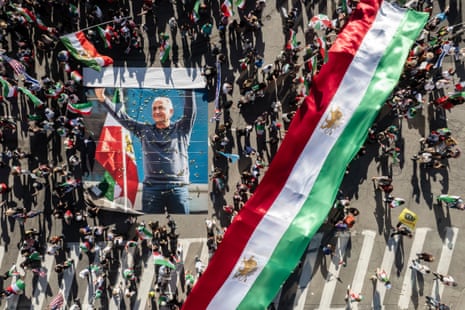
Now, a similar dynamic is unfolding as Iranian exile factions jockey for the attention and backing of US leaders, each claiming to be the best-positioned to lead the country after the downfall of the current regime.
On one side is Maryam Rajavi, the leader of the MEK, a group that was once designated as a terrorist organization by the US but has since cultivated relationships with prominent Republican figures, including former President Donald Trump's allies. The MEK has a long history of opposing the Islamic Republic and has carried out armed attacks against the Iranian government.
On the other hand, Reza Pahlavi, the son of the last Shah of Iran, has also been actively courting US support. Pahlavi has positioned himself as a unifying figure who can bring together various opposition groups and lead a transition to democracy in Iran.
Both Rajavi and Pahlavi have been making the rounds in Washington, meeting with lawmakers and other influential figures in an attempt to secure their backing. Their competition highlights the ongoing struggle for influence over the future of Iran, as the country continues to grapple with widespread protests and calls for political change.
As the US and its allies weigh their options in the region, the jockeying among Iranian exiles is likely to intensify, with each side seeking to position itself as the best-placed to lead the country towards a post-regime future.
Source: The Guardian


