
Iran's Hybrid Warfare: Recruiting Teens for UK Attacks

Iranian intelligence services recruiting teenagers through criminal intermediaries to launch coordinated low-level attacks across UK and Europe targeting Jewish sites and opposition networks.
Intelligence analysts, law enforcement officials, and security experts have identified a troubling pattern of coordinated attacks across Europe and the United Kingdom, with evidence pointing to Iranian intelligence services orchestrating what authorities describe as systematic hybrid warfare operations. According to investigators and police documents, operatives connected to Iran's Revolutionary Guards are allegedly recruiting teenagers through criminal intermediaries to execute a series of strategically timed incidents designed to destabilize communities and sow discord across Western nations.
The Iranian intelligence recruitment campaign represents a concerning escalation in unconventional warfare tactics, utilizing young people as proxies to conduct attacks that fall below traditional military thresholds. Security officials emphasize that this approach allows Iran to maintain plausible deniability while achieving their strategic objectives of creating chaos and undermining social cohesion in targeted nations. The use of intermediaries further obfuscates the chain of command, making attribution and prosecution significantly more challenging for law enforcement agencies across multiple jurisdictions.
The initial salvo of these coordinated operations commenced in early March, precisely 10 days following the commencement of military strikes by the United States and Israel targeting Iranian positions. This timing suggests a deliberate retaliatory strategy, with Iran responding to perceived threats through asymmetric means rather than direct military confrontation. The first wave systematically targeted Jewish community sites in Belgium and the Netherlands, as well as American financial institutions, indicating a calculated effort to strike at Israeli allies and Western economic interests.

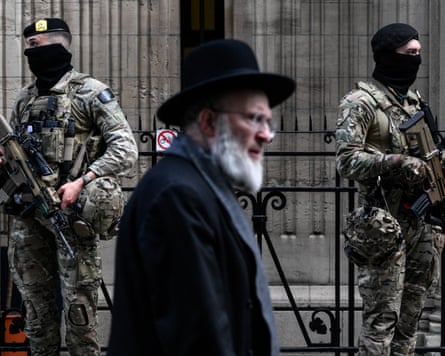
Subsequent waves of attacks have concentrated their focus on the United Kingdom, with investigators documenting a disturbing sequence of arson and attempted arson incidents directed against multiple synagogues throughout British cities. Beyond houses of worship, the campaign has expanded to target a prominent Jewish charitable organization and, notably, the London offices of an Iranian opposition-aligned television network. This diversification of targets suggests a two-pronged strategy: attacking Jewish institutions to inflame communal tensions while simultaneously targeting Iranian dissidents and opposition media to suppress critical voices challenging Tehran's regime.
The low-level attack campaign demonstrates sophisticated understanding of Western security vulnerabilities and legal frameworks. By recruiting teenagers through criminal networks, Iranian operatives exploit the juvenile justice system's generally more lenient approach while maintaining geographic and operational distance from direct involvement. These young perpetrators, many potentially unaware of the larger geopolitical context of their actions, serve as expendable assets in Iran's broader strategic design.
Security analysts have highlighted the unprecedented nature of this recruitment methodology within European and UK contexts. Historically, Iranian cyber operations and diplomatic incidents have dominated headlines, but direct recruitment of local youth to conduct physical attacks represents a significant tactical shift. This evolution suggests Iran's intelligence apparatus has developed enhanced capabilities for grassroots mobilization and local network infiltration across Western nations.

The involvement of criminal intermediaries reveals the sophisticated compartmentalization of these operations. Rather than direct contact between Iranian handlers and teenage operatives, the chain of command flows through established criminal networks with existing infrastructure for recruitment and coercion. These intermediaries, many with their own financial motivations and operational autonomy, create multiple layers of insulation that complicate investigation and attribution efforts by national security agencies.
Intelligence officials have expressed serious concern about the potential for escalation if current operations prove successful in achieving Iran's strategic objectives. The relatively low-risk, high-visibility nature of hybrid warfare attacks creates an attractive operational model for Tehran, particularly given the difficulty in securing prosecutions and the limited international response mechanisms available for such distributed campaigns. Each successful operation potentially validates the approach and encourages further recruitment and attack planning.
Police documents obtained by investigators reveal detailed surveillance and planning preceding several attacks, indicating centralized coordination despite the decentralized execution model. Target selection appears strategic rather than random, with Jewish institutions and opposition media outlets receiving particular attention. This targeted approach underscores the political and ideological dimensions of the campaign, extending beyond simple chaos generation to specific messaging regarding Iran's adversaries and the fate of its internal opponents.
The recruitment process itself has evolved to exploit digital platforms and social networks where criminal intermediaries operate. Young people demonstrating susceptibility to radicalization, financial desperation, or prior involvement in criminal activity become targets for recruitment pitches emphasizing financial rewards or ideological justification. Once committed, these teenagers become locked into the operational framework through combination of incentives, coercion, and ideological indoctrination orchestrated by their handlers.
European and UK security services have initiated comprehensive investigations involving inter-agency cooperation and intelligence sharing across borders. Cross-border coordination between national security agencies has become essential given the distributed nature of the threat and the involvement of multiple nations in the targeting pattern. Joint task forces are working to identify recruitment networks, trace financial flows, and intercept communications related to ongoing operations.
The broader context of US-Israel military operations against Iran provides crucial understanding of the timing and intensity of this retaliatory campaign. Iran's leadership views these attacks as a measured response that demonstrates resolve and capability without triggering escalatory military confrontation that could prove catastrophically disadvantageous. The hybrid warfare approach allows Tehran to maintain strategic ambiguity regarding direct responsibility while still inflicting political and psychological damage on Western societies and their perceived allies.
Defense and intelligence officials emphasize that countering this threat requires sustained vigilance, enhanced community awareness, and sophisticated intelligence operations targeting the recruitment networks and command structures orchestrating these attacks. Traditional counterterrorism approaches may require modification to address the distinctive challenges presented by distributed networks of teenage operatives acting under external direction and influence. Public-private cooperation involving social media platforms, financial institutions, and telecommunications providers will prove essential in disrupting recruitment and operational communications.
Looking forward, analysts anticipate potential expansion of these operations to additional European nations and possibly Canada and Australia, given the global nature of Iran's strategic interests and the extensibility of recruitment networks. The success of current operations will likely inform Tehran's decision-making regarding future operations, making the coming weeks and months particularly critical in either disrupting this network or potentially witnessing its expansion across additional Western nations and targets.


