
Iran Warns Against US Sanctions Compliance Amid Gulf Tensions

Iran issues stark warning as commercial vessel hit near Qatar and UAE, Kuwait report drone attacks. Regional tensions escalate amid sanctions pressure.
In a significant escalation of regional tensions, Iran has issued a direct warning to nations and entities considering compliance with American economic sanctions, signaling its intent to maintain a hardline stance against international pressure. The warning arrives amid a tumultuous period in the Persian Gulf, where multiple security incidents have been reported across the strategically vital waterway that serves as a critical artery for global trade and energy supplies.
The Iranian government's cautionary message targets countries and international businesses that might be considering stricter adherence to the expanding US sanctions regime against Tehran. Officials in Tehran have made it clear that any nation or entity that accelerates compliance with American economic measures will face serious consequences, though specific details about potential retaliation remain ambiguous. This aggressive posturing reflects Iran's frustration with what it perceives as an unjust and destabilizing sanctions architecture designed to cripple its economy.
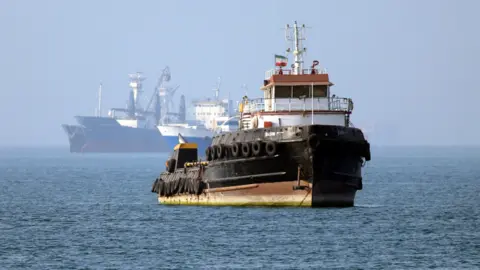
Simultaneously, the maritime environment of the Persian Gulf region has become increasingly volatile. A commercial vessel operating in international waters near Qatar reported being struck in what officials characterize as a potential attack, though the exact nature and origin of the incident remain under investigation. The incident adds to a growing list of maritime security concerns that have raised alarm bells among shipping companies, insurers, and governments dependent on Gulf trade routes.

The vessel strike near Qatar represents one of several incidents reported across the Gulf in recent days, highlighting the fragile security situation in what is already one of the world's most geopolitically sensitive regions. Maritime incidents in this area carry outsized significance due to the passage of approximately one-third of the world's seaborne traded oil through these waters. Any disruption to shipping or escalation of security threats has the potential to reverberate through global energy markets and international commerce.
Adding to the mounting concerns, both the United Arab Emirates and Kuwait have reported separate drone attacks against their territory and interests in recent days. These incidents underscore the expanding arsenal of unmanned aerial vehicles deployed by various state and non-state actors throughout the region. The UAE, a critical economic hub and US-aligned nation, reported drone activity, while Kuwait also confirmed its airspace and critical infrastructure faced unauthorized aerial incursions.
These drone attack reports have intensified concerns about regional stability and the potential for miscalculation or escalation. Unmanned aerial systems have become an increasingly prevalent tool in Middle Eastern conflicts, offering operators the ability to conduct strikes with reduced risk of immediate retaliation. The proliferation of this technology has made it more difficult for regional powers to attribute attacks definitively, complicating diplomatic responses and raising the risk of uncontrolled escalation.
The clustering of incidents—the commercial vessel strike, drone attacks on UAE and Kuwait, and Iran's escalatory rhetoric—paints a picture of a region teetering on the edge of broader conflict. Analysts and regional experts have long warned that the combination of Iranian regional ambitions, US sanctions pressure, and the presence of multiple armed actors throughout the Gulf creates conditions ripe for unexpected escalation. Each incident, however isolated it may appear, carries the potential to trigger a chain reaction of responses and counter-responses.
Iran's warning specifically addresses the economic dimensions of the current crisis, emphasizing that any nation or company deepening its compliance with American economic sanctions will bear responsibility for hostile actions toward Iran. This messaging strategy attempts to distribute blame for Iran's economic hardship across the international community while simultaneously discouraging further sanctions enforcement. Tehran has repeatedly characterized Western sanctions as economic warfare and a violation of international law, despite their formal basis in UN Security Council resolutions and unilateral American authority.
The Gulf security situation has deteriorated markedly over the past several years due to multiple overlapping crises and conflicts. The ongoing Yemen war, where Iran-backed Houthi forces have repeatedly demonstrated the ability to strike at Saudi and UAE targets across significant distances, has provided a template for asymmetric warfare throughout the region. Houthi drone and missile attacks have targeted commercial shipping, military vessels, and critical infrastructure, establishing a precedent that other actors have watched closely.

The latest warnings and incidents must also be understood within the context of broader US-Iran tensions. The Trump administration's 2018 withdrawal from the Iran nuclear agreement and subsequent reimposition of sanctions have created a cycle of escalation and retaliation. Iran has progressively violated the terms of the agreement, expanded its nuclear program, and increased support for regional proxy forces. Meanwhile, the Biden administration has engaged in diplomatic overtures while maintaining the sanctions architecture, creating an ambiguous environment where military and economic pressure coexist with diplomatic channels.
Commercial shipping interests have grown increasingly concerned about the security environment in the Persian Gulf. Insurance premiums for vessels transiting the region have risen, and some shipping companies have begun routing vessels through longer, more expensive alternative passages to avoid the most dangerous waters. This economic impact, while perhaps less immediately visible than military incidents, carries profound implications for global commerce and energy security. The disruption of shipping patterns can increase costs for consumers worldwide and create additional pressure on already fragile supply chains.
The United States military presence in the region has attempted to maintain the freedom of navigation and deter the most egregious attacks, but the challenge of defending thousands of miles of shipping lanes against distributed threats from unmanned systems has proven formidable. The US Navy's Fifth Fleet, headquartered in Bahrain, has conducted numerous operations to counter what it characterizes as Iranian and Iranian-backed maritime threats. However, the reactive nature of military responses to dispersed, unpredictable attacks limits their effectiveness in preventing all incidents.
Regional powers have responded to the deteriorating security situation with their own military buildups and security arrangements. The UAE and Saudi Arabia have invested heavily in air defense systems, drone technology, and intelligence capabilities to better protect their interests. Kuwait, smaller and more vulnerable, has sought security guarantees from larger powers while attempting to maintain a delicate diplomatic balance between its neighbors and its Western allies.
Looking forward, the trajectory of the situation remains uncertain. Iran's warning against sanctions compliance could represent a negotiating position designed to extract concessions, or it could signal a commitment to escalate tensions further. The reported attacks on commercial vessels and the drone incidents against the UAE and Kuwait may be isolated incidents or the beginning of a coordinated campaign. Regional stability in the Persian Gulf depends on multiple actors choosing restraint over escalation, a commitment that has proven increasingly difficult to maintain in an environment marked by deep mistrust, competing regional aspirations, and the proliferation of advanced military technologies.
The international community, particularly countries dependent on Gulf energy supplies and trade, watches developments closely. The situation underscores the urgent need for diplomatic solutions that can address the underlying causes of regional tension while establishing mechanisms for conflict prevention and de-escalation. Without such efforts, the cycle of warnings, incidents, and escalatory responses may continue indefinitely, with potentially grave consequences for global security and economic prosperity.
Source: BBC News


