
Iraqi Commander Arrested for 18 Terror Attacks Across Europe

US authorities arrest alleged Iranian-backed militia commander Mohammad Baqer Saad Dawood al-Saadi, accused of orchestrating 18 terrorist attacks in UK, Europe and Canada linked to Iran's Quds Force.
The arrest of an Iraqi terror suspect by United States federal authorities represents a significant breakthrough in an ongoing international investigation into coordinated terrorist attacks that have plagued multiple Western nations. The apprehension, announced through an unsealed federal complaint in Manhattan, marks a pivotal moment in the years-long effort to dismantle what intelligence agencies have long suspected to be a sophisticated network of operatives loyal to Iran's Islamic Revolutionary Guards, particularly its elite Quds Force unit.
Mohammad Baqer Saad Dawood al-Saadi, an alleged Iraqi commander of an Iranian-backed militia organization, now faces charges related to orchestrating a chilling campaign of violence across Western nations since the escalation of tensions following recent geopolitical upheavals in the Middle East. The scope of the allegations is staggering, with federal prosecutors accusing him of bearing responsibility for no fewer than 18 separate terrorist incidents spanning from Europe to North America, demonstrating the wide geographical reach and operational sophistication of the alleged network.
According to the detailed criminal complaint unveiled on Friday by Manhattan federal authorities, al-Saadi's alleged operations included a methodical series of firebombings targeting financial institutions throughout Continental Europe. The attacks reportedly struck banks and commercial establishments in France, Belgium, Germany, and the Netherlands, suggesting a coordinated strategy designed to create widespread fear and instability across multiple jurisdictions simultaneously.

Beyond the European firebombings, the complaint details other grave incidents allegedly directed by al-Saadi that reflect an alarming escalation in targeting specific communities. Among these attacks was an arson assault on a synagogue, representing an apparent shift toward targeting religious institutions and specific demographic communities. The allegations paint a picture of a deliberate campaign aimed at generating terror within vulnerable populations and undermining the sense of security in Western nations.
One of the most brazen incidents attributed to the alleged network under al-Saadi's direction occurred in March when gunfire erupted at the United States consulate located in Toronto, Canada. This attack on American diplomatic personnel and facilities represented a direct assault on American interests and represented a dangerous escalation that prompted immediate diplomatic and law enforcement responses from both American and Canadian authorities.
Perhaps most alarming to American and European security officials has been the recent wave of coordinated attacks on predominantly Jewish targets throughout the United Kingdom. These incidents, according to the federal complaint, have included assaults on places of worship and charitable organizations serving the Jewish community. The targeting of religious communities in this manner suggests a deliberate strategy to foment religious tensions and create division within Western societies.
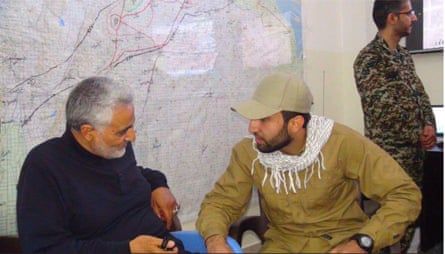
For years, intelligence agencies operating across the Western world have harbored deep suspicions regarding the involvement of Iran's Quds Force in orchestrating terror campaigns abroad. The Quds Force, recognized as the extraterritorial operations branch of Iran's Islamic Revolutionary Guards, has long been designated as a terrorist organization by numerous Western governments and is widely understood to conduct sophisticated operations beyond Iran's borders. The arrest of al-Saadi appears to validate these longstanding suspicions while simultaneously providing concrete evidence of the operational mechanics through which such attacks are allegedly coordinated.
The arrest itself, while surprising in its timing and the specificity of the charges, arrives at a moment when Western intelligence services have been increasingly vocal about Iranian-backed terrorism. What makes this development noteworthy is not necessarily that it reveals new information about Iranian intentions or capabilities, but rather that it provides prosecutorial authorities with what they believe is direct evidence linking a specific individual to a coordinated campaign of international terrorism spanning years and multiple continents.
Security analysts and terrorism experts have long understood that Iran's Quds Force operates through proxy networks, utilizing local militia groups and sympathetic individuals to carry out operations that can be plausibly denied by the Iranian government. Al-Saadi's position as an Iraqi commander of an Iranian-backed militia fits perfectly into this operational model, serving as the type of intermediary through which strategic decisions made in Tehran can be translated into violent actions on European and North American streets.
The federal complaint unsealed in Manhattan provides prosecutors with an opportunity to present a comprehensive narrative of how terrorism networks operate in the modern era. The allegations suggest that al-Saadi did not act alone but rather served as a coordinator and commander within a larger organizational structure, delegating specific attacks to operatives under his command and maintaining communication with superiors directing the overall strategy. This hierarchical structure, if proven, would demonstrate the sophisticated command-and-control mechanisms through which these operations are managed.
The international dimensions of this investigation cannot be overstated. The attacks allegedly orchestrated by al-Saadi occurred across multiple sovereign nations, each with its own law enforcement and security apparatus. The coordination required between American federal authorities, European intelligence services, Canadian law enforcement, and the intelligence agencies of affected nations represents a significant feat of international cooperation. Such collaboration has become increasingly essential in combating terrorism in an era when threats routinely transcend national borders and when perpetrators operate within complex international networks.
What remains to be seen is how thoroughly prosecutors can establish the specific links between al-Saadi's alleged command structure and the individual actors who carried out specific attacks. Each of the 18 terrorist incidents mentioned in the complaint would presumably require detailed evidence demonstrating al-Saadi's role in planning, coordinating, or directing that particular attack. Building such a comprehensive evidentiary record across multiple countries and time periods represents a monumental investigative challenge.
The apprehension of al-Saadi also raises significant questions about the broader network of which he was allegedly a part. Security officials will undoubtedly scrutinize whether other operatives remain at large, whether the network continues to function despite al-Saadi's arrest, and what additional threats might be developing even as this particular cell is being dismantled through legal proceedings. The removal of one commander, no matter how significant his alleged role, does not automatically eliminate the threat posed by Iranian-backed extremism in Western nations.
Moving forward, this case will likely serve as a crucial test of international justice mechanisms in confronting state-sponsored terrorism. The successful prosecution of al-Saadi, should evidence prove sufficient, would send a powerful message that individuals who coordinate terrorist attacks across multiple nations cannot escape accountability. Conversely, any failures in the prosecutorial process could embolden similar operations and demonstrate gaps in the international legal system's ability to address transnational terrorism effectively.


