
Israel Releases Activists After Intercepting Gaza Aid Flotilla

Israel releases nearly all activists detained during Gaza aid flotilla interception in Greece. Global Sumud Flotilla denounces action as 'piracy' amid tensions.
In a significant development regarding maritime humanitarian operations, Israel has released the vast majority of activists who were detained following the interception of a Gaza aid flotilla in Greek waters. The incident has sparked renewed debate over maritime law, humanitarian access, and the legality of naval blockades in international waters. The release of most detainees comes after intensive negotiations and international pressure, though two activists remain in custody pending further legal proceedings.
The Global Sumud Flotilla, the organization coordinating the humanitarian mission, has issued a scathing statement characterizing the naval interception as an act of "piracy" and a violation of international maritime law. According to the flotilla's representatives, the vessels were operating in international waters and carried supplies intended for civilians in Gaza, particularly medical equipment and humanitarian relief materials. The organization has called for immediate international intervention and the establishment of independent investigations into the boarding and detention of their personnel.
Israel's foreign ministry has taken a contrasting stance, dismissing the entire operation as a "PR stunt" designed to generate negative publicity rather than provide genuine humanitarian assistance. Israeli officials argue that security protocols require the inspection of all vessels attempting to breach the established maritime boundaries around Gaza. The ministry contends that proper channels for humanitarian aid delivery exist and that unauthorized maritime attempts circumvent established security procedures designed to prevent weapons smuggling and terrorist activities.

The flotilla incident represents the latest in a series of maritime confrontations between Israeli naval forces and international humanitarian organizations attempting to deliver aid to Gaza. These operations have occurred periodically over the past decade and consistently generate significant international controversy. The most notable previous incident occurred in 2010 when Israeli commandos boarded the Mavi Marmara, a Turkish vessel, resulting in the deaths of nine activists and triggering widespread international condemnation and diplomatic tensions between Israel and Turkey.
Observers of Middle Eastern geopolitics have noted that such flotilla missions often serve dual purposes: delivering humanitarian supplies while simultaneously making political statements about access restrictions and blockade enforcement. The humanitarian access debate has intensified in recent years as the situation in Gaza has deteriorated, with international organizations documenting severe shortages of medical supplies, food, and basic necessities among the civilian population. Human rights groups argue that maritime blockades, while potentially justified on security grounds, have become instruments that disproportionately affect vulnerable populations including children, the elderly, and those requiring urgent medical treatment.
The two remaining detainees face potential charges related to illegal maritime activities and breaching security zones. Israeli authorities have not publicly detailed the specific allegations against these individuals, though standard procedures typically involve investigations into the funding sources of the flotilla, the identities of organizers, and potential security threats. Legal experts suggest that the cases could become precedent-setting regarding the rights of activists engaged in civil disobedience and the jurisdictional authority of nations over international waters.
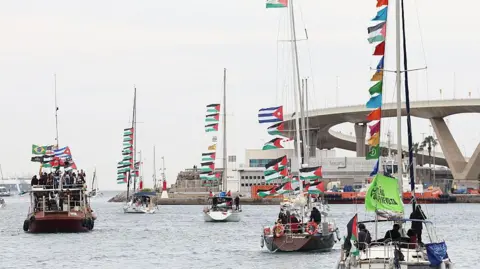
Greece's role in the incident has also drawn scrutiny from various international stakeholders. The vessel interception occurred in Greek territorial waters or within Greece's broader maritime jurisdiction, raising questions about coordination between Greek and Israeli authorities. Some Greek political figures have expressed concerns about their country being used as a staging ground for operations that could be perceived as affecting regional stability and Greek-Israeli relations. The Greek government has maintained a relatively neutral public position while internally managing the diplomatic complexities of the situation.
International humanitarian organizations have called for immediate diplomatic intervention from the United Nations and regional powers to establish clearer guidelines for aid delivery mechanisms to Gaza. Several countries have issued formal protests to Israeli authorities and called for investigation into the interception procedures. The European Union has publicly stated its commitment to ensuring that humanitarian assistance reaches those in need while respecting legitimate security concerns of all parties involved in the regional conflict.
The broader context of Gaza humanitarian crisis cannot be overlooked in assessing the significance of this flotilla incident. The territory faces severe restrictions on the import of materials and goods due to the ongoing blockade, creating a precarious situation for approximately two million residents. Medical facilities report critical shortages of medications and equipment, educational institutions lack basic supplies, and unemployment remains extraordinarily high. The United Nations has designated Gaza as "unlivable" under current conditions, with infrastructure deteriorating and humanitarian needs expanding dramatically year after year.
Activists and humanitarian workers detained during the flotilla incident have described their treatment and provided accounts of the boarding procedures. Most released detainees have stated that they were treated relatively humanely during detention but expressed frustration with the perceived heavy-handedness of the operation. Some reported that Israeli personnel were professional and followed legal procedures, while others criticized what they characterized as unnecessary force and extended interrogation periods focused on political affiliations rather than security threats.
The incident has reinvigorated debate among international law scholars regarding the legitimacy of naval blockades and the legal parameters governing humanitarian operations. Legal experts remain divided on whether maritime humanitarian missions constitute legitimate forms of protest or potentially dangerous violations of established security protocols. The complexity intensifies when considering that some flotilla participants have acknowledged their intention to deliberately challenge the blockade as an act of civil disobedience, further complicating the legal and ethical analysis.
Looking forward, the Gaza aid logistics question remains unresolved, with humanitarian organizations uncertain about the prospects for future flotilla missions. Israeli security officials have indicated that similar attempts will be met with comparable interception procedures, potentially deterring future maritime operations. However, the release of most detainees may be interpreted by some humanitarian groups as a victory that justifies continued pressure through such operations, creating a cycle of attempted missions and naval interceptions.
The diplomatic fallout continues as various countries and international organizations position themselves regarding the incident. Turkey, with its historical involvement in flotilla operations, has expressed solidarity with the detained activists and called for international accountability. Arab nations have condemned what they characterize as Israeli aggression against humanitarian workers, while Western nations have generally called for restraint from all parties and renewed emphasis on peaceful resolution of underlying conflicts.
This flotilla incident exemplifies the broader challenge of balancing legitimate security concerns with humanitarian obligations in conflict-affected regions. The release of the majority of detainees suggests that Israeli authorities determined insufficient grounds existed for extended detentions, yet the continued holding of two activists indicates that security investigations remain active. Moving forward, establishing comprehensive frameworks for maritime humanitarian assistance that satisfy both security requirements and humanitarian needs will require unprecedented international cooperation and innovative diplomatic solutions from all involved parties.
Source: BBC News


