
Israel Strikes Beirut: First Attack Since Hezbollah Ceasefire

Israel conducts first military strike on Beirut since April ceasefire, targeting senior Hezbollah commander in unprecedented escalation.
In a significant escalation of regional tensions, Israel conducted its first military strike on Beirut since a ceasefire agreement with Hezbollah was established in mid-April. The Israeli military claimed the operation specifically targeted a senior Hezbollah figure within the Lebanese capital, marking a dramatic shift in the fragile peace arrangement that had held for several months.
The strike represents a notable breach of the existing ceasefire framework, which had been intended to de-escalate hostilities between Israel and the militant organization. Israeli officials stated that the operation was conducted in response to what they characterized as violations of the ceasefire agreement by Hezbollah. The targeting of a high-ranking Hezbollah commander in Beirut indicates a willingness by Israeli military leadership to pursue operational objectives within Lebanese territory, despite the established truce.
The ceasefire that began in April had been seen as a diplomatic breakthrough following months of cross-border tensions and military exchanges. Regional analysts had expressed cautious optimism that the agreement would hold, given its significance for stability in the Eastern Mediterranean. However, this latest action demonstrates that underlying tensions between the two parties remain acute, and the ceasefire appears increasingly fragile.
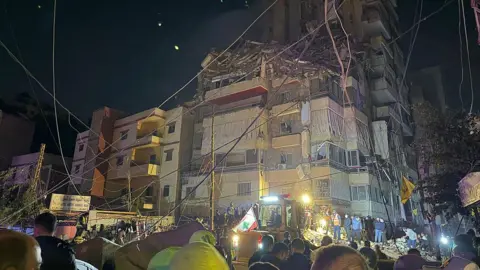
Hezbollah, which maintains significant influence in Lebanon and operates as both a political party and militant organization, has historically engaged in prolonged conflicts with Israel. The organization has repeatedly declared its commitment to the ceasefire, though both sides have accused each other of violations and provocative behavior. This latest Israeli airstrike directly challenges the viability of maintaining peaceful coexistence under the current agreement.
The Israel-Hezbollah conflict has deep historical roots, spanning decades of military confrontations and political tension. Previous conflicts have resulted in significant casualties and displacement of civilian populations on both sides of the border. The April ceasefire represented an attempt to interrupt this cycle, though the conditions for a durable peace agreement appeared uncertain from its inception.
Military analysts suggest that the targeting of senior Hezbollah leadership in Beirut indicates a calculated Israeli response to perceived threats or violations. The operation was executed with apparent precision, suggesting advanced intelligence and planning capabilities. Such targeted strikes are typically used when Israeli security officials believe they have identified high-value military or organizational targets that pose direct threats to Israeli citizens or national security interests.
The implications of this strike extend beyond the immediate military exchange. Regional security dynamics in the Middle East are heavily influenced by Israeli-Lebanese relations, and any escalation between these parties affects broader geopolitical calculations. Neighboring countries, including Syria, Jordan, and Palestinian territories, all have stakes in maintaining relative stability along the Israeli border regions.
Lebanese government officials expressed concern about the strike, which they characterized as a violation of Lebanese sovereignty. The Lebanese state, already fragile due to economic crisis and political instability, faces pressure from multiple directions as various armed groups operate within its borders. Hezbollah's military presence complicates the Lebanese government's ability to maintain full state authority throughout national territory.
International observers have increasingly focused on Middle East ceasefire violations as a critical indicator of regional stability. Multiple international organizations and governments have called for all parties to respect existing agreements and avoid further escalation. The United Nations has urged both Israel and Hezbollah to recommit to the ceasefire framework and engage in dialogue to address grievances through diplomatic channels.
The timing of this strike raises questions about what prompted the Israeli decision to abandon the established ceasefire arrangement. Israeli security officials have referenced intelligence indicating that Hezbollah was either planning attacks or had already engaged in violations. These claims remain subject to independent verification, though Israeli military intelligence is generally regarded as sophisticated and capable of detailed threat assessment.
Previous agreements between Israel and Hezbollah have often included provisions for indirect communication and dispute resolution mechanisms. The Beirut strike suggests that these channels may have broken down or proven ineffective at preventing escalation. Future negotiations will likely need to address the fundamental question of how to construct a ceasefire that both parties view as legitimate and verifiable.
The broader context of Israeli military operations in the region includes ongoing challenges in Gaza, tensions with Iran and its proxy forces, and complex relationships with various Arab states. The decision to strike Beirut must be understood within this complicated security environment, where Israeli military planners must manage multiple concurrent threats and strategic objectives.
Hezbollah's response to this strike will be closely monitored by international observers and regional actors. The organization has historically demonstrated the capacity and willingness to conduct retaliatory operations when Israeli military actions affect its leadership or operational capabilities. The next few days and weeks will be critical in determining whether this incident escalates into a broader conflict or remains an isolated operation within the failing ceasefire framework.
This development underscores the persistent challenges of achieving lasting peace in the Middle East, where historical grievances, military capabilities, and competing security narratives make sustainable agreements difficult to maintain. The Israel-Hezbollah ceasefire appeared increasingly precarious even before this latest strike, and the breach may signal a return to the cycle of escalation that characterized their previous conflicts.
As the situation develops, international diplomatic efforts will likely intensify as various countries attempt to prevent further deterioration. The United States, European nations, and regional powers all have interests in preventing a major escalation that could destabilize Lebanon further and draw in additional actors. The coming weeks will determine whether the ceasefire framework can be salvaged or whether both sides will return to active military confrontation.
Source: BBC News


