
Israel to Maintain Presence in Southern Lebanon After Hezbollah Conflict

Israel plans to retain control over part of southern Lebanon after a potential war with Hezbollah, demolishing homes near the border, according to the country's Defense Minister.
Israel's Defense Minister, Israel Katz, has announced that the country intends to maintain control over a portion of southern Lebanon even after a potential conflict with the Hezbollah militant group. This decision comes as a departure from Israel's previous stance of fully withdrawing from Lebanese territory following the end of hostilities.
According to Katz, Israel will demolish houses in Lebanese villages located near the Israeli border as part of this plan. The move is aimed at securing Israel's northern frontier and preventing Hezbollah from re-establishing a presence in the region.
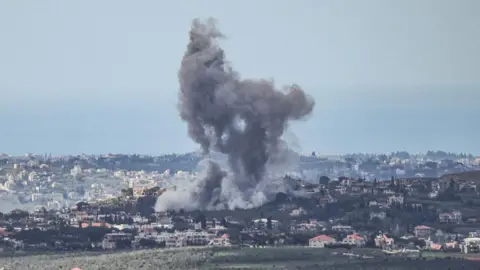
The announcement represents a shift in Israel's post-war strategy, which has traditionally involved a complete withdrawal from Lebanese soil. This change in policy is likely driven by Israel's concerns about Hezbollah's ongoing threat and the group's ability to regroup and rebuild its infrastructure in the border region.
Hezbollah, a powerful Shiite militia backed by Iran, has been a long-standing adversary of Israel. The two sides have engaged in several conflicts, the most recent being the 2006 Lebanon War, which ended with Hezbollah's retreat from southern Lebanon but the group's continued presence in the region.
Israel's decision to maintain a presence in southern Lebanon is seen as a defensive measure aimed at preventing Hezbollah from re-establishing its stronghold in the area. The demolition of homes in Lebanese border villages is also likely to be a controversial move, as it could displace local residents and further strain relations between Israel and Lebanon.
The announcement comes at a time of heightened tensions in the region, with both Israel and Hezbollah preparing for the possibility of a future conflict. The ongoing conflict in Syria, where Hezbollah has been actively supporting the Assad regime, has also added to the volatility of the situation.
As the international community watches the developments closely, the future of southern Lebanon remains uncertain. Israel's decision to maintain a presence in the region after a potential war with Hezbollah is likely to have significant implications for the stability and security of the area, as well as the broader geopolitical dynamics in the Middle East.
Source: BBC News


