
Israeli Airstrikes Kill 19 in Lebanon Amid Ceasefire Tensions

Israeli military strikes on southern Lebanon kill at least 19 civilians including children and women. Clashes with Hezbollah continue despite US-brokered ceasefire agreement.
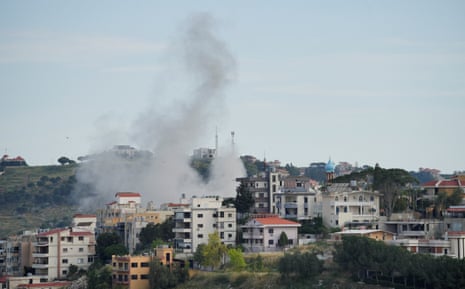
Israeli airstrikes on southern Lebanon have resulted in significant casualties, with Lebanon's health ministry confirming at least 19 deaths during strikes conducted on Tuesday. The fatalities include four women and three children, highlighting the impact of military operations on civilian populations in the region. A particularly devastating single strike targeted the village of Deir Qanoun al Nahr in the coastal Tyre province, killing 10 people in one incident, which included three children and three women according to health ministry reports.
The attacks represent the latest escalation in what has become a pattern of near-daily military exchanges between Israeli forces and Hezbollah militants, despite the existence of a fragile US-brokered ceasefire agreement between the two parties. The continuation of hostilities indicates significant tensions remain unresolved between Israel and the Lebanese militant organization, with both sides maintaining military operations despite diplomatic efforts to establish lasting peace. These incidents underscore the delicate nature of current ceasefire arrangements in the region and the challenges faced by international mediators in maintaining stability.
Israel's military command issued statements regarding its operational activities, confirming that between Monday afternoon and Tuesday afternoon, it had conducted targeted operations against more than 25 sites identified as Hezbollah infrastructure in southern Lebanon. However, the Israeli military did not immediately provide specific commentary on the reported civilian casualties or details surrounding individual strike incidents. The military's operational focus appears centered on dismantling what it characterizes as militant organizational capabilities and weapons storage facilities across the southern region.
The death toll and nature of the casualties raise important questions about the impact of military operations on civilian communities living in conflict-affected areas. The presence of children and women among the dead underscores humanitarian concerns regarding the distinction between military and civilian targets during ongoing military operations. International observers and humanitarian organizations have increasingly focused attention on civilian protection mechanisms and the need for greater restraint in military engagements affecting populated areas.
The Lebanon-Israel conflict has demonstrated a pattern of escalating tensions despite multiple attempts at establishing lasting peace frameworks. Previous ceasefire agreements have similarly proven fragile, with both sides citing provocations by the other as justification for continued military operations. The current situation reflects broader regional instability and the interconnected nature of conflicts involving state actors and non-state militant organizations throughout the Middle East.
Hezbollah, designated as a terrorist organization by several Western nations but operating as a political and military force within Lebanese society, has maintained a significant military presence in southern Lebanon for decades. The organization's dual role as both a social services provider and armed militant group has complicated international diplomatic efforts to address regional security concerns. Israel has long viewed Hezbollah's military capabilities and cross-border activities as existential security threats requiring preemptive military action.
The US-brokered ceasefire agreement represented a significant diplomatic initiative aimed at reducing tensions and establishing mechanisms for conflict de-escalation. However, the continued military operations by both sides suggest that underlying grievances, security concerns, and strategic objectives remain unresolved through purely diplomatic channels. The failure of ceasefire arrangements to completely halt military activities indicates the complexity of implementing and enforcing such agreements in deeply contested regions.
International humanitarian law and conventions governing armed conflict establish principles regarding civilian protection and the prohibition of indiscriminate attacks. The documented civilian casualties in Lebanon raise questions about adherence to these international standards and the potential need for investigation into specific incidents. Human rights organizations and United Nations bodies have called for transparent accountability mechanisms to address civilian harm during military operations.
The broader context of Israeli-Lebanese relations encompasses decades of conflict, including major wars, cross-border raids, and ongoing security concerns on both sides of the international border. Southern Lebanon has historically served as a flashpoint for tensions, with multiple armed groups operating in the region and complex overlapping claims of territorial control and security interests. The strategic importance of the area in regional geopolitics has made it a focal point for international diplomatic attention and military concerns.
Medical facilities in southern Lebanon have reported increased demand for emergency services and trauma care following the airstrikes, with hospitals in Tyre and surrounding areas receiving multiple casualty patients. Healthcare infrastructure in conflict-affected regions often faces strain from sudden surges in patient volume combined with resource constraints and security concerns. The humanitarian toll extends beyond immediate casualties to include injuries, psychological trauma, and displacement of civilian populations.
The continuation of military operations despite ceasefire agreements highlights the challenges faced by international mediators in achieving sustainable peace in contexts marked by deep-seated security concerns and competing strategic objectives. Both Israeli security establishment and Hezbollah leadership maintain positions that prioritize their respective security interests, making compromise on military capabilities and operational freedom difficult. The involvement of external powers, including the United States and regional actors, further complicates diplomatic resolution efforts.
The impact on civilian populations and local communities represents a critical humanitarian dimension of ongoing military operations in the region. Families displaced by airstrikes face uncertain futures, with limited access to basic services and ongoing security threats affecting daily life. The psychological impact of repeated military operations on populations living in affected areas constitutes a significant humanitarian concern requiring international attention and support.
Source: The Guardian


