
Israeli Soldiers Sentenced for Destroying Jesus Statue

Two Israeli Defense Forces soldiers face 30-day jail sentences after destroying a Jesus statue in Lebanon. One soldier used a sledgehammer while the other filmed the incident.
The Israel Defense Forces have handed down significant disciplinary action against two soldiers following an incident that sparked international outcry. The soldiers have been removed from active combat duty and sentenced to 30 days in jail after one used a sledgehammer to destroy a statue of Jesus in a Christian village in southern Lebanon, near the Israeli border. The second soldier filmed the incident, which later circulated widely on social media, prompting widespread condemnation from Christian communities across the globe.
The statue, which depicted a crucified Jesus Christ, had fallen from its cross in the village, located in the border region between Israel and Lebanon. What began as the toppled religious monument became the subject of a serious military incident when one soldier deliberately struck the head of the statue with a sledgehammer. The act was captured on video and subsequently shared across multiple social media platforms, where it gained significant traction and sparked intense reactions from religious groups worldwide.
In response to the incident, the IDF statement emphasized that the soldiers' conduct was completely unacceptable and directly contradicted the military's core values and operational guidelines. Military leadership stated that the behavior "completely deviated from IDF orders and values," signaling strong disapproval from the highest levels of the organization. The swift disciplinary action was seen as an attempt to address the serious breach of military conduct and demonstrate accountability.
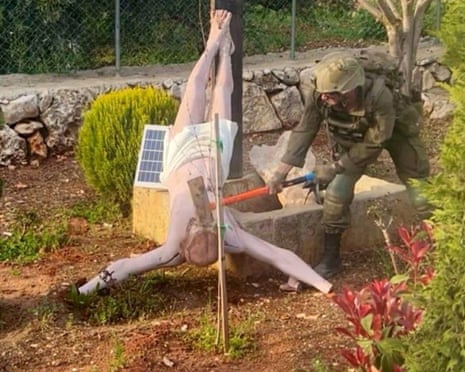
The destruction of the religious monument triggered immediate reactions from Christian leaders and organizations around the world. Many viewed the incident as deeply disrespectful to Christian faith and sacred symbols, particularly in a region with significant Christian populations who have long-standing historical and cultural ties to their communities. Religious organizations issued statements condemning the action and calling for accountability, which the military's swift response appeared to address.
The incident highlights ongoing tensions in the border region between Israel and Lebanon, where military activities have been a source of frequent conflict and controversy. The area near the Israeli-Lebanese border has been a flashpoint for regional tensions, and incidents involving military personnel can quickly escalate diplomatic tensions. This particular event, though involving a religious monument rather than direct military conflict, drew attention to the broader military presence and operations in the area.
The two soldiers faced military court proceedings that resulted in their jail sentences and removal from combat operations. The disciplinary process moved relatively quickly, demonstrating the seriousness with which the military treated the matter. Military officials indicated that the soldiers would face the consequences of their actions through both imprisonment and removal from active duty, signaling that such conduct would not be tolerated within the ranks.
In the aftermath of the incident, discussions emerged about military discipline, religious respect, and the importance of ensuring that soldiers understand and abide by the rules of engagement and ethical standards expected of them. Military training programs and codes of conduct came under renewed scrutiny, with commentators questioning whether adequate emphasis was placed on respecting religious and cultural sites during operations. The IDF indicated that the incident represented an aberration from standard practices and values.
The broader implications of the incident extended beyond the immediate military discipline to questions about intercommunal relations in the region. Christian communities expressed concern about the treatment of their sacred symbols and whether their heritage and religious sites would be respected amid ongoing military activities. The incident served as a reminder of the delicate balance required to maintain respect for religious and cultural diversity in conflict-affected areas.
The 30-day jail sentences imposed on the soldiers represented a substantial punishment within military disciplinary frameworks. Removal from combat duty further affected the soldiers' service records and future military assignments. These penalties were intended to send a clear message that conduct violating religious respect and military values would result in serious consequences.
International observers noted that the military's swift and public response to the incident demonstrated a commitment to accountability, even in cases involving sensitive geopolitical dynamics. The willingness to prosecute and publicly acknowledge the misconduct was viewed by some as evidence of institutional self-correction mechanisms within the military establishment. However, others questioned whether the punishments were sufficiently severe given the religious and cultural significance of the damage.
The incident also raised questions about recruitment, training, and the cultural and religious sensitivity awareness provided to military personnel operating in diverse and religiously significant regions. Military leadership began discussions about enhancing training programs to emphasize respect for religious sites and symbols, particularly in border areas where civilian populations with different religious backgrounds coexist. These conversations reflected broader efforts to prevent similar incidents in the future.
As the story developed, it became clear that the incident in southern Lebanon would have lasting implications for military-civilian relations and interfaith understanding in the region. The swift justice administered by the IDF provided some measure of closure for those offended by the act, though opinions remained divided on whether the response was adequate. The event underscored the importance of maintaining discipline, respect, and accountability within military forces operating in sensitive religious and cultural contexts.
Source: The Guardian


