
Israeli Strikes Kill 10 in Lebanon's Bekaa Valley Attack

At least 10 people killed, 24 wounded including children in Israeli military strikes targeting Hezbollah command centers in Lebanon's eastern Bekaa valley region.
A series of devastating Israeli airstrikes in Lebanon's eastern Bekaa valley has resulted in the deaths of at least 10 individuals and left 24 others wounded, according to official statements from the Lebanese health ministry. Among the casualties were three children, highlighting the civilian impact of the military operation that targeted what Israeli forces described as strategic militant positions.
The Israeli military justified the attacks by stating they had successfully struck multiple "command centres" belonging to Hezbollah, the Iranian-backed Lebanese militant organization that has maintained a significant presence in the region for decades. The strikes represent a continuation of the ongoing tensions between Israel and Hezbollah forces operating along the Lebanese border.
Two security sources, speaking to Reuters on condition of anonymity, confirmed that Hussein Yaghi, a senior Hezbollah leader, was among those killed during the coordinated strikes. Yaghi's death marks a significant blow to the militant group's operational structure in the eastern Lebanese region, where Hezbollah has historically maintained training facilities and command operations.
The Bekaa valley, located in eastern Lebanon near the Syrian border, has long served as a strategic corridor for Hezbollah operations and weapons smuggling routes. The fertile agricultural region has become increasingly militarized over the past decade, with the area serving as a launching point for various militant activities and a key supply line for Iranian weapons deliveries to Lebanese proxy forces.
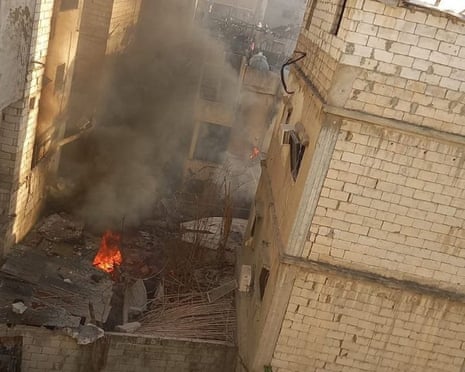
Lebanese health officials reported that emergency response teams were dispatched immediately to the strike locations to provide medical assistance to the wounded and coordinate evacuation efforts. Local hospitals in the region have been placed on high alert to handle the influx of casualties, with medical personnel working around the clock to treat both serious injuries and minor wounds sustained during the attacks.
The presence of children among the casualties has drawn particular concern from humanitarian organizations monitoring the situation in Lebanon. International aid groups have repeatedly called for the protection of civilian populations during military operations, emphasizing the need for all parties to distinguish between militant targets and non-combatant areas where families reside.
Israeli defense officials have not provided detailed information about the specific nature of the command centers targeted, but military sources suggest the strikes were part of a broader intelligence-driven operation aimed at disrupting Hezbollah's operational capabilities in the eastern region. The timing of the attacks coincides with increased regional tensions and ongoing security concerns along the Israeli-Lebanese border.
Hezbollah has yet to issue an official response to the strikes or confirm the death of Hussein Yaghi, though the organization typically acknowledges the loss of senior commanders through formal statements released via their media outlets. The group's military wing has historically retaliated against Israeli strikes with rocket attacks or other forms of asymmetric warfare targeting Israeli positions.
The international community has been closely monitoring the situation, with several diplomatic missions expressing concern about the potential for escalation between Israeli forces and Lebanese militant groups. The United Nations peacekeeping forces stationed in southern Lebanon have maintained their positions while calling for restraint from all parties involved in the conflict.
Regional analysts note that the Bekaa valley strikes represent a continuation of Israel's policy of preventing Iranian weapons transfers to Hezbollah through Lebanese territory. The strategic location of the valley, with its proximity to Syrian supply routes, makes it a critical point of intervention for Israeli military planners seeking to limit Hezbollah's arsenal expansion.
Lebanese government officials have condemned the strikes as violations of national sovereignty, calling for international intervention to prevent further military actions on Lebanese soil. The country's caretaker government, already struggling with severe economic and political crises, faces additional challenges in managing the security implications of renewed Israeli-Hezbollah confrontations.
The wounded individuals are currently receiving treatment at various medical facilities throughout the region, with some requiring transfer to specialized trauma centers in Beirut due to the severity of their injuries. Medical officials report that several of the wounded remain in critical condition, and the death toll could potentially rise in the coming hours as doctors work to stabilize the most seriously injured patients.
Intelligence sources suggest that the targeted command centers were actively involved in coordinating militant operations and served as communication hubs for Hezbollah's military activities in the eastern region. The elimination of these facilities is expected to temporarily disrupt the organization's operational coordination, though analysts caution that Hezbollah maintains redundant command structures throughout Lebanon.
The strikes occurred during daylight hours, with witnesses reporting the sound of multiple explosions echoing throughout the valley. Local residents described scenes of chaos as emergency services rushed to the affected areas, with some families evacuating their homes as a precautionary measure following the attacks.
This latest escalation adds to the growing list of cross-border incidents that have occurred over the past year, contributing to an atmosphere of increased tension along the Israeli-Lebanese frontier. Military experts warn that the cycle of attacks and counter-attacks could potentially spiral into a broader conflict if diplomatic efforts fail to establish sustainable ceasefire arrangements between the opposing forces.
Source: The Guardian


