
Japan's Biggest Anti-War Protests Challenge PM's Defence Plan

Massive anti-war demonstrations sweep Japan as Prime Minister pushes constitutional changes to strengthen military capabilities, deepening national divide over pacifism.
Japan is experiencing its most significant wave of anti-war protests in several decades, as thousands of citizens take to the streets to oppose the government's controversial push for enhanced military capabilities. The demonstrations represent a fundamental clash between traditional pacifist values enshrined in Japan's post-World War II constitution and the current administration's vision for a more militarily assertive nation. These grassroots movements have galvanized diverse segments of Japanese society, from students and elderly citizens to labor unions and civil rights organizations, all united in their opposition to what many view as a departure from the country's peaceful heritage.
The Japanese Prime Minister has been actively advocating for significant modifications to the nation's pacifist constitution, specifically Article 9, which has historically prohibited Japan from maintaining military forces for warfare. The administration argues that changing global security dynamics, particularly tensions in East Asia and the Indo-Pacific region, necessitate a stronger military posture to protect national interests. This constitutional shift would represent one of the most dramatic changes to Japan's post-war defense policy, potentially transforming the country's military from a self-defense force into a more conventional defense establishment with expanded capabilities.
The constitutional changes proposed by the government would fundamentally alter Japan's security framework, allowing for greater military spending, enhanced weapons capabilities, and broader participation in international military alliances. Supporters of these reforms contend that the current security environment demands such modernization, citing concerns about North Korean missile development, Chinese military expansion, and broader geopolitical instability in the region. They argue that Japan's pacifist stance, while historically important, may no longer be sufficient to ensure national security in an increasingly unpredictable world.
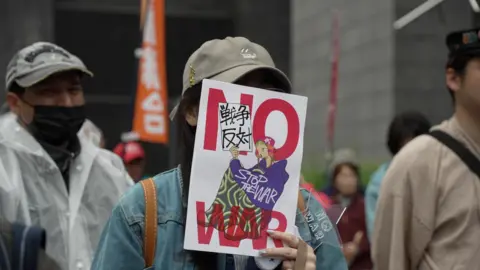
However, opponents of the defense expansion argue that strengthening Japan's military contradicts the core principles of the post-war constitution and risks escalating regional tensions. The pacifist movement in Japan draws on deep historical roots, with many citizens believing that the country's commitment to peaceful resolution of disputes has been instrumental in maintaining regional stability for over seven decades. Protesters have organized massive rallies in major cities including Tokyo, Osaka, and Kyoto, with some demonstrations attracting hundreds of thousands of participants who express concerns about militarization and its potential consequences.
The anti-war sentiment runs particularly strong among older generations who experienced or remember Japan's devastating World War II legacy. These citizens view the pacifist constitution as a hard-won achievement that emerged from Japan's painful wartime history, and they fear that abandoning these principles could set the nation on a dangerous path. Younger generations have also joined the protests, suggesting that opposition to military expansion transcends age groups and reflects broader concerns about Japan's future direction and its role in regional security dynamics.
Labor unions have mobilized their members to participate in the demonstrations, staging coordinated strike actions and mass gatherings across the country. Civil rights organizations have similarly mobilized to oppose what they view as an authoritarian shift in government policy, arguing that constitutional changes of such magnitude should require broader public consensus rather than executive-driven initiatives. The breadth of opposition suggests that the defense policy debate has become a central issue in Japan's political discourse, touching fundamental questions about national identity and values.

The government's push for constitutional revision reflects its assessment of Japan's strategic environment and its desire to strengthen ties with allies such as the United States. Military strategists and security analysts within the government argue that Japan needs more flexibility in its defense posture to respond effectively to emerging threats and to contribute more substantially to regional security arrangements. The administration has framed the constitutional changes as necessary adaptations to a changing world, rather than a rejection of Japan's pacifist heritage.
International observers have noted the significance of these protests within the context of Japan's post-war history. The peace movement in Japan has long been one of the world's strongest and most organized, reflecting the country's unique constitutional commitment to pacifism. The current demonstrations indicate that this commitment remains deeply embedded in Japanese society, even as the government pursues policies that would modify it. The tension between government initiatives and public opposition has created a contentious political environment that will likely shape Japan's policy trajectory for years to come.
The political implications of these protests are substantial, potentially affecting electoral outcomes and the government's ability to secure the supermajority needed for constitutional amendments. Japan's constitution requires a two-thirds majority in both chambers of parliament for any amendment, followed by a national referendum in which a majority of voters must approve the change. This high threshold means that the government must build considerable public support for its proposals, and the current wave of protests suggests that such support may be difficult to achieve.
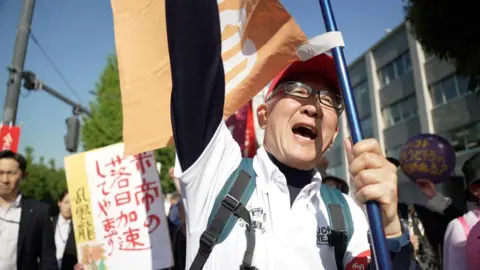
Public opinion polls have reflected the divided nature of Japanese society on this issue, with support for military expansion varying significantly depending on age, region, and political affiliation. Younger voters, particularly those concerned about economic issues, show somewhat higher support for defense strengthening compared to older generations, though opposition remains substantial across all age groups. Regional variations also appear, with residents of areas closer to potential security threats showing somewhat higher support for military modernization, while those in more remote regions tend to favor maintaining pacifist policies.
The media landscape in Japan has also played a role in shaping public discourse around the constitutional debate. Major newspapers, broadcasting networks, and digital media outlets have provided extensive coverage of both the government's defense proposals and the anti-war protests, though editorial perspectives vary. Some outlets have emphasized security concerns and the need for strategic adaptation, while others have focused on the pacifist movement's historical importance and its continued resonance with Japanese society.
International relations experts have suggested that the domestic debate over Japan's defense policy could have significant implications for regional stability and international security arrangements. Japan's stance toward military buildups influences perceptions in neighboring countries and affects the broader balance of power in East Asia. The outcome of this internal struggle will likely shape not only Japan's own security posture but also its relationships with regional powers and its contributions to international security frameworks.
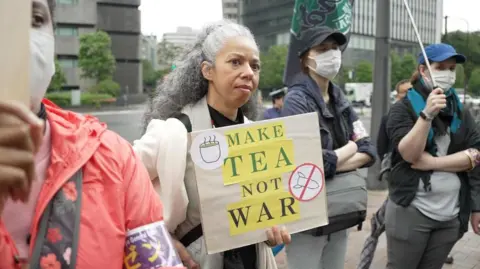
The government has responded to the protests by emphasizing its commitment to democratic processes and suggesting that public discourse should continue as constitutional amendment procedures unfold. Officials have stated that they welcome debate on these important issues and that the government's proposals reflect careful consideration of Japan's security needs. However, critics argue that the government has not adequately consulted with the public or addressed the deep concerns expressed by protesters regarding the wisdom and necessity of constitutional change.
As the debate continues, Japan faces a critical juncture in its post-war history. The outcome of this struggle between the government's defense ambitions and the public's pacifist sentiment will help determine whether Japan maintains its unique constitutional commitment to peace or whether it undergoes a fundamental transformation in its security policies and military capabilities. These anti-war demonstrations represent more than just political opposition; they reflect deeply held values about Japan's identity, its historical lessons, and its vision for its future role in regional and global affairs. The coming months and years will be crucial in determining the ultimate direction of Japanese defense policy and the nation's approach to an increasingly complex security environment.
Source: BBC News


