
Japan's Massive Protests Against Constitution Revision

Prime Minister Sanae Takaichi pushes for pacifist constitution changes amid nationwide demonstrations opposing amendments to Japan's post-war supreme law.
Japan's political landscape has become increasingly contentious as Prime Minister Sanae Takaichi advances her agenda to revise the nation's pacifist constitution, prompting an unprecedented wave of public opposition. During an official state visit to Vietnam, Takaichi articulated her vision for constitutional modernization, asserting that the fundamental law should undergo periodic updates to align with contemporary needs. Her remarks have ignited widespread debate about the future direction of Japan's military capabilities and international security posture, touching upon one of the most sensitive issues in Japanese governance since the post-war period.
The constitution in question represents a unique historical artifact, crafted by US occupation forces following the conclusion of World War II in 1945. This document, which explicitly renounces war and severely constrains Japan's military development, has served as the cornerstone of the nation's pacifist identity for nearly eight decades. Takaichi's calls for "advanced discussions" regarding constitutional reform have struck a nerve among millions of Japanese citizens who view the existing framework as a crucial safeguard against militarization. The timing of her remarks, coinciding with rising geopolitical tensions in East Asia, has intensified public concern about the potential implications of such constitutional changes.
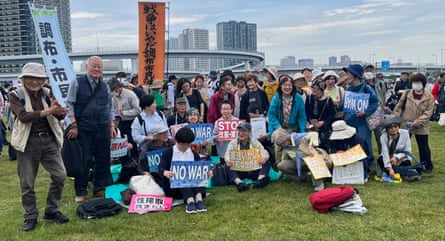
In response to the government's proposed constitutional revision discussions, Japan has witnessed what observers are characterizing as the largest organized protests in recent memory focused specifically on defending the pacifist constitution. Citizens from diverse age groups, socioeconomic backgrounds, and political persuasions have mobilized across major cities including Tokyo, Osaka, Kyoto, and numerous smaller municipalities. These demonstrations reflect a broad-based commitment to preserving Japan's post-war peaceful orientation, with participants carrying signs and banners emphasizing themes of peace, stability, and the dangers of military expansion.

Takaichi's framing of the issue centers on the principle that constitutions should evolve with changing times and circumstances. She has argued that Japan's fundamental law, while historically significant, contains provisions that may not adequately address modern security challenges and regional developments. Proponents of constitutional reform in Japan contend that the nation's limited military capacity under current constitutional constraints creates vulnerabilities in an increasingly unstable Asia-Pacific region. They maintain that updating the constitution would enable Japan to respond more effectively to contemporary threats while maintaining its commitment to peace and international law.
However, opponents of the revision effort present compelling counterarguments rooted in Japan's historical experience and moral commitments. They emphasize that the pacifist constitution has served Japan extraordinarily well for nearly eighty years, establishing the nation as a respected international partner committed to diplomatic resolution of conflicts. Critics worry that weakening constitutional constraints on military action could set Japan on a path toward increased militarization, potentially destabilizing the region and undermining the diplomatic relationships that have underpinned Japanese prosperity. Additionally, many Japanese citizens harbor deep reservations about any constitutional modifications that might entangle the nation in international military conflicts.
The debate surrounding Japan's constitution reflects broader tensions within Japanese society between those advocating for a more assertive military and diplomatic posture versus those committed to the nation's post-war pacifist orientation. Political leaders supporting Takaichi's position argue that regional security concerns, including actions by neighboring powers and maritime disputes, necessitate constitutional modernization. They contend that Japan's ability to defend itself effectively should not be artificially constrained by language drafted during a historical era fundamentally different from the present day.
Conversely, peace activists, leftist political parties, and civil society organizations have mobilized substantial resources to oppose any constitutional changes. They emphasize that the pacifist constitution represents a hard-won achievement representing Japan's commitment to international peace and humanitarian principles. These voices argue that constitutional revision risks transforming Japan into a more militarized society and potentially compromising the nation's long-standing commitment to conflict resolution through diplomatic channels. The grassroots nature of the protests demonstrates that concerns about militarization extend far beyond political elites to ordinary Japanese citizens across demographic groups.
The constitutional text itself, formally known as the Constitution of Japan, contains Article 9, which stands as the centerpiece of any potential revision debates. This article explicitly renounces war as a sovereign right and prohibits the maintenance of military forces. While successive Japanese governments have navigated around these constraints through creative legal interpretations, permitting the existence of the Self-Defense Forces, the core constitutional language remains remarkably restrictive compared to the military provisions in most modern constitutions. Any formal revision would require supermajority support in both houses of the Diet, making passage challenging despite governing party efforts.
Takaichi's statements during her Vietnam visit suggest the government intends to pursue constitutional discussions through formal legislative channels rather than attempting dramatic immediate changes. However, the timeline for such revisions remains unclear, and the level of public opposition demonstrated through recent protests indicates that any modification process will face substantial resistance. The government's approach appears to be laying groundwork for longer-term deliberation while gauging public sentiment and building support for potential reform among political allies and international partners.
International observers have closely monitored the constitutional revision debate, recognizing its implications for regional security dynamics and the broader Asia-Pacific order. Japan's alignment with the United States through the bilateral security alliance means that constitutional changes affecting military capabilities could have consequences extending beyond Japan's borders. Regional neighbors, including South Korea, Taiwan, and countries throughout Southeast Asia, are watching developments carefully, understanding that Japanese military modernization could influence regional military balances and strategic calculations.
The timing of these constitutional debates coincides with broader geopolitical shifts in East Asia, including increasing Chinese military capabilities, North Korean weapons development, and evolving security partnerships throughout the region. These circumstances have created genuine strategic debates within Japan about how best to ensure national security while maintaining the nation's post-war values. Ultimately, whether Japan's pacifist constitution undergoes revision will depend on the complex interplay between government ambitions, public opinion, parliamentary mathematics, and evolving security circumstances in the years ahead.


